Today, we give thanks to Rosa Parks, who changed the world with her incredible bravery 70 years ago. On Dec. 1, 1955, Rosa Parks ignited one of the most significant civil rights boycotts in American history when she refused to surrender her seat at the front of a Montgomery, Alabama, bus, a section reserved for white passengers. As the bus grew crowded and the driver ordered her to move to the back, the area designated for Black riders, Parks stood her ground. That single act of defiance helped launch the Montgomery Bus Boycott and transform the national struggle for civil rights.
What many don’t realize is that Parks was already a seasoned activist long before that pivotal day. She had been deeply involved in community organizing and had even supported 15-year-old Claudette Colvin, who months earlier had also refused to give up her seat on a segregated bus.
Here’s what we know about the great freedom fighter’s life and legacy.
Rosa Parks was entrenched in the Montgomery Civil Rights movement before her arrest.
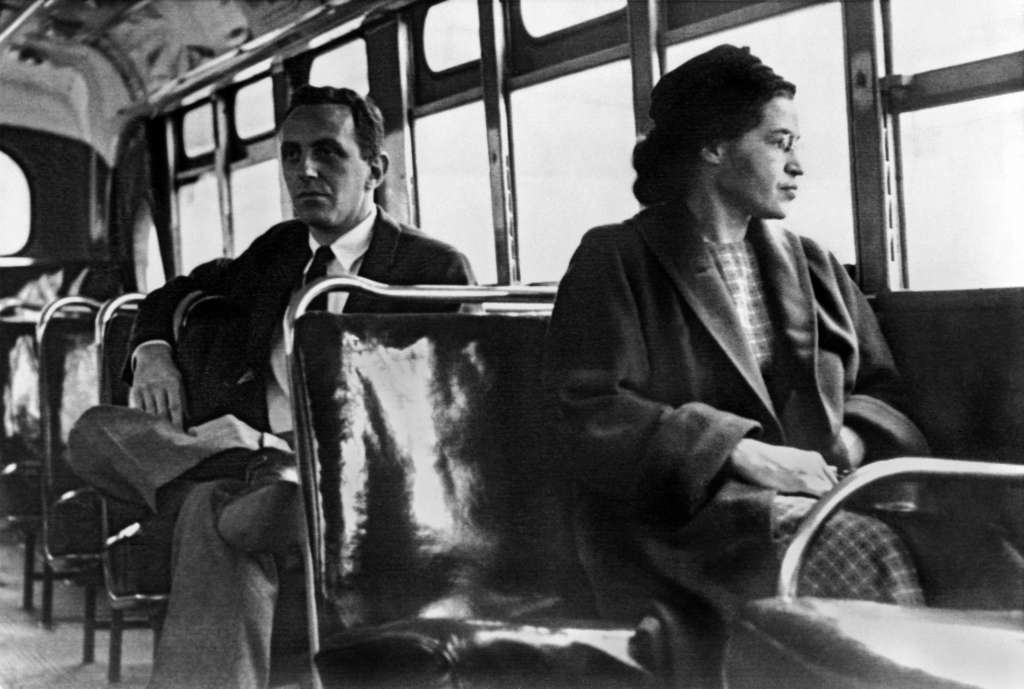
According to Women’s History, Rosa Louise McCauley was born on Feb. 4, 1913, in Tuskegee, Alabama. She attended an industrial school for girls and later enrolled at Alabama State Teachers College for Negroes (now Alabama State University), leaving school to care for her ill grandmother. Growing up in the Jim Crow South, she faced racism and violence firsthand and became involved in civil rights work early in life.
At 19, she married Raymond Parks, a barber and committed activist. Together, they worked alongside numerous social justice groups, and Rosa eventually became secretary of the Montgomery NAACP. By the time she boarded that bus in 1955, she was already an influential strategist and leader within Alabama’s Civil Rights Movement. She not only resisted unjust treatment that day but also helped coordinate the Montgomery Bus Boycott that followed. Though some tried to reduce her actions to simple fatigue, Parks later made her true motivations clear.
“People always say that I didn’t give up my seat because I was tired, but that isn’t true. I was not tired physically, or no more tired than I usually was at the end of a working day. I was not old, although some people have an image of me as being old then. I was forty-two. No, the only tired I was, was tired of giving in,” Parks said about her courageous act at the time.
That December evening, Parks sat in the bus’s middle section, where Black riders could sit but could be forced to move “on the whim of the bus driver,” her website notes. When the bus filled and a white man was left standing, driver James Blake ordered her row to give up their seats. He warned, “You all better make it light on yourselves and give me those seats.” The others “reluctantly” stood, but Parks—thinking of her grandfather and Emmett Till—felt that giving up her seat “wasn’t making it light on ourselves as a people.” Pushed to the brink of frustration, she refused, recalling in an interview, “I felt that if I did stand up, it meant that I approved of the way I was being treated, and I did not approve.”
After sliding to the window to wait, two officers boarded and arrested her.
The civil rights icon was eventually bailed out by local activist and union organizer E.D. Nixon, with support from white allies Virginia and Clifford Durr, an attorney and social reformer active in Montgomery’s civil rights efforts, according to her website. Although already involved in community activism, Parks would soon become even more deeply embedded in the city’s civil rights movement. In July 1955, the Durrs helped secure a scholarship for her to attend an integration workshop at the Highlander Folk School, an experience that strengthened her resolve to challenge the segregated bus system, Stanford University noted. Around that same time, she also connected with the Women’s Political Council (WPC) of Montgomery, an organization that helped bring her case to the spotlight.
The Women’s Political Council of Montgomery.
The Women’s Political Council (WPC) of Montgomery, founded in 1949 by Mary Fair Burks, aimed to inspire African Americans to “live above mediocrity, to elevate their thinking … and in general to improve their status as a group.” The WPC worked to expand Black political power through civic participation, voter registration drives, and persistent lobbying for reforms and by 1955 had grown to over 200 members.
Long before Parks’ arrest, the WPC had been laying the groundwork for a bus boycott. They pushed back against discriminatory bus practices in 1953 and 1954, calling for fairer seating laws and warning officials that Black residents were prepared to stop riding altogether.
When Rosa Parks was arrested on Dec. 1, the WPC and community activists sprang into action. After Nixon — with help from Virginia and Clifford Durr — secured Parks’ release and her permission to use the case to challenge segregation, WPC president Jo Robinson and representatives produced and distributed thousands of leaflets announcing the upcoming boycott, which organizers set for Dec. 5.
That day, an estimated 90 percent of the city’s Black residents refused to ride, and what was meant to last only a day stretched into a 381-day mass protest. The Montgomery Bus Boycott ran from December 5, 1955, to December 20, 1956. On June 5, 1956, a federal district court ruled in Browder v. Gayle that bus segregation was unconstitutional, and in November 1956, the U.S. Supreme Court upheld the decision, striking down laws enforcing segregated seating on public transportation.
Throughout the movement, WPC members drove carpools, organized mass meetings, and coordinated daily operations. Burks said that “members of the Women’s Political Council were trailblazers” who mobilized Black middle-class women to challenge Montgomery’s segregated systems. Their work came at great personal cost; many members, especially educators at Alabama State College, faced retaliation and ultimately relocated after years of pressure.
Rosa Parks helped out 15-year-old Claudette Colvin before her arrest.
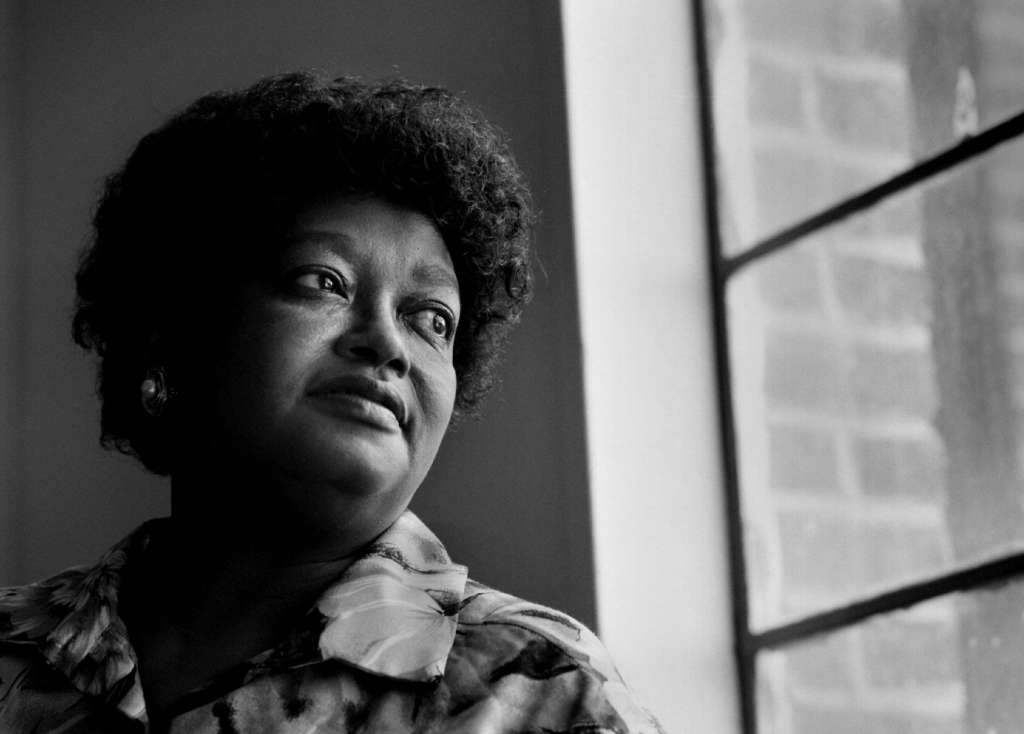
On March 2, 1955, 15-year-old Claudette Colvin boarded a bus after school, having recently studied both the Constitution and the case of her wrongfully accused classmate Jeremiah Reeves. When the white section filled and a white woman was left standing, the driver ordered Colvin and the students beside her to move. The others rose; she stayed seated.
“We’d been studying the Constitution…I knew I had rights,” she later said, according to Parks’ website.
Claudette Colvin recalled that the white woman refused to sit in the row with her. “If she sat down in the same row as me, it meant I was as good as her.” The driver shouted again, and a white passenger demanded she stand. A classmate spoke up from the back:
“She ain’t got to do nothin’ but stay black and die,” the student allegedly said. Thirteen students reportedly witnessed the exchange.
Police arrived and dragged Colvin from the bus. While some remembered her “fought like a little tigress,” Colvin insisted she simply went limp. In the patrol car, officers taunted her and made crude remarks. Fearing for her safety, she tried to distract herself: “I recited Edgar Allan Poe, Annabel Lee, the characters of Midsummer’s Night Dream, the Lord’s Prayer and the 23rd Psalm.”
Her arrest galvanised local activists. Rosa Parks and Virginia Durr organized fundraising efforts, receiving more than a hundred letters and generous donations. Parks hoped Colvin’s courage would inspire youth involvement and encouraged her to join the NAACP Youth Council. Jo Ann Robinson, Ed Nixon and Martin Luther King Jr. also pressed city leaders for change after her arrest, but were repeatedly dismissed.
Although Parks and community leaders initially explored using Colvin’s case to challenge segregation, the judge dismissed the key charges and convicted her only of assaulting the officers, preventing an appeal that could challenge bus segregation directly. But all of that was a testament to Parks’ commitment to the fight for desegregation. After her arrest, she spent years educating the world about her story and why Colvin’s case was important in the fight for change.
In February 1987, Parks and Elaine Eason Steele co-founded the Rosa and Raymond Parks Institute for Self-Development, established in memory of Parks’ late husband, Raymond. The Institute was created to inspire and guide young people—especially those often overlooked by other programs—to realise their full potential. Parks believed deeply in the power and promise of youth, a conviction she stressed in her frequent talks at schools, colleges, and national organisations around the world.
One of the Institute’s signature initiatives, the “Pathways to Freedom” program, connects the history of the Underground Railroad to the civil rights movement and its ongoing legacy. Participants, ages 11 to 17, travel as modern-day “freedom riders,” engaging in historical research and meeting with national leaders. Some had the opportunity to speak to Parks directly. Centered on the question “Where have we been? Where are we going?”, the program encourages young people to explore both the past and their role in shaping the future.
As a mentor and symbol of resilience, Parks cherished the enthusiasm young people showed in learning her story. Yet, in her characteristically humble manner, she always encouraged them to study the lives of other individuals who advanced peace and justice around the world. The Institute—and the broader Rosa Parks Legacy—stand as her massive gift to future generations.
Throughout her lifetime, Parks received more than forty-three honorary doctorates, including one from SOKA University in Tokyo, as well as hundreds of awards, citations, and keys to numerous cities. Her honors include the NAACP’s Spingarn Medal, the UAW Social Justice Award, the Martin Luther King Jr. Non-Violent Peace Prize, and the Rosa Parks Peace Prize, awarded in Stockholm in 1994. In September 1996, former President Bill Clinton presented her with the Presidential Medal of Freedom, the nation’s highest civilian award.
SEE MORE:
CBC Pushes For Federal Rosa Parks Holiday
Daisy Bates Honored With Statue In US Capitol
The Real Story Behind Rosa Parks’ Bus Ride And What’s Often Overlooked
was originally published on
newsone.com