

British Columbia won’t be renewing its agreement with Health Canada that allowed for the decriminalization of small amounts of drugs for personal possession, officially ending a three-year program that was hailed as a groundbreaking experiment before critics blamed it for fuelling public disorder and failing to rein in the overdose crisis.
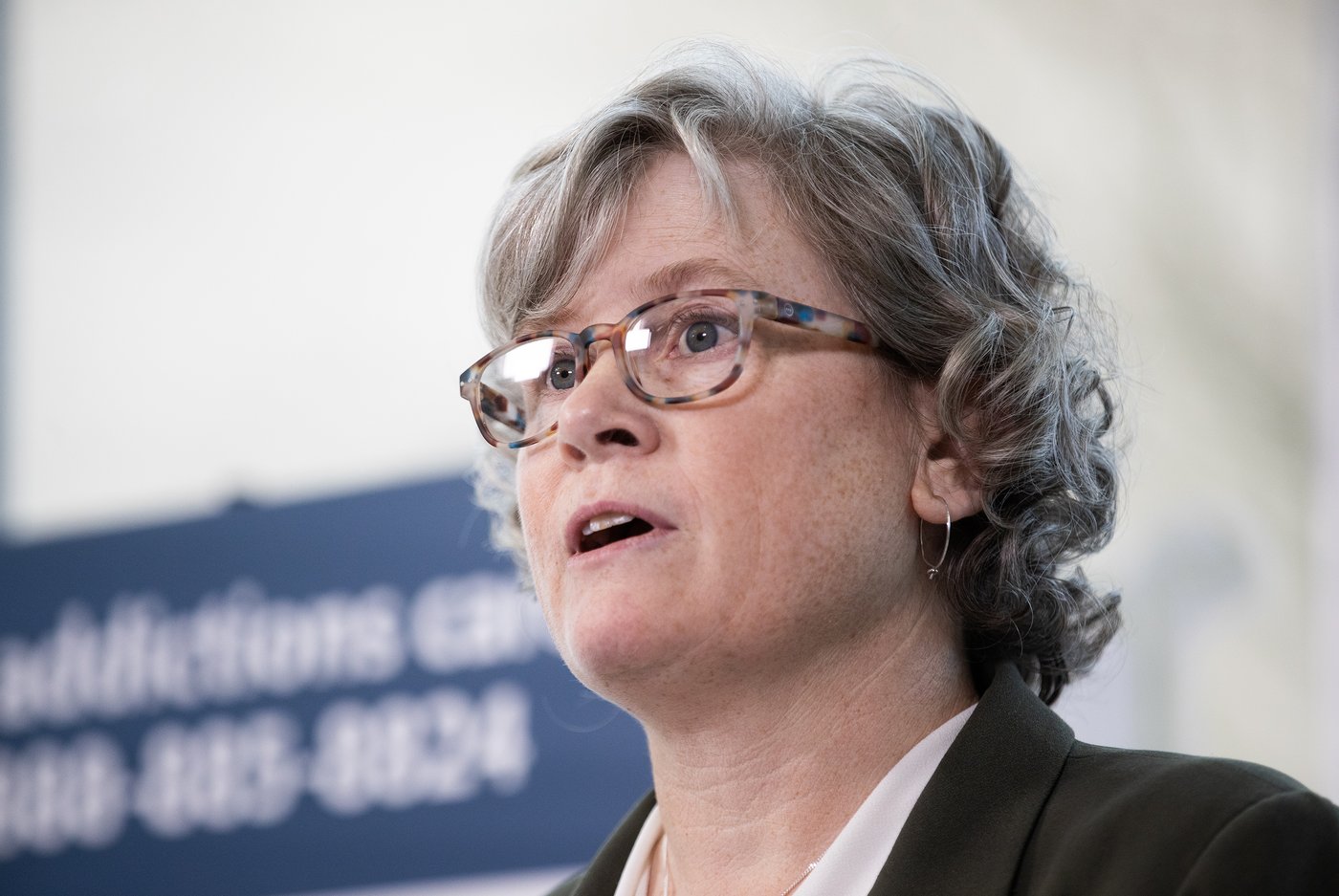
Health Minister Josie Osborne said Wednesday that the goal of the pilot project slated to end Jan. 31 was to make it easier for people to come forward and seek help during a complex public health emergency.
“From the beginning, this pilot was designed as a time-limited trial, with ongoing monitoring built in so we could understand what was working, what wasn’t, and where changes were needed,” she said.
“However, the pilot hasn’t delivered the results that we hoped for.”
The program is ending amid the same sort of division it has inspired since 2023, with critics blaming it for drug deaths and public disorder, and supporters saying it helped reduce stigmatization that could deter people from seeking life-saving help.
Some supporters of the program say the decision to end it was made in the cabinet office, amid public pressure, rather than with input from health officials.
DJ Larkin, the executive director of the Canadian Drug Policy Coalition at Simon Fraser University, said stigma built up over a hundred years can’t be reversed in three, but there were early indicators people were more comfortable accessing supports.
Larkin said a decrease in interactions with police was important because involvement with the justice system can drive harm, including losing housing and employment, increasing risk of overdose.
“This was a decision made to follow a particular political path that’s been decided by the B.C. government, not one that is informed by chief public health officer, coroner’s offices, academics, researchers, (or) people who use drugs, not informed by the experts,” Larkin said.
B.C.’s decriminalization project began in January 2023, when Health Canada granted the province an exemption under the federal Controlled Drugs and Substances Act, initially allowing adults to possess up to 2.5 grams cumulatively of opioids, crack and powdered cocaine, methamphetamine and MDMA.
The program was pitched with the goal to “reduce stigma and fear of criminal prosecution that prevents people from reaching out for help, including medical assistance.”
But a furor ensued over claims that the program was encouraging public drug use in playgrounds and other inappropriate places, and in May 2024, the exemption was amended to restrict possession to private homes and places where homeless people are legally sheltering, as well as designated health-care clinics and overdose prevention, drug checking and supervised consumption sites.
Surrey, B.C., mother Ellen Lin said the end of the program came too late.
She linked it to the death of her 14-year-old daughter, Emmy Liu, who died of a fentanyl overdose on Jan. 30, 2025.
“Many innocent lives were lost during those three years, especially children. What explanation does (Osborne) have for families who lost their loved ones? I think the policy is totally a failure,” she said in Mandarin at a news conference in Richmond, B.C., that was coincidentally held on Wednesday just ahead of the minister’s announcement in Victoria.
Lin said that allowing possession of drugs made it easier for adults to provide them to children like her daughter.
“As a mom who just lost my younger daughter, I think the policy is extremely ridiculous,” said Lin. “When my child’s life was in danger, I have been exploring all resources and methods to save her. I had been seeking help from the police, from counsellors and the school board. But I felt helpless. These absurd policies blocked the path to save my child’s life.”
Osbourne said the public conversation around decriminalization had become “very challenging” and that the government wanted to focus on a “health-first approach.”
She called decriminalization “a very well-intentioned attempt to add one more tool to help increase access to care.”
“With the decriminalization pilot ending though, we continue our work. We continue this work of adding treatment and recovery beds; continuing to expand the intervention and supports; continuing to extend harm reduction services and undertaking everything that we can to save lives,” she said.
Larkin said returning to criminalization will mean inconsistent policing in terms of who is arrested and charged and more people using drugs in secret who will be afraid to get help.
A return to criminalization would embolden people to increase stigma and decrease compassion, and push for more policing, Larkin said.
“All of which is dangerous and doesn’t actually produce healthier communities,” Larkin said.
Samona Marsh, a member of the board of directors for the Vancouver Area Network of Drug Users, said the program was “good for the psyche” among people who use drugs.
“Less people were prone to using in the back alley, or whatever, because there was no worry about the police stopping them.”
The government didn’t give the program a chance to work “before they deemed it unworkable,” Marsh said.
BC Green Party MLA Jeremy Valeriote said if destigmatization was the government’s only measure of success, then the pilot failed “not because of the policy itself, but because the government failed to do the necessary public education.”
“People who are worried about being arrested won’t reach out for help. This knee-jerk reaction is designed to appease the Opposition Conservatives, rather than engage in a thoughtful course correction. We cannot throw the baby out with the bathwater here.”
Drug deaths in B.C. initially continued to rise after decriminalization, hitting a record 2,589 in 2023, an increase of eight per cent over the previous year. That was faster than in some other places in Canada, such as Ontario, where deaths were up four per cent, while deaths had started falling in the United States after peaking in 2022.
The policy was curtailed in 2024 and deaths fell 10 per cent that year compared with 2023. That was slower than in Ontario, which experienced a 15 per cent decline, while deaths dropped by 27 per cent in the United States that year.
There were 1,538 deaths in B.C. in the first 10 months of 2025, putting the province on track for a decline of about 20 per cent.
A study published in JAMA Health Forum in 2025 found that both safer supply and drug decriminalization policies in British Columbia were associated with increased opioid overdose hospitalizations but not with an increase in opioid deaths.
The minister said it was difficult to attribute overdose death numbers in the province to any single factor, calling recent drops in deaths encouraging but not enough.
The B.C. pilot program had received scathing reviews from the federal Opposition Conservatives. Leader Pierre Poilievre’s spokesperson Sam Lilly said Wednesday that the federal Liberal government “could have stopped their deadly and radical experiment at any time.”
Lilly said that instead “they were perfectly content to sit and watch as our streets were flooded with highly powerful opioids,” adding that “countless families will never recover from the loss of their loved ones.”
In a statement following the announcement, the B.C. Conservatives said the “risky experiment with drug decriminalization” negatively affected communities and schools.
“From the outset, businesses, local governments, and police raised alarms about increased public drug use and disorder in community spaces. Instead of acting quickly to tighten the rules and restore confidence, the NDP defended the approach until the consequences became impossible to ignore,” mental health critic Claire Rattée said in the statement.
Lin said she had tried all means to keep drug dealers and bad friends from supplying Emmy with drugs, but the decriminalization program had created an “environment unsafe” for children.
She said that speaking out against the program “has become my mission and my responsibility,“ said Lin. “I terribly miss my daughter who left the world so early.”
— with files by Nono Shen in Richmond, and Sarah Ritchie in Ottawa
This report by The Canadian Press was first published Jan. 14, 2026.
Ashley Joannou, The Canadian Press

