

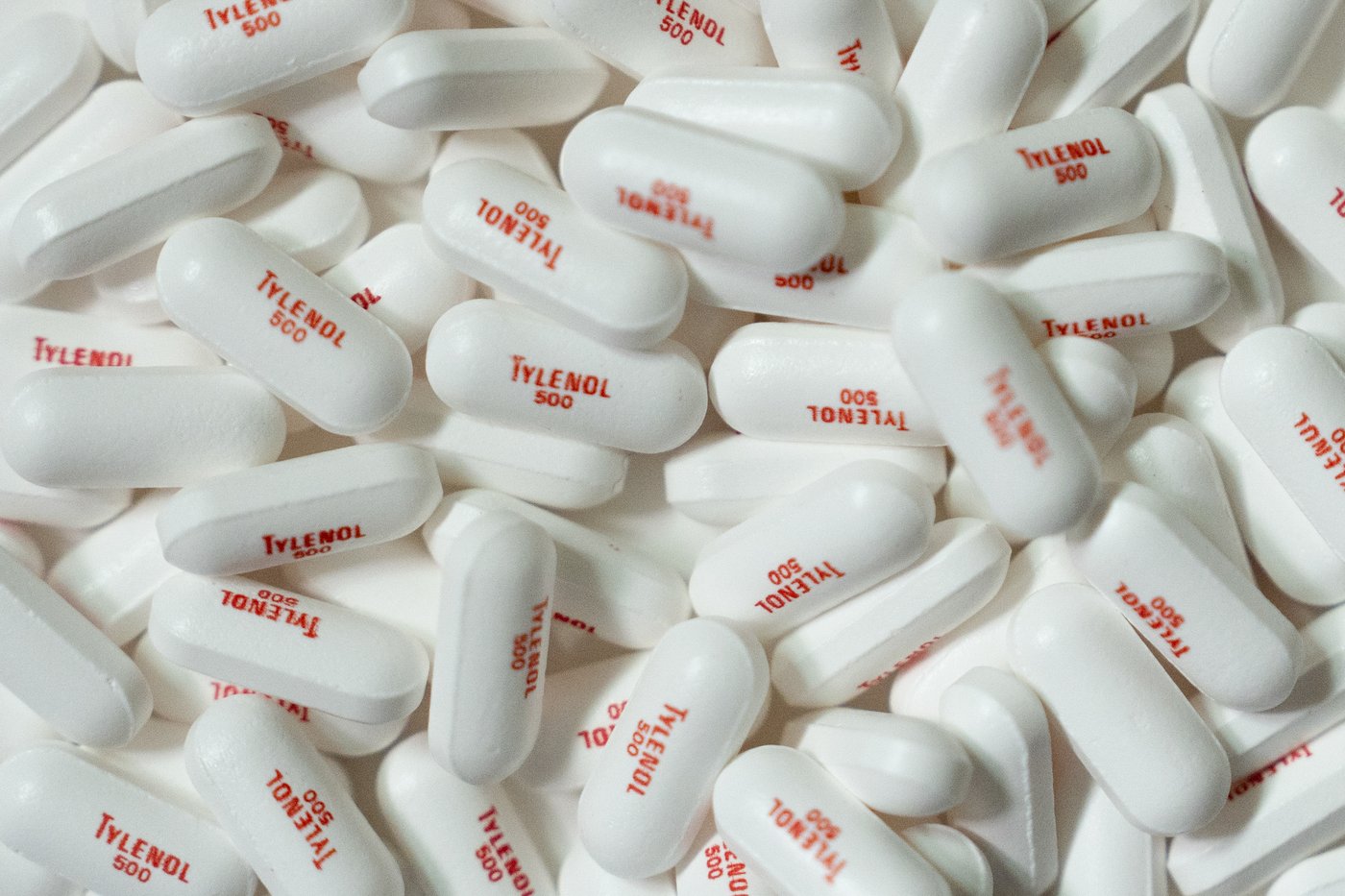
A new review of studies has found that taking Tylenol during pregnancy doesn’t increase the risk of autism, ADHD or intellectual disabilities – adding to the growing body of research refuting claims made by the Trump administration.
President Donald Trump last year promoted unproven ties between the painkiller and autism, telling pregnant women: “Don’t take Tylenol.”
The latest research review, published Friday in The Lancet Obstetrics, Gynecology & Women’s Health, looked at 43 studies and concluded that the most rigorous ones, such as those that compare siblings, provide strong evidence that taking the drug commonly known as paracetamol outside of the U.S. does not cause autism, ADHD or intellectual disabilities.
It’s “safe to use in pregnancy,” said lead author Dr. Asma Khalil. “It remains … the first line of treatment that we would recommend if the pregnant woman has pain or fever.”
While some studies have raised the possibility of a link between autism risk and using Tylenol, also known as acetaminophen, during pregnancy, more haven’t found a connection.
A review published last year in BMJ said existing evidence doesn’t clearly link the drug’s use during pregnancy with autism or ADHD in offspring. A study published the previous year in the Journal of the American Medical Association also found it wasn’t associated with children’s risk of autism, ADHD or intellectual disability in an analysis looking at siblings.
But the White House has focused on research supporting a link.
One of the papers cited on its web page, published in BMC Environmental Health last year, analyzed results from 46 previous studies and found that they supported evidence of an association between Tylenol exposure during pregnancy and increased incidence of neurodevelopmental disorders. Researchers noted that the drug is still important for treating pain and fever during pregnancy, but said steps should be taken to limit its use.
Some health experts have raised concerns about that review and the way Trump administration officials portrayed it, pointing out that only a fraction of the studies focus on autism and that an association doesn’t prove cause and effect. Khalil, a fetal medicine specialist at St. George’s Hospital, London, said that review included some studies that were small and some that were prone to bias.
The senior author of that review was Dr. Andrea Baccarelli, dean of the faculty at Harvard T.H. Chan School of Public Health, who noted in the paper that he served as an expert witness for plaintiffs in a case involving potential links between acetaminophen use during pregnancy and neurodevelopmental disorders. Baccarelli did not respond to an email seeking comment on his study.
Overall, Khalil said, research cited in the public debate showing small associations between acetaminophen and autism is vulnerable to confounding factors. For example, a pregnant woman might take Tylenol for fevers, and fever during pregnancy may raise the risk for autism. Research can also be affected by “recall bias,” such as when the mother of an autistic child doesn’t accurately remember how much of the drug she used during pregnancy after the fact, Khalil said.
When researchers prioritize the most rigorous study approaches – such as comparing siblings to account for the influence of things like genetics – “the association is not seen,” she said.
Genetics are the biggest risk factor for autism, experts say. Other risks include the age of the child’s father, preterm birth and whether the mother had health problems during pregnancy.
In a commentary published with the latest review, a group of researchers who weren’t involved — from the London School of Hygiene and Tropical Medicine, Children’s Hospital Colorado and elsewhere —cautioned that discouraging the use of acetaminophen during pregnancy could lead to inadequate pain or fever control. And that may hurt the baby as well as the mother. Untreated fever and infection in a pregnant woman poses “well-established risks to fetal survival and neurodevelopment,” they said.
___
The Associated Press Health and Science Department receives support from the Howard Hughes Medical Institute’s Department of Science Education and the Robert Wood Johnson Foundation. The AP is solely responsible for all content.
Laura Ungar, The Associated Press

