Great speeches do more than announce policy — they signal how a leader sees the world.
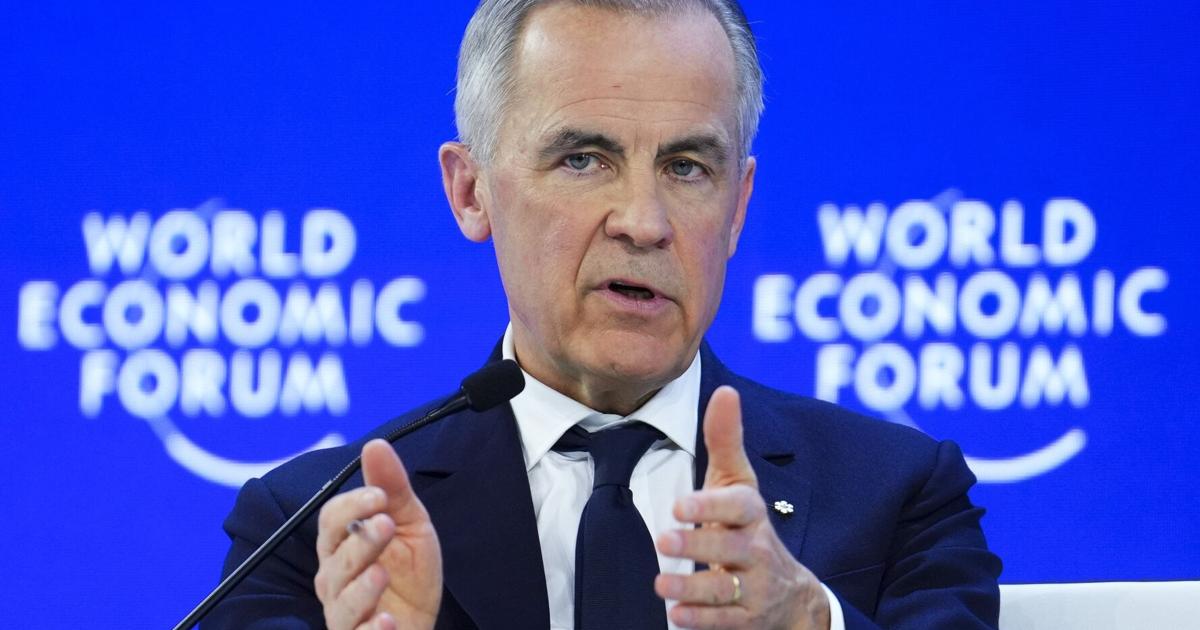
In a closely watched address at the World Economic Forum in Davos, Switzerland, on Tuesday, Prime Minister Mark Carney drew on his background in international trade and finance to deliver a speech his office says he wrote himself. That’s unusual, as prime ministers typically rely on advisers and speech writers for major foreign-policy addresses.
The prime minister warned that the international order that has shaped global affairs for decades is increasingly unstable, as rising geopolitical competition pushes states to rethink how power is exercised.
Speaking before political leaders, business executives and policymakers, Carney argued that long-standing assumptions about global co-operation, security and economic integration can no longer be relied upon.
“There are no gratuitous attempts to be eloquent,” said David McLaughlin, who was the managing senior editor at the office of former Ontario premier Dalton McGuinty.
“But there is eloquence in speaking with such clarity and conviction. I think that is why so many around the world have responded so positively to the speech.”
To assess the speech’s significance, the Star spoke with experts in international relations, speech writing and history. They pointed to its clear, direct tone — a hint of Carney’s flair — and broad geopolitical scope, examined its central arguments, and considered what it could signal for Canadian foreign policy moving forward.
The full speech below with annotations
Correction – Jan. 24, 2026
This article has been updated to reflect that Prime Minister Mark Carney delivered his speech in Davos this past Tuesday, not Wednesday.