


As the Ottawa Police Service continues to crack down on retail and grocery theft, one criminologist is calling for restorative justice and community-based solutions to tackle the root cause of the issue.
Twelve people are facing charges after they were arrested for theft at a grocery store in the Centretown neighbourhood earlier in January. The arrests were part of the OPS’ “Project Pantry” operation, where officers worked seven shifts over two weeks at the store starting on Jan. 12.
According to Ottawa Police Chief Eric Stubbs, 78 charges were laid against the 12 people as part of those efforts.
Stubbs also said police targeted that particular grocery store after analysts looked at the number of shoplifting complaints across Ottawa, which guided them to focus on Centretown specifically.
He noted that the OPS was planning to expand those efforts across the city, and not just at grocery stores.
“This isn’t the first one that we’ve done as well. We did another (operation) at the Lululemon store in the Rideau Centre,” Stubbs told reporters at a news conference on Tuesday.
“It is resource-heavy, but that’s what proactive work is all about. When you have that time, you have those resources that can be targeted on specific people or issues. You want to see an improvement of safety and, of course, you want to see some charges laid. So. yes, we will expand that.”
The crackdown comes as overall crime rates in Ottawa remain above provincial baselines. According to an OPS key performance indicator report presented at the Jan. 26 police board meeting, the increase was driven mainly by theft under $5,000, arson, auto theft and harassment-related offences.
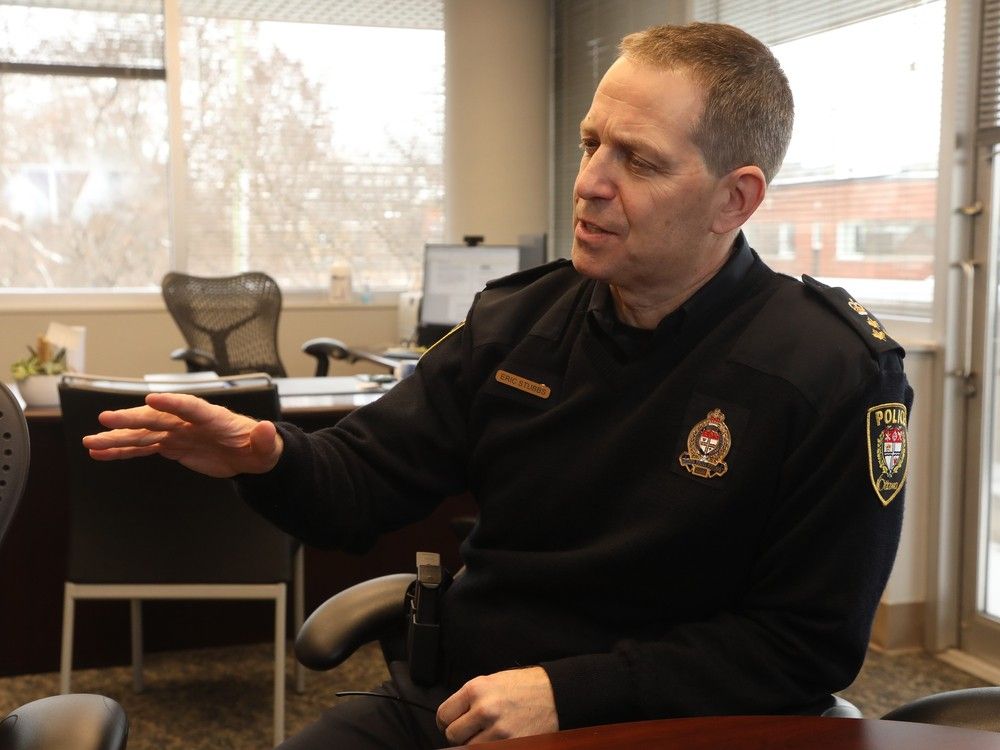
The police chief said retail theft was something that officers had been hearing about, and it was not just happening in the downtown core.
“We want to hold these people more accountable … We want to be evidence-based and data led,” Stubbs said at Tuesday’s news conference. “We definitely have seen the the presence of organized crimes where people will steal high-end items, be it at a grocery store for meat and cheese, or at a store where it’s jewelry or high-end perfume, etc.”
Thefts tied to socio-economic pressures, not organized crime
Jeffrey Bradley, a part-time criminology professor at the University of Ottawa, disagreed with Stubbs’ analysis that the operation had been effective, nor did he agree with the notion that it was a good use of time.
Bradley has been studying restorative justice, policing issues and transformative justice for 10 years, with a focus on violence prevention.
He slammed the police operation and called it “shameful” because it stigmatized marginalized communities during a cost-of-living crisis, especially as demand at food banks across Ottawa reached record levels in 2025.
“Whenever the economy is not doing well, you see theft going up. I’m not quite clear on why they believe that targeting a grocery store as an effective way of addressing the issue … Somebody’s stealing food for survival,” Bradley told the Ottawa Citizen in an interview.
“I really doubt that (it’s connected to organized crime). I don’t think there’s a huge market for something like that. And arresting 12 people … To me, that’s laughable.
“It really doesn’t address what the community wants when it comes to community safety. They are cracking down and criminalizing poverty, homelessness, addiction, etc.”
The criminologist also questioned Stubbs’ comments around community demands for more policing, he said, because the majority of community members just want to feel safe in their communities and to make sure everyone’s basic needs are met.
But policing has been positioned as the immediate solution to crime for years, Bradley noted, and community-based solutions have been sidelined because they “take too long” to generate results.
“We want immediate solutions, but, if we start investing today in mentorship programs or community kitchens, that would eventually pay off,” Bradley said.
“We’re not going to see an immediate drop (in crime) tomorrow if we start up programs, but we may see a 40- to 50-per-cent drop in the next one to three years.”

What solutions are there?
Restorative justice is one of many solutions that can help address crime, Bradley said.
Restorative justice works to repair harm by creating a space where the person harmed and the person who caused the harm can communicate and address their needs after a crime, according to the Government of Canada.
Currently, Ontario’s government allows people to participate in restorative justice programs if “the needs and interests of society can be better served through the exercise of prosecutorial discretion to withdraw or stay criminal charges upon an accused person’s completion of a comprehensive diversion program.”
Bradley said those charged, arrested or convicted of theft could be given community service orders instead of jail time, or referred to affordable food initiatives so they can have their needs met.
Youth mentorship programs that divert at-risk youth away from crime are also an important part of the solution, Bradley added.
“We want to understand why and how do we prevent this and others from having to do the same thing. You’d be talking to business owners and talking to people who caused the harm and asking them why they do it, then you go from there,” he said.
“I’ve seen in some instances, like in Nova Scotia, where they have a permanent program that’s funded by the province, where they had someone apologize to a small business owner who had their shop broken into, and then the (person accused of stealing) helped with a community dinner.”
But Bradley highlighted that none of these community-based initiatives would work if local politicians didn’t invest money into them.
He urged City of Ottawa councillors to consider funding for community organizations dealing with low-level crime and social disorder, as well as jobs and mentorship programs to help lift people out of poverty.
“I hope that they would not just invest in policing, but they would invest in social and community services and help make life easier in Ottawa. The cost of rent, the unreliable transit, those need to be addressed,” Bradley said.
“We need to move away from enforcement-driven models and invest in a community safety and well-being plan, even if the province won’t.”
Related
Our website is your destination for up-to-the-minute news, so make sure to bookmark our homepage and sign up for our newsletters so we can keep you informed.

