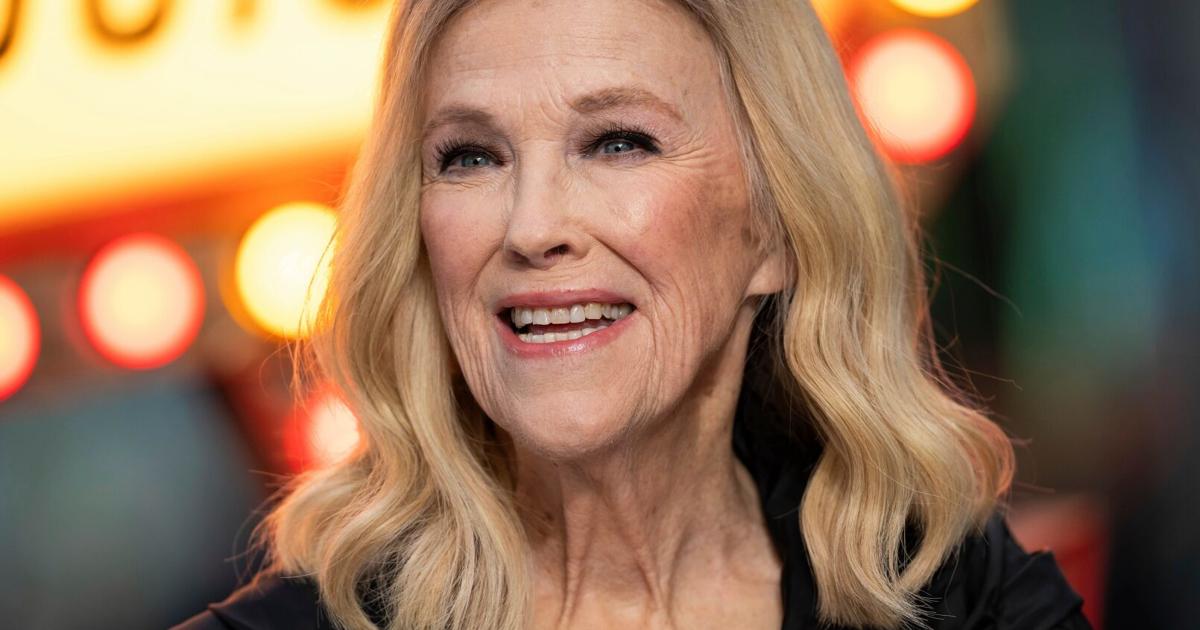
Back in 2023, I had the privilege of spending 35 minutes on the phone with Catherine O’Hara. She was about to receive the Academy Icon Award at that year’s Canadian Screen Awards — although the idea of being an icon made her guffaw — and we were revisiting her long, successful television and movie career.
At one point we discussed the idea of being star-struck. O’Hara admitted to feeling that way meeting former U.S. secretary of state Hillary Clinton and other prominent women at a conference in Abu Dhabi, but she scoffed at the notion that anyone would be star-struck meeting her.
“Most of the time it’s just lovely to have people smile at you and be friendly,” she said of her fans.
“When you do comedy, I think generally speaking, people are very kind. They feel like they know you, like you’re their buddy. I’m always confused, actually, when people are so familiar and friendly with me. I think, ‘Oh no, I can’t remember why I know them. Oh shoot, what’s their name?’ Turns out I don’t know them,” she added.
When O’Hara died on Jan. 30 at 71, I believe many Canadians felt bereft precisely because they felt like they knew her.
The shock of her passing on has left a void in the Canadian cultural fabric that feels deeply personal. O’Hara wasn’t just a Hollywood star who happened to be from Etobicoke; she was the architect of a specific brand of Canadian comedy — one that was collaborative, character-driven and fiercely original. To lose her is to lose the leader of a comedic revolution that began on a small stage in Toronto and eventually conquered the world.
O’Hara had been on our screens, large and small, for five decades, going back to “The Wayne and Shuster Show” in 1975. That kind of exposure can’t help but breed a sense of familiarity. And, as O’Hara herself said, comedians feel particularly familiar.
Laughing is such a basic human reaction — Scientific American notes that humans laugh before we speak — is it any wonder that many of Canada’s most revered entertainment figures are comedians?
O’Hara was at the top of that pantheon, although I suspect she would shy away from that praise. She was as humble as she was funny. And that’s another reason why she feels so quintessentially Canadian to me: her lack of pretension off-screen, her refusal to blow her own horn, her insistence on sharing credit for her indelible work.
Take “Schitt’s Creek” (2015-2020), the multi-Emmy-winning Canadian comedy that gave O’Hara what I would argue was her definitive role, as over-the-top former soap opera star Moira Rose.
O’Hara herself came up with the characteristics that made Moira so memorable — the constantly changing wigs, the black and white designer “armour,” the affected way of speaking — but she gave full credit to “Schitt’s” co-stars and co-creators Eugene and Daniel Levy, costume designer Debra Hanson, hairstylist Ana Sorys and the show’s writers for creating Moira alongside her.
“When do you ever get to work with people that say yes to all these ideas that haven’t quite been worked out and then they make them work?” she asked. “I think my job is to offer as much as I can, but you have to have people who are open to allowing you to collaborate.”
Creating characters and collaborating were key components of the informal training O’Hara received in the ’70s at Toronto’s Second City comedy club from the likes of Eugene Levy, John Candy, Martin Short and especially, Gilda Radner, whom O’Hara understudied and later replaced in the troupe.
To hear O’Hara tell it, if not for Radner — who attended Sunday family dinners at the O’Hara house in Etobicoke while dating one of Catherine’s brothers — O’Hara would never have found her way into a comedy and acting career.
It’s impossible to overstate how O’Hara and her fellow “SCTV” comedians fundamentally altered the DNA of Canadian broadcasting — and comedy in general. O’Hara proved that homegrown satire didn’t need to be a pale imitation of American content: it could be weirder, smarter and entirely self-made.
Fifty years later, Moira Rose became a global meme on a show that was profoundly Canadian. The CBC production was filmed in the small Ontario town of Goodwood, proving that local stories told with O’Hara’s signature “yes-and” collaborative spirit could fuel the biggest comedy series on the planet. She didn’t just play a character on a Canadian show; she gave the entire domestic industry a master-class in how to stay true to your roots while reaching millions of screens.
One of my questions for O’Hara on that day in 2023 was which of her many movie and TV roles she was proudest of, but she demurred.
“I honestly don’t look at it like what am I most proud of,” she said. “I’m most grateful, I would say, for that first job, Second City. I mean that was my university of comedy. I learned on the job with those people …
“I like to think I made the most of it and I worked hard, but that’s quite the opportunity … I’m still trying to practise everything I learned there. All the basics of everything I do came from there.”
I suspect you’d be hard pressed to find anyone this week with a knowledge of O’Hara’s career who doesn’t believe she built magnificently on the foundation she laid in that Toronto club.
As we wrapped up our call that day, O’Hara said, “Well, thank you, Debra, thank you very much, very kind of you.”
No Catherine, thank you — for five decades of brilliance and for making me proud to call you a fellow Canadian.