

For people living with sickle cell disease, blood transfusions are a routine part of survival. But for people of colour, finding the right blood match is far from routine and donor diversity could be the difference between stability and crisis.
Sickle cell disease is a blood disorder inherited at birth. It causes red blood cells to become hard, sticky, and shaped like the letter “C,” which makes it difficult for them to move around the body. According to Health Canada, this can lead to severe pain, limited blood flow, and organ damage for those with the disease.
For many, the pain arrives without warning and lingers without visible signs, creating a reality that’s often misunderstood.
“It’s a very isolating experience, especially dealing with such a unique disease where it causes immense pain. And it’s invisible. You can’t see what I’m going through. I might look perfectly fine to you, but inside, internally, it’s like havoc,” said Gabriel Badejo who has sickle cell disease.
To manage that pain and prevent serious complications, many patients like Badejo depend on regular blood transfusions. Over time, repeated transfusion make finding compatible blood more difficult.
“The blood donations are life-saving, literally. And the thing is, when you have a genetic illness like sickle cell, it’s harder for them to match your blood with all the blood that’s out there.”
That reality brought dozens of people to a downtown Toronto donor centre Wednesday, where community members gathered not just to give blood, but to learn how donor diversity affects patient care.
“I think it’s important for us as Black people to come out and donate blood as much as we can. There’s not enough of us, and I wanted to start today,” said Ruth Alemayehu, one of the donors.
In Canada, sickle cell disease primarily affects people of African, Caribbean, Middle Eastern, and South Asian descent. Canadian Blood Services says when compatible blood is unavailable, patients face a higher risk of transfusion reactions, delayed treatment and long-term complications linked to immune responses.
“If we look at Canada, about 4.3 per cent, based on the latest numbers, comes from African, Caribbean, and Black populations. But only around one per cent of our donation base comes from African, Caribbean, and Black communities. So we’re on a mission to increase that one per cent,” said Eloise Tan, the VP of Inclusion and Sustainability with Canadian Blood Services
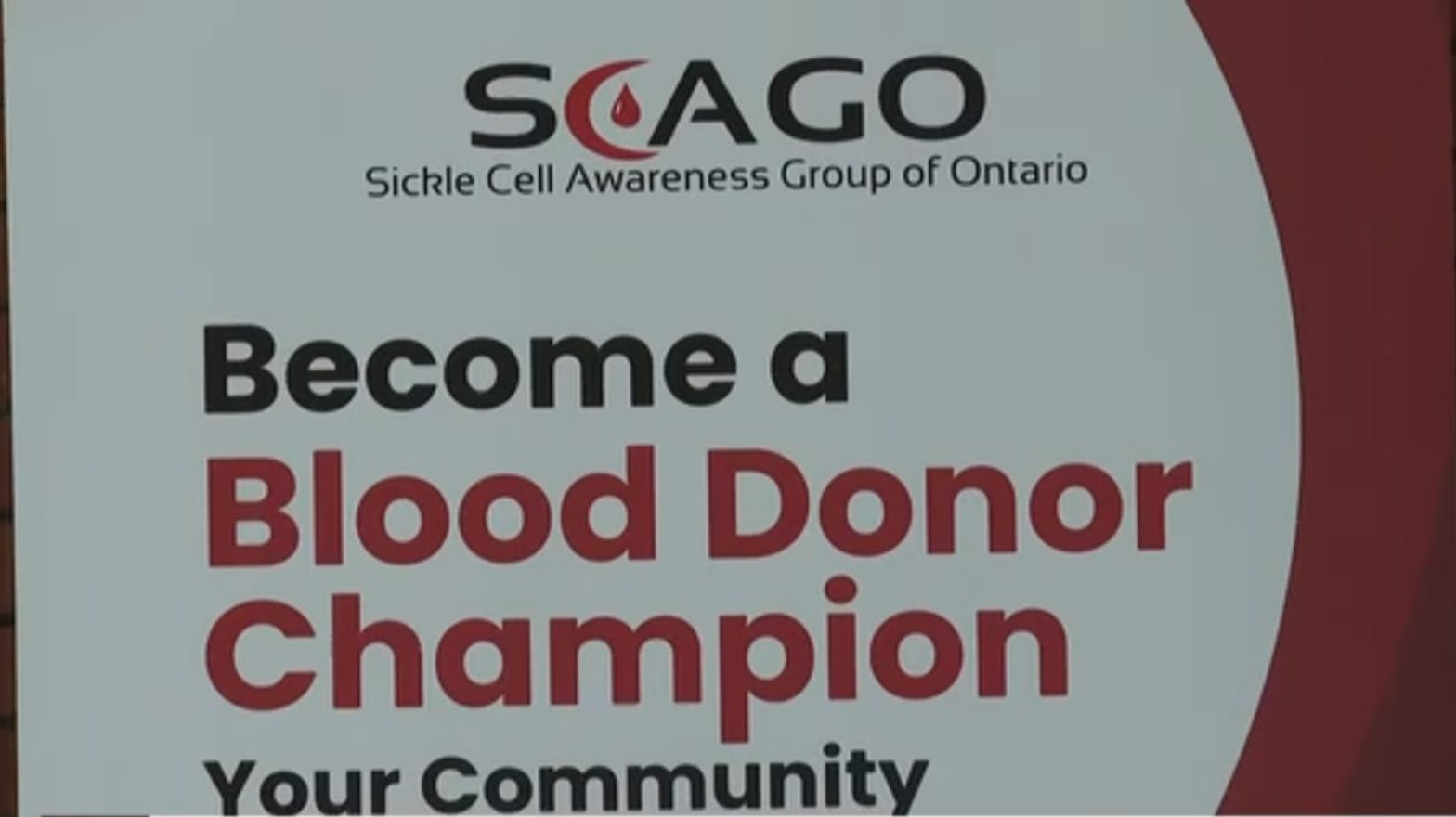
The Sickle Cell Awareness Group of Ontario, a patient advocacy and support organization founded in 2005, works to close that gap through education, outreach and community partnerships.
“One of our biggest focuses this year is collaborating more with Canadian Blood Services but also going into communities to talk about what blood donation means, what it means for sickle cell disease, and how people can make an impact. We’re also trying to debunk some of the myths around the donation process and where blood goes,” Chloe Jang, communications coordinator with the Sickle Cell Awareness Group of Ontario.
Canadian Blood Services says common concerns include fear of pain, mistrust around how blood is used, and uncertainty about eligibility. The agency says many of those concerns are misconceptions, noting blood donation is regulated, voluntary and closely tracked from donor to patient.
“I get the stigmas and the hesitation … It’s not just about the act of donating blood. It’s about the act of supporting your community,” said Badejo.
Organizers say increasing donor diversity requires consistent participation beyond a single event. More community-led donor drives are planned through Black History Month and beyond.

