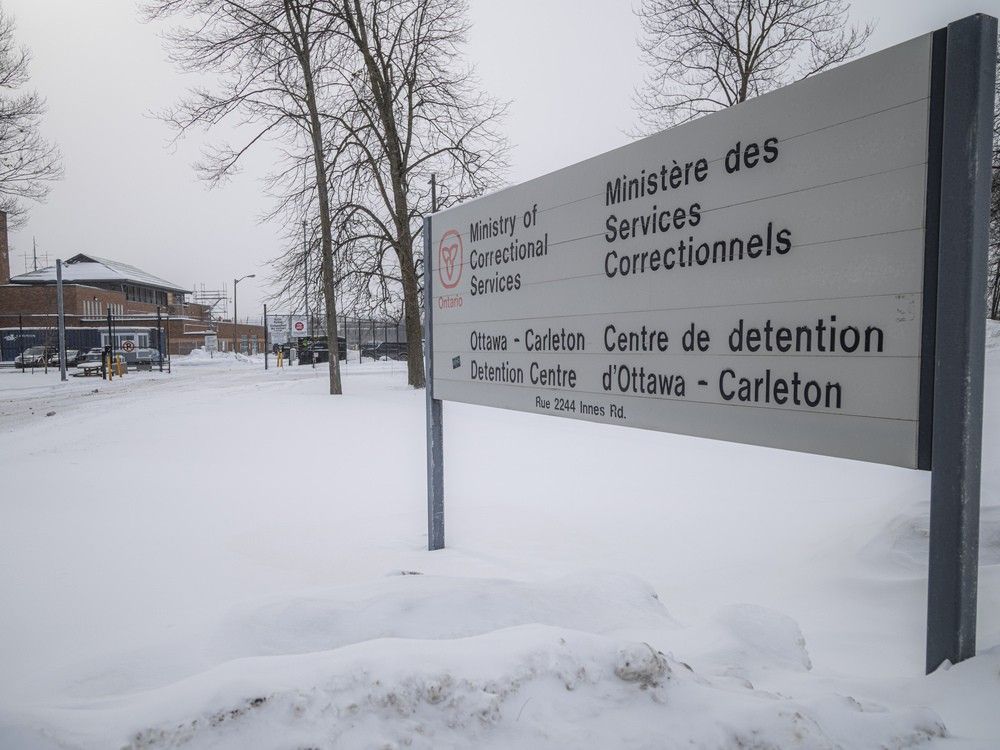
The Ottawa-Carleton Detention Centre should have better mental health-care resources for long-term inmates and better communication between health-care professionals so everyone is informed about inmates’ care,
a coroner’s inquest jury says
.
Those were two of five recommendations the jury made following the completion of the inquest looking into the death of Taher Hashemi, 49, who died by suicide on Aug. 24, 2021.
Hashemi, a businessman,
was charged with with attempted murder
of his wife, aggravated assault, assault with a weapon and possession of an offensive weapon on Dec. 12, 2017. The jury heard that he was living a relatively normal and successful life with his wife and daughter prior to the arrest, but he began to display irrational behaviour and paranoia sometime in 2016 or 2017. He accused his wife of cheating on him and often worried that people were spying on him.
Hashemi was denied bail and was
sent to OCDC
awaiting trial, where he spent almost four years of his life. He was immediately flagged as a suicide risk and placed in the suicide block upon admission.
Between Dec. 12, 2017 to July 15, 2021, he was being assessed by medical professionals around five to 10 times a month. This included primary care physicians, psychologists, social workers, mental-health nurses and registered nurses.
He was also placed on and off suicide watch and enhanced supervision during this time. On July 15, 2021, a psychologist cancelled the suicide precaution after a 30-minute assessment and recommended that Hashemi be placed in a cell alone. He was transferred to the OCDC’s health-care unit 13 days later.
Between July 16, 2021 to Aug. 23, 2021, Hashemi was seen 12 times by health-care professionals at OCDC.
He pleaded guilty to attempted murder, assault and aggravated assault on Aug. 23, 2021, and the court case was then adjourned for a month for sentencing.
Three days later, correctional officers found him unresponsive in his cell. Lifesaving efforts were performed by health-care professionals and paramedics, but they were unsuccessful. He was pronounced dead at 8:49 a.m. on Aug. 24, 2021. A forensic pathologist said the cause of death was hanging.
An inquest into his death was called last November. It commenced on Monday, Feb. 2 and ended on Wednesday, Feb. 4.
The four-person jury (there were originally five people on the jury, but one had to leave in the middle of proceedings due to a personal issue) made five non-binding recommendations, most of them directed at OCDC.
Those recommendations include:
- Court dispositions or notable proceedings, events or results for days in court for inmates in stabilization or health-care units should be communicated to OCDC health-care teams
- Relevant minutes from health-care planning for high-risk inmates should be recorded or documented and available in health-care records so all members of the inmate’s health-care team have access
- Recreational material such as sudoku, newspapers, reading material, crossword puzzles, etc., should be proactively provided to inmates
- Health-care plans for long-term inmates who are facing persistent mental-health challenges should take into account the inmates’ length of stay and the period until the next court date
- Room implements, such as bedding and light fixtures, should be re-assessed to remove any risks of inmates potentially harming themselves.
Hashemi was not placed on suicide watch when he died
Health-care professionals who testified in the inquest all described Hashemi as a relatively quiet and respectful man who was dealing with paranoia and depressive episodes, especially after his daughter died in the summer of 2020.
Dr. Yaniv Benzimra, a psychologist who saw Hashemi close to 50 times for psychology consultations, was one of three health-care professionals who testified at the three-day inquest.
He noted that Hashemi had significant paranoia and believed psychiatrists were poisoning his food with medication and were colluding with lawyers to deny a Not Criminally Responsible verdict.
Hashemi also preferred to live alone, and the isolation may have contributed to his mental health, Benzimra said.
The jury also heard Benzimra provided different strategies to help Hashemi, including cognitive behavioural therapy and frequent counselling.
He also conducted suicide risk assessment on July 23, 2021 and noted that Hashemi did not report suicidal thoughts or ideation at that time.
However, the death of his daughter was always looming on the inmate, Benzimra said.
“He had hoped to re-establish some kind of link with his daughter, so that was a big shock,” Benzimra told the inquest jury.
“Obviously, when this happened, we offered him additional attention and additional services, because we knew it was a big risk factor during that time.”
Benzimra also noted the ongoing challenges in providing care to Hashemi.
He was only employed by OCDC on a contract basis, which meant he wasn’t at the jail every day and couldn’t provide consistent care to inmates like Hashemi. That meant Hashemi was being seen by a team of professionals for ongoing care, and Benzimra tried to conduct followup consultations whenever he could.
But because Hashemi was seen by multiple people, there were sometimes lapses in communication.
“I’m a consultant. I don’t know exactly all the inner functioning of the health-care unit, but perhaps the health-care manager or assistant manager can disseminate information to the mental-health nurses or anybody who needs to be aware of higher-risk inmates,” Benzimra said.
“There isn’t sufficient amount of time to be able to go to a one-hour meeting every week or every other week because the number of inmates is extremely elevated, so we have to constantly focus on the urgencies or priorities.”
Benzimra also said communication between lawyers, court staff and OCDC health-care professionals needs to improve. Earlier in his testimony, he said he wasn’t notified when Hashemi pleaded guilty in court, despite being a regular part of the inmate’s care.
Was he provided comprehensive care?
Benzimra testified that, despite the resource issues, Hashemi was given a level of care that no other inmate received at OCDC.
“In comparison to the typical inmates, he received a lot of care. Way more than the majority of inmates, in comparison,” he said.
“I think part of it is because he was housed in the segregation unit. By default, you get more care, but he was followed by pretty much every professional. … Many people knew of his story and his condition, and would follow up.”
Meagan Lance, a social worker at OCDC who worked with Hashemi, testified throughout the inquest that the inmate’s care was well-co-ordinated, despite the absence of a chief psychologist at the time. She would conduct weekly mental-health tours, or mandatory check-ins for patients who lived alone in a cell or didn’t come out of their cells for a long period of time.
She noted that he was seen by various professionals during his time at OCDC, including mental-health nurses, physicians, psychologists and recreation department staff.
Lance said she would also provide Hashemi with sudoku puzzles, books and mindfulness activities to pass the time, and she would conduct suicide screeners to create a baseline for future assessments. Hashemi’s last suicide screener before he died came back negative for suicide ideation, so Lance did not initiate suicide precaution measures.
“When it comes to co-ordinating the care that someone like Mr. Hashemi was receiving, was the effectiveness of that co-ordination impacted by the fact, in your view and your experience, did the absence of a chief psychologist impact the court the ability to co-ordinate that care?” asked Jal Dhar, inquest counsel.
“No, I don’t believe that,” Lance replied.
Lance concluded her testimony by saying that no additional services or programs could have benefited Hashemi, as the support system in place was “comprehensive”.
She did note constraints in care such as the lack of private meeting spaces for counselling, but said it didn’t impact the care provided to Hashemi.
However, one health-care professional who testified during the inquest did not agree.
Catherine Grant, a psychometrist, worked with Hashemi over a three-year period. A psychometrist is a professional responsible for the administration and scoring of psychological and neurological tests under the supervision of a clinical psychologist or clinical neuropsychologist.
She testified at the inquest that Hashemi wasn’t being seen by medical professionals as often as he used to for a month before he died, and that he “fell through the cracks”.
She also told the jury that if he had been seen during that time, he may never have killed himself.
Our website is your destination for up-to-the-minute news, so make sure to bookmark our homepage and sign up for our newsletters so we can keep you informed.
Related
- ‘No question’ return-to-office will be good for downtown, board of trade says
- Still no timeline for resumption of normal Ottawa public transit service, GM says