

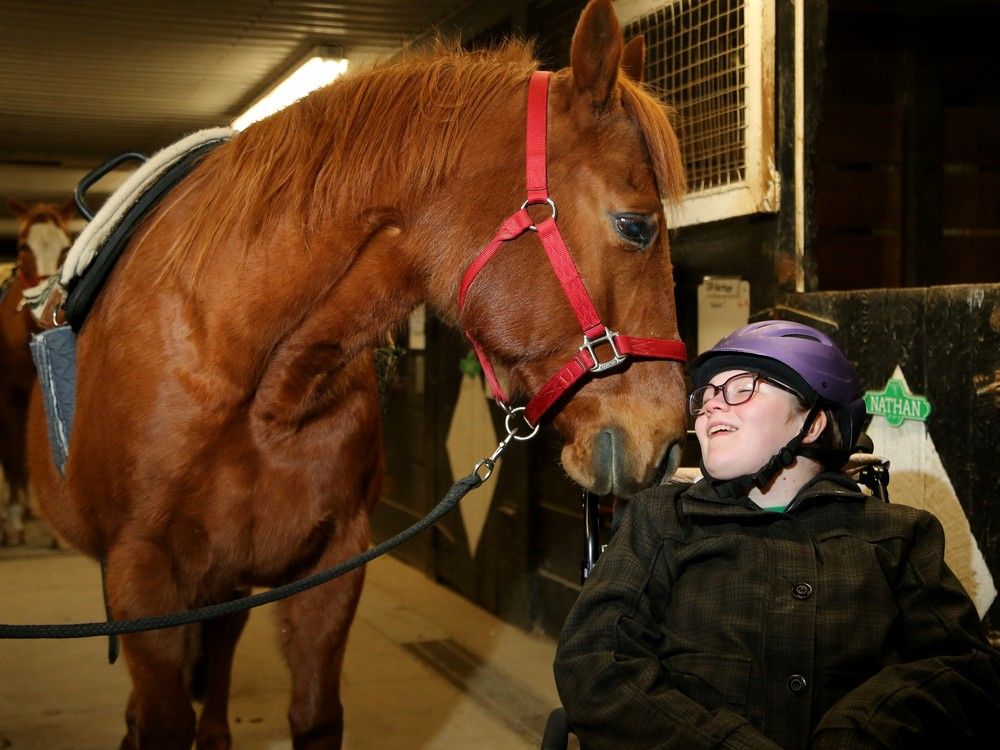
When 13-year-old Keira Reaney was asked what image she’d like printed on her customized ankle and foot orthotics, she chose a photo of the first horse she rode during therapeutic riding lessons.
The photo reflects the profoundly positive impact riding has had on the teenager’s life.
“Keira loves Chica so much,” says her mom, Emma Reaney, of the horse.
After contracting bacterial meningitis at just 15 months old, Keira suffered several
strokes
, which impacted each side of her body in different ways, says her mother. “One of the big side effects was loss of trunk control, trunk strength, and needing to rehabilitate her ability to mobilize.”
Keira underwent intensive physiotherapy at CHEO, then attended the CHEO School before transitioning to the public school board. At age four, when her parents were looking for activities for their little girl who sometimes uses a wheelchair but could also get around with a walker, a physiotherapist suggested therapeutic riding.
“Horses have a gait similar to humans, so it’s very good sensory information for the brain in terms of learning gait,” explains Emma. “The games and exercises amplify the work we’re doing in physiotherapy and occupational therapy.”
Located on a 20-acre pasture in Greely, a rural community south of the city, the Therapeutic Riding Association of Ottawa-Carleton (TROtt) has been providing riding lessons and other equine-assisted programs for children and adults with physical, developmental and learning disabilities for half a century. But for participants like Keira, riding offers more than physical benefits. It has grown her confidence and provided a sense of community.
“I love riding, I love the horses, I love the people,” Keira beams as she reflects back on her nine years at TROtt.
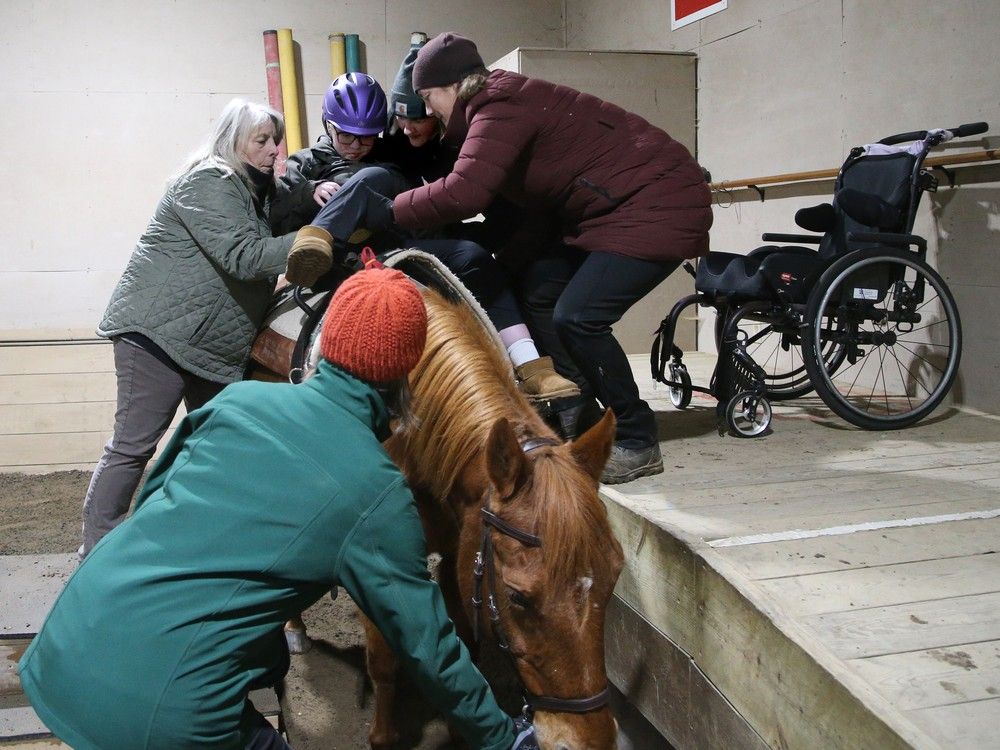
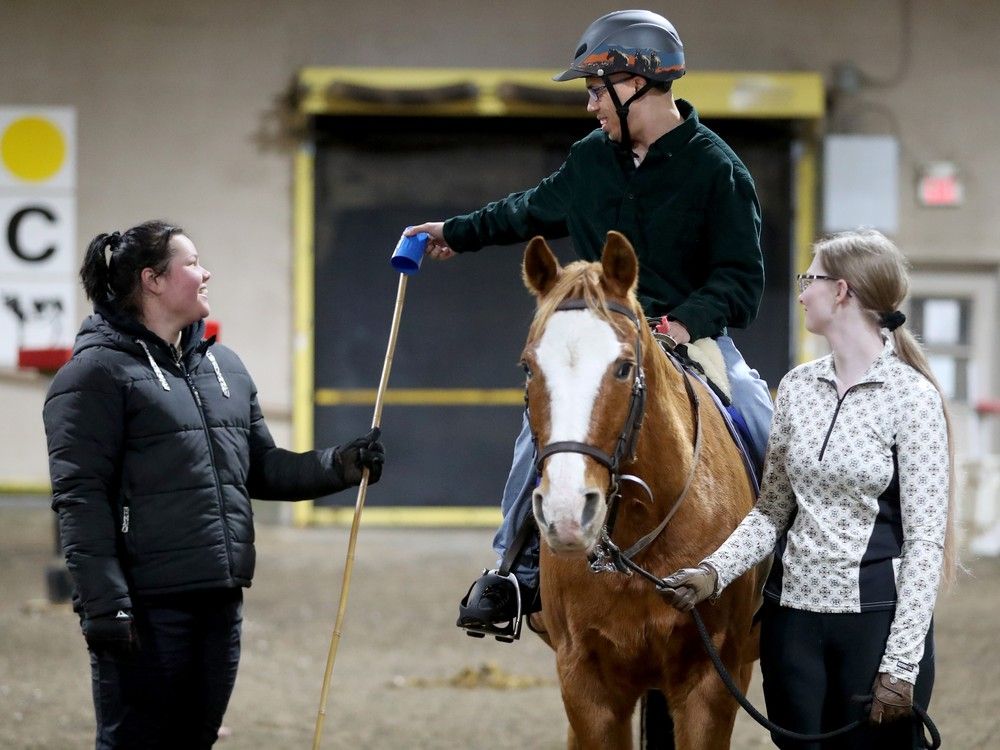
Keira’s sessions take place in TROtt’s indoor arena with three other riders. Amanda, a certified instructor, leads participants through games and activities — like relay races or obstacle courses — focused on developing motor and sensory skills, as well as engaging muscle groups. With the help of her parents, Keira shares how Grant, Tasha and Lydia — the trio of volunteers who assist her — have become her cherished friends, who chat and joke with her throughout their sessions. The volunteers also ensure Keira’s safety on the horse.
“Keira has a hard time with balance. To make sure she’s secure, they have somebody on either side [when she’s on the horse],” says Emma. “Tasha and Lydia link their arms over her legs, just as an extra precaution.”
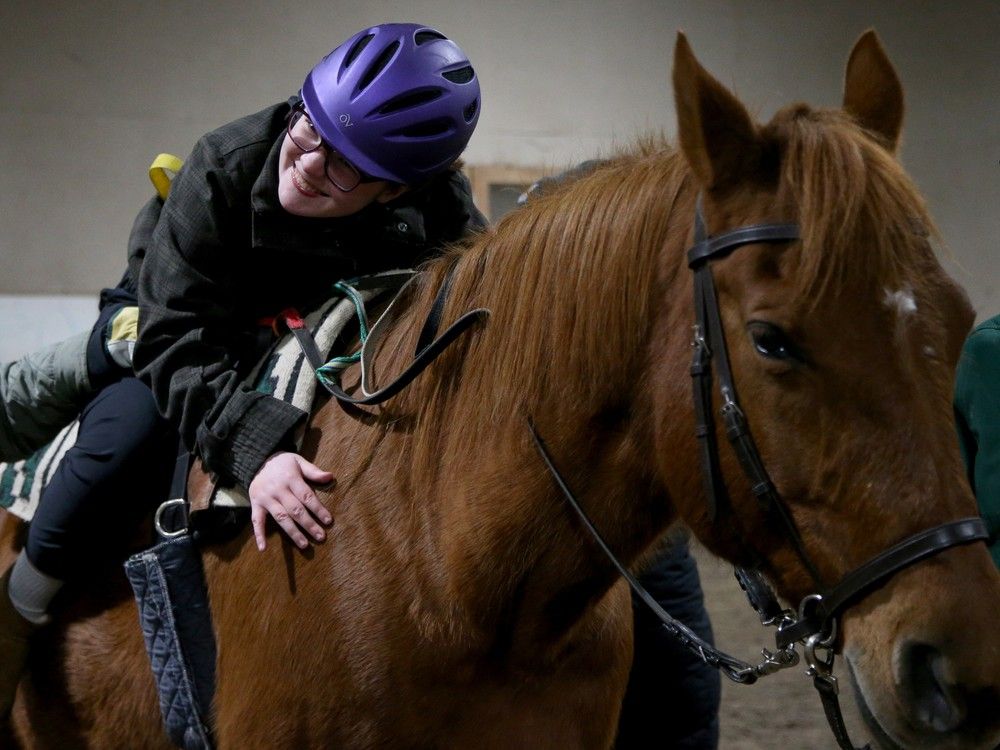
Grant, who connected with Keira on day one and drives over an hour to TROtt, leads the horse around the arena during her program.
“The volunteers really facilitate that independence for her,” says Emma. “Not needing to have us involved is a nice thing for her.” She and her husband, Scott, watch Keira ride from the viewing gallery.
Gregory Harper, a participant in TROtt’s adult program, says he loves therapeutic riding for the social connections he’s created.
“I’ve made countless friends there,” he says Harper. “I can’t explain to you just how fun and how comforting it is to be around that team and those beautiful animals. It’s very calming, very soothing for me.”
Born premature at just 23 weeks, Gregory lives with cerebral palsy. Therapeutic riding has brought physical improvements.
“I have a lot less stiffness,” explains Gregory. “It’s actually given me a lot more stability when standing.”
As Carol Harper and her husband, Glen, look back at their son’s early challenges, they’re grateful for everything riding has offered him.
“At one point, he was never going to be able to walk, so for him to get on a horse was never something we thought may happen,” says Carol. “From the time he started a year ago — barely able to put his leg over a horse — now he’s able to come off. He’s sitting up straight, not complaining about his sore legs afterwards.
“He has balance, energy and dedication; he’s actually our inspiration.”
While the history of equine therapy dates back to ancient Greece, the concept gained considerable traction in Canada after the Second World War.
“Horses were an important part of supporting veterans who had been injured, both their physical and mental rehabilitation,” explains Dianne Urquhart, executive director at TROtt.
In the 1970s, says Urquhart, the concept of inclusion for people with disabilities was beginning to grow. This set the stage for Lelia Sponsel — an educator and a German-trained equestrian — to establish TROtt in an effort to bring the sport of dressage to people with disabilities.
“While our origin was para riding, we quickly incorporated other kinds of things,” says Urquhart of the organization. “Many of the early riders were referred from the children’s hospital, and it was seen as a physical therapy — but fun.”
In addition to its riding program, TROtt also offers an equine assisted learning program. Participants benefit from interacting with horses — stroking them, leading them and learning about their behaviour — without actually riding.
“The horse can be a mirror for a lot of things,” says Urquhart. “Research shows unmounted programs to be very beneficial for people with mental health challenges, people who are neurodiverse, or those experiencing life-changing circumstances like cancer diagnoses or early dementia.”
From its humble beginnings with just four rented horses, TROtt now has 15 resident horses, including two miniatures used in ground-based programs. The organization serves about 120 people per week, with participants ranging in age from four to 99, and there’s currently a two-year waitlist for the mounted program.
Over 200 volunteers support all aspects of TROtt’s operation. For participants like Keira and Gregory, the kindness and energy of those volunteers is what inspires them to keep coming back.
“It’s a very warm and welcoming place,” says Gregory. “I really enjoy it; I will continue to do it until I can’t anymore.”

