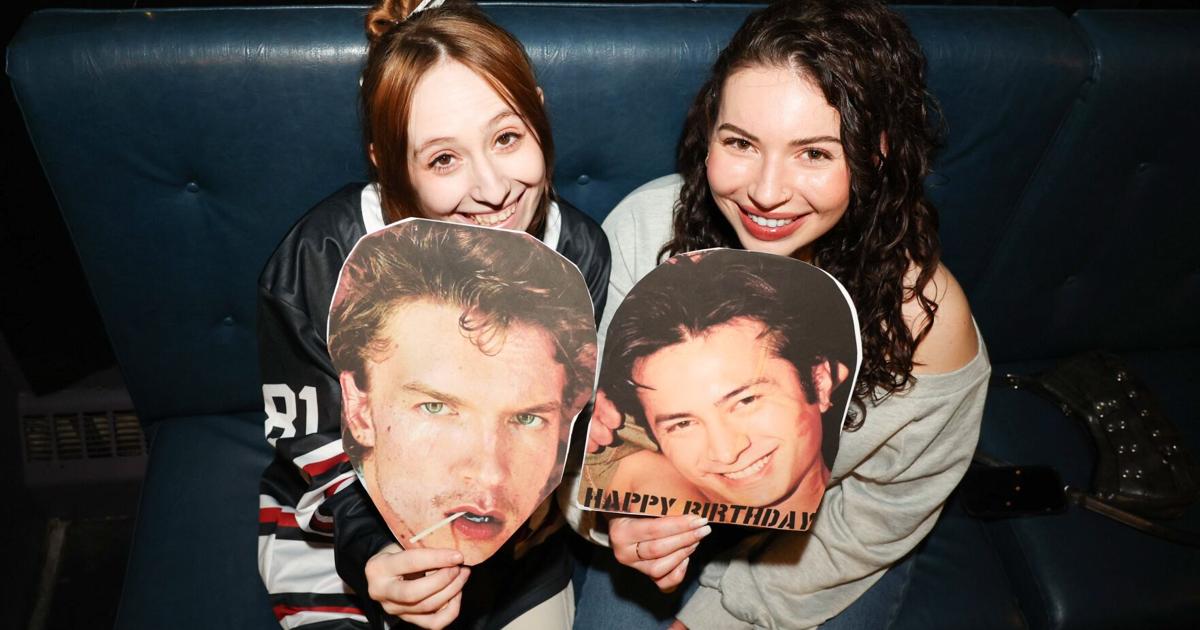
As the clock ticks toward midnight, the temperature inside the Phoenix Concert Theatre is reaching boiling point.
Under blue and purple lights, hundreds of people — mostly young women — are grooving to Lady Gaga and the Weeknd, occasionally erupting into carnal screams as footage of shirtless actors Hudson Williams and Connor Storrie flashes on screens behind the DJ. Some fans wave cardboard cut-outs of the stars’ faces glued to Popsicle sticks.
This isn’t a boy band concert, but the front lines of the “Heated Rivalry” phenomenon in Toronto. Based on Rachel Reid’s bestselling novels, the Crave television series follows the decade-long secret romance between rival hockey stars Shane Hollander (Williams) and Ilya Rozanov (Storrie).
Since its December finale, the show has become a cultural juggernaut. Look-alike contests have cropped up from Sydney to New York. Williams and Storrie appeared at the Golden Globes and carried the torch at the Milan Olympics. On Monday, Williams was named a face of fashion brand Balenciaga. In Toronto, the show has spawned a cottage industry of sold-out trivia nights, drag brunches and dance parties fuelled by a growing fandom whose fervour is on par with the legendary Swifties.
“I can’t focus on my school work because this fandom has taken over my life,” said Amy Ghuman, a University of Toronto grad student, who recently created a 62-page slide presentation called “Heated Rivalry: An Overanalyzation by Someone Who Needs to Get a Grip” as an outlet for her obsession. (The most loyal viewers have settled on “Loons” as their fandom’s name, inspired by the show’s famous “Stupid Canadian Wolf Bird” quote.)
Ghuman says the appeal is the instant social bond sparked by the fandom. Before the dance party, she linked up with four strangers via TikTok. Almost immediately, they became a tight-knit unit of revellers.
“There’s a level of safety and support because everyone here loves the show,” said Ghuman.
For Nia Lee, the connection to “Heated Rivalry” is literally skin-deep.
After joining the active online community of fans who “reheat” (rewatch) the show, she inked the phrase “You Deserve Sunshine” across her forearm last month. It’s a nod to the famous line spoken by Kip’s best friend, Elena, to hockey star Scott Hunter: “He deserves sunshine, and so do you.”
Lee says the tattoo reminds her of both the show and of the fans who’ve given her a feeling of unity. “I genuinely think people just want something to look forward to, whether that’s hope, joy or whimsy,” she said. “This is where I want to be.”
John Paul Catungal, an assistant professor at the University of British Columbia, said the in-depth debates about Easter Eggs baked into the show’s cinematography is part of the fun.
“This is a show, unlike many others, that has cultivated such community,” said Catungal. “In a world that attempts to individualize us, I think there’s a craving for that kind of connection.”
Jessica Sorrentino, who runs a packed calendar of Toronto trivia nights as “Quizmaster Jess,” said she hasn’t seen a fandom like this before. In 2026, she’s hosted 17 sold-out trivia nights, with demand for more.
“The last time there was a frenzy to this degree was when Taylor Swift was in town — I did nine sold-out nights,” said Sorrentino. “From a trivia perspective, ‘Heated Rivalry’ is more popular than Taylor Swift.”
At a recent trivia gathering, Amrita Shome struck up a conversation with a fellow fan at a table reserved for solo players. The duo soon made plans to attend other fan events together.
“It’s an easy topic we both like; it helps break the ice,” Shome said. “Fandoms always end up becoming friends.”
Exactly why “Heated Rivalry” is resonating this strongly remains a bit of a mystery. Some fans suggest its theme of unity offers a reprieve from a divisive political climate, while others say it’s a rare opportunity to see an LGBTQ storyline where the characters are allowed to experience happiness, rather than experience suffering.
Minnesota hockey player Jesse Kortuem came out publicly on social media after watching the series, saying the nuanced portrayal of LGBTQ athletes forced him to confront why he remained closeted from his former local league teammates.
“It stirred up something where I finally said, I can’t be silent anymore,” Kortuem told the Star. “My hope is to reach those who really need to hear it most.”
“That young player who is about to walk out because he doesn’t feel safe in the sport. Parents, other players, coaches. (I want) them to know that how you show up to the rink matters. Your language in the locker room matters.”
Ever Fisher-Quann, who has watched the series dozens of times, sees parallels with the explosion of romance fiction, particularly the genre’s popular enemies-to-lovers trope, which pits two rivals against each other who eventually sleep together, then fall in love.
Then there’s the intense chemistry between the two leads.
“People love to watch hot sex scenes,” said Fisher-Quann.
On the Phoenix dance floor, Brian Donnellan said he was initially taken aback by the “bachelorette party energy” in the room. Eventually, he warmed to the undeniable positivity.
“We’re living in a time where there’s a lot of hate,” he said. “But this is a celebration of love.”