

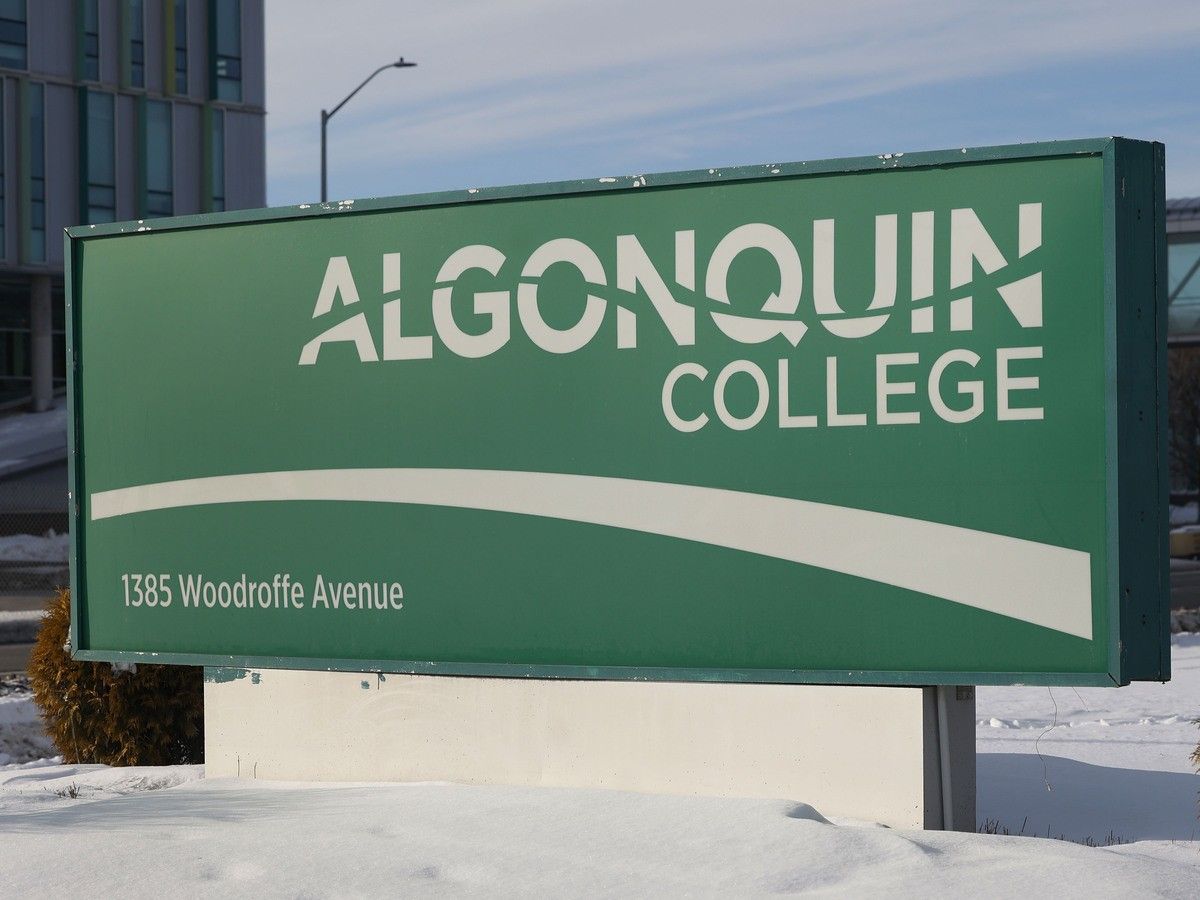
Suspending arts and hospitality programs at Algonquin College will have a serious impact on Ottawa’s economy, business and arts organizations say.
Algonquin
released a list of 30 recommended program cuts
on Jan. 22.
On March 2, Algonquin’s board of governors
voted to cancel
the “consolidated” list of all 30 programs after only an hour of discussion in a virtual meeting.
This is the second round of cuts for Algonquin. Last year, the college’s portfolio contained 236 programs. After
the first round of cuts
, 199 programs remained. The March 2 decision cut that number to 169. Programs on the list for elimination this time included music, media and film foundations, music industry arts and illustration and
concept art
.
Cancelling music industry arts (MIC) will have an impact that is “profound and generational,” said Ottawa Music Coalition executive director Melanie Brulée, an award-winning Franco-Ontarien singer-songwriter.
Arts and culture are propping up plans to revitalize Ottawa’s downtown core and to attract talent in other areas like health care and tech, Brulée said.
Options for the $200 million ByWard Market revitalization plan
include a replacing a garage on Clarence Street with an arts hub, for example.

“If we don’t have people working behind the scenes to actually make these events happen, then you have to import people from out of town,” she said. “Students who want to be in the industry are going somewhere else to study, and they’re not necessarily coming back to Ottawa.”
“It’s devastating for festivals in a sector that is already under considerable financial strain,” said Tara Shannon, executive director of the Ottawa Festival Network, which has 170 members. If festivals can’t access the talent that lives in Ottawa, costs will go up, and they will be passed in to festival-goers, she said.

Algonquin’s music industry arts program accepts about 90 students a year, and graduates have an employment rate of more then 92 per cent. They work at festivals, venues and live events and in music production, but also at conferences and corporate events, program co-ordinator Colin Mills said. Graduates have included Elijah Woods, a singer-songwriter and producer now based in Los Angeles and Jacob Lacroix-Cardinal, a Juno Award-winning mixing engineer.
“My fear is that students will leave Ottawa for that education and never come back,” Mills said.
In a letter to Algonquin, Sandrine Pechels de Saint Sandros, the CEO and film commissioner of the Ottawa Film Office, said she had serious concerns about Algonquin’s decision to suspend the media and film foundations program.
Ottawa has hosted
dozens of feature films
and television series including 24 Karat Christmas, Hot Frosty, Geek Girl, Eaux Turbulentes and Michael Cera’s
Love is Not the Answer
. In 2025, live-action production in Ottawa generated more than $62 million in local production spending, she said. That figure rises to above $100 million when animation and in-house projects are also taken account.
Still, the industry faces significant workforce challenges, Pechels de Saint Sandros said. Many graduates from Algonquin and Collège La Cité find career opportunities in Toronto, Montreal and Vancouver. That leaves gaps in Ottawa and foundations programs like music, media and film help fill those jobs. The program is essential to sustaining Ottawa’s competitiveness as a production destination, she said.
“Suspending the program in a time of growth will reduce pathways into the industry and limit the development of locally trained talent precisely when the sector most needs it,” she said.
The group that represents Ottawa’s 18 business improvement areas (BIAs) said Algonquin students would come from all over Ontario and contribute to the Ottawa economy as part-time and seasonal employees in restaurants and cafés, retail, festivals and events.
The impact from winding up the Algonquin programs won’t come a few years down the road, but will be felt immediately, said Michelle Groulx, chief advocate for the Ottawa Coalition of Business Improvement Areas and an Algonquin graduate.
“This is impacting an entire talent pool and talent acquisition,” said Giroux, who argues that Algonquin programs help “anchor” young talent in Ottawa. Many graduates remain in the city to launch their own enterprises, opening restaurants, cafés, specialty services and retail concepts that add character to Ottawa’s main streets and give them a sense of place.
“BIAs are cultural economy drivers,” Groulx said, pointing to events hosted by these organizations ranging from an Orléans craft beer festival to Taste of Little Italy and the Chinatown night market.
“They create and animate unique experiences. These are all organized by event managers,” she said.
Speaking to the board of governors on March 2, Algonquin president and CEO Claude Brulé said the province had indicated the need to focus on key sectors such as health care, skilled trades, construction and transportation, mining and energy technology, advanced manufacturing technology and STEM.
Some of the $6.4 billion in new provincial funding for colleges and universities announced in February is contingent on offering programs in these areas, Brulé said.

In an interview, Algonquin senior vice-president academic Julie Beauchamp said administrators heard loud and clear about the value of the programs recommended for suspension. Cutting the programs was not a judgment on the quality of the programs Algonquin has provided, but a realignment of the portfolio based on the current reality, she said.
“These are programs that people are passionate about. It really was a portfolio decision.”
Algonquin will continue to have a focus on the creative industries, but it will be integrated into interdisciplinary fields such as AI interactive content, which combines technology with creative design, Beauchamp said.
“It’s a re-imagining of the portfolio. It’s a shift from what has been traditionally understood.”
In recent weeks, people in the creative industries have been talking about opening a private college in Ottawa with courses ranging from the business side to the technical and production sides — including skill development and training for some of the programs that Algonquin has cancelled, Shannon said.
“There’s a need and it’s viable financially.”
Related
Our website is your destination for up-to-the-minute news, so make sure to bookmark our homepage and sign up for our newsletters so we can keep you informed.

