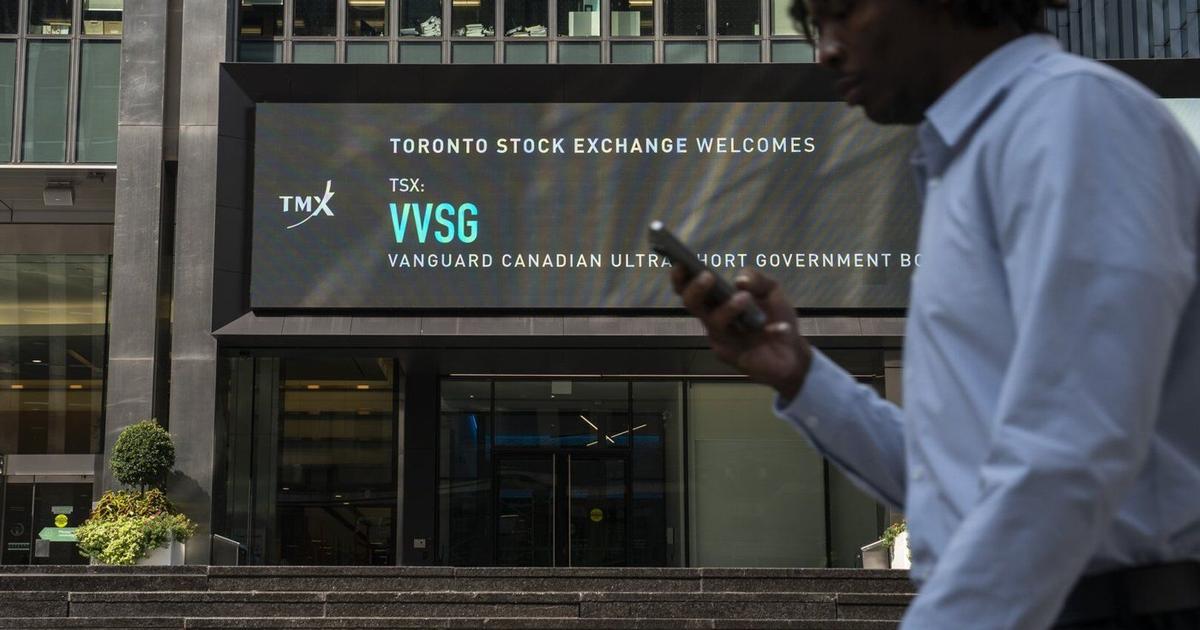
TORONTO – Stock markets in Canada and the U.S. dropped on Friday amid the dual effect of oil prices spiking above US$90 per barrel and weaker U.S. jobs data.
“The concern here that’s been creeping into the market throughout the week is that this conflict is going to be longer than originally discussed and oil prices, energy prices are going to remain higher for longer,” said Dustin Reid, vice-president and chief strategist for fixed income at Mackenzie Investments.
The April crude oil contract was up US$9.89 at US$90.90 per barrel.
Oil prices have surged as the war has expanded and included areas critical to the production and movement of oil and gas in the Middle East. Much will depend on what happens with the Strait of Hormuz. Roughly a fifth of the world’s oil typically sails through the narrow waterway off Iran’s coast.
Earlier in the week, Reid said the primary concern in markets was that higher oil prices would lead to inflationary pressures, but that has evolved into wider concerns about the economy.
“I think we’re at the cusp of potentially a thematic change where the market is not necessarily trading the higher inflation theme, it’s trading the lower growth theme,” he said.
If oil prices spike further, like to US$100 per barrel, and stay there, some analysts and investors say it could be too much for the global economy to withstand.
To be sure, the U.S. stock market has a history of bouncing back relatively quickly following conflicts in the Middle East and elsewhere, as long as oil prices don’t jump too high for too long. Uncertainty about just how high oil prices will go this time around and for how long caused frenetic swings across financial markets this past week, sometimes hour by hour.
U.S. President Donald Trump’s most recent signal on the war was that he wants an “unconditional surrender” of Iran, apparently ruling out negotiations.
Meanwhile, U.S. employers unexpectedly cut 92,000 jobs last month, a sign that the country’s labour market remains under strain.
Usually when the economy is unsteady and the job market is weakening, the U.S. Federal Reserve cuts interest rates to give things a boost. Lower rates can make it easier for households to get mortgages and for companies to raise money to expand, while also lifting prices for stocks and other investments. The Fed cut its main interest rate several times last year and had indicated more were to come this year.
But lower interest rates can also make inflation worse. And the Fed’s hands may be increasingly tied because spiking oil prices are pushing inflation higher due to disruptions for the energy industry.
In New York, the Dow Jones industrial average was down 453.19 points at 47,501.55. The S&P 500 index was down 90.69 points at 6,740.02, while the Nasdaq composite was down 361.31 points at 22,387.68.
The S&P/TSX composite index was down 526.25 points at 33,083.72.
In the Canadian stock market, most sectors were in negative territory, with consumer cyclicals leading the declines.
With the Middle East conflict taking centre stage, analysts are warning it could drive up costs across Canada’s supply chains and compound price pressures at the grocery store in the weeks to come.
Fraser Johnson of the Ivey Business School at Western University says that while Canada doesn’t get oil or natural gas from the Gulf region, consumers could feel the jump in global energy prices beyond the gas pumps.
“Cost of living is going up and to see consumer discretionaries, at least from a TSX perspective, lead the pack in terms of downside, I think is helping to illustrate that view that the market is making that thematic switch, so I think that’s actually a really important takeaway from today’s price action,” Reid said.
The Canadian dollar traded for 73.46 cents US compared with 73.12 cents US on Thursday.
The April gold contract was up US$80.00 at US$5,158.70 an ounce.
This report by The Canadian Press was first published March 26, 2026.
Companies in this story: (TSX:GSPTSE, TSX:CADUSD)