There are lots of things that keep Premier Doug Ford awake at night — not least of which is his iPhone that he refuses to turn off.
Ford, who only gets about three or four hours of sleep nightly, famously hands out his personal phone number to the public, meaning it is ringing and pinging at all hours.
During those rare silences in the wee hours when he’s not texting or chatting, the three-term premier may be reflecting upon what he wants his legacy to be.
In 2018, a newly elected (and more overtly right-leaning) Ford hoped to be celebrated for cutting the size of government, reducing taxes, making Ontario more business-friendly and lowering the legal minimum retail price for breweries to “a buck a beer.”
While the Progressive Conservatives, in his telling, “have never, ever raised tax,” crusade against red tape and liberalized booze sales, he does run the largest government in the history of the province, spending 40 to 50 per cent more annually than predecessor Kathleen Wynne’s Liberals.
His administration is also facing an ongoing RCMP criminal probe into the aborted $8.28-billion Greenbelt land swap, and Ontario Provincial Police are investigating a company that received money from the Tories’ $2.5-billion Skills Development Fund. The Tories deny any wrongdoing in both controversies.
But a quarter of a century from now, what will Ford be remembered for?
When the premier let slip that Billy Bishop Toronto City Airport’s runway would be extended to accommodate jets and that a new 2-million square foot Toronto convention centre would soon be announced — likely at Exhibition Place, although an artificial island scheme has been floated — it showcased a desire to intertwine his legacy with massive infrastructure projects.
“I just can’t mention where it’s going to be or how we’re going to build it, but it’s going to be another shock and awe when people see it,” he enthused Monday at the Metro Toronto Convention Centre, which opened in 1984.
“Wait until you see the design of the world-class convention centre that will attract opportunities and jobs to this great province. We’re going to make it spectacular, absolutely spectacular, and that announcement will be coming shortly.”
Those close to him, speaking confidentially in order to recount private conversations, maintain he has matured since his earliest days in office when he simplistically sloganeered about being “for the people” and against “the gravy train” of government, echoing the mantras of his late brother, Rob Ford, Toronto’s mercurial mayor from 2010 to 2014.
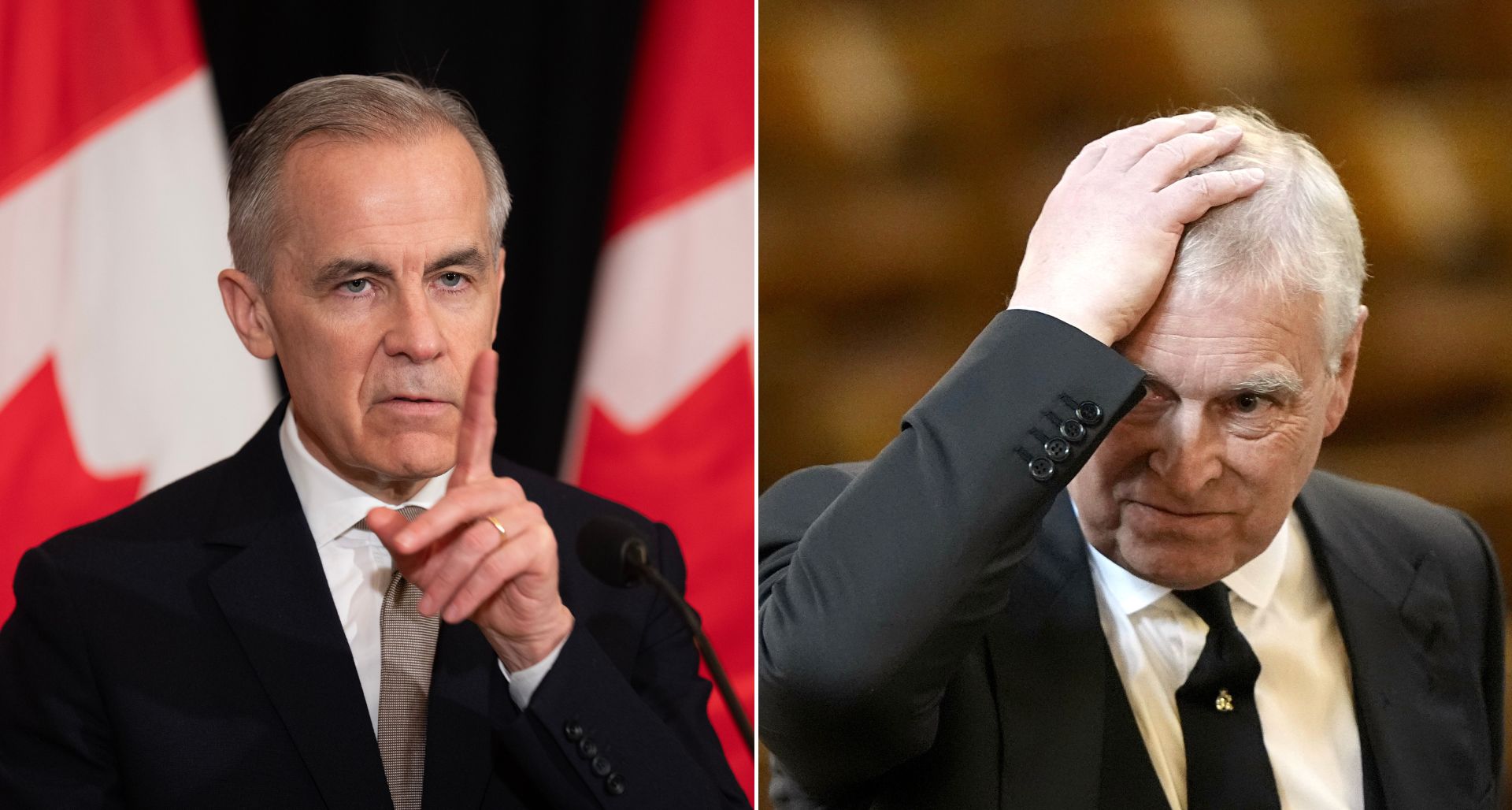
Forced more to the centre of the political spectrum by the COVID-19 pandemic — when he worked closely with Liberal prime minister Justin Trudeau on the health emergency that killed 60,871 Canadians, including 18,873 Ontarians — he is now in lockstep with Prime Minister Mark Carney in the fight against U.S. President Donald Trump’s tariffs.
“His thinking has evolved and he has evolved,” said a confidant, noting Ford and Carney have each other on speed dial to discuss Trump’s trade war on Canada and ways to make the country less reliant on the U.S.
Now, the premier wants to be known for building things up, not tearing them down, such as his impetuous 2018 decision to cut the size of Toronto city council in half in the middle of a municipal election campaign.
That means construction of new transit like the Ontario Line subway in Toronto, freeways such as Highway 413 and the Bradford Bypass, hospital projects in every corner of the province, nuclear reactors, a road to the Ring of Fire mineral region, and the contentious Ontario Place redevelopment, anchored by a relocated Ontario Science Centre.
One year into his third term in office, Ford, who has also pledged to build a Mississauga-Scarborough tunnel beneath Highway 401 that would cost tens of billions of dollars, insists he’s just getting started.
“I want to be premier forever! I’m just pumped up. We’re getting things done,” he raved at the Feb. 26 unveiling of the architectural renderings for the new Science Centre that should open on the lakefront within three years.
That would be in time for the next provincial election, expected in 2029 or 2030.
Should Ford, 61, be successful in that fourth campaign, he could surpass Bill Davis, who governed from 1971 to 1985, as the second-longest serving premier in Ontario history. (The record is held by Oliver Mowat, was in office from 1872 to 1896.)
Still, insiders acknowledge a lot can happen between now and then.
Ford’s gamble to hold a snap election in February 2025 — 17 months before the scheduled vote — paid off thanks to the Trump card.
But the existential threat posed by the Republican U.S. president, who faces challenging midterm elections this November that may result in a Democratic Congress constraining his powers, could dissipate before Ontario voters next head to the polls.
Given that Ford ran on the slogan “Get It Done” in the 2022 campaign, Tories privately concede the premier now must show progress on the many projects he promised.
“Now it really is about getting it done,” said a second senior official, who was not authorized to speak for attribution.
“People want to see results, people expect to see results,” the official added.
That’s one reason Ford, unlike some of his Tory predecessors who were antagonistic toward organized labour, is aligned with the unions that represent construction workers and other trades.
Indeed, public polls suggest impatience is growing — the popularity of the premier’s Tories has been dipping month by month in Abacus Data’s tracking survey from an all-time high of 53 per cent last August to 44 per cent in February.
Opposition parties charge Ford is better at talking the talk than walking the walk.
“This crisis is real and it’s everywhere. We have seen no houses being built — Ontario has the worst housing record in the country,” said NDP Leader Marit Stiles, arguing public safety concerns are also mounting.
“Right now, people feel less safe in their communities than ever before,” said Stiles, imploring Ford to stop campaigning and start working.
“Now, apparently, he wants to be premier forever. He thinks he has that right,” the New Democrat said.
Interim Liberal leader John Fraser — whose party, which governed from 2003 to 2018 under Wynne and Dalton McGuinty, will choose a new leader in November — said Ontarians know “things aren’t getting any better” under the Tories.
“People feel it when they can’t get a family doctor. People feel it if their son or daughter are going to have a hard time getting a higher education because it’s going to cost them more money,” said Fraser, adding Ford is hoping to distract voters with headline-grabbing infrastructure announcements.
“The premier is just trying to tell us … ‘Hey, everything’s OK, don’t worry. Look at this, we’re doing this thing over here. This is great, I’m building all this stuff. Look, folks, things are wonderful,’” he said.
“They’re not.”
Error! Sorry, there was an error processing your request.
There was a problem with the recaptcha. Please try again.
You may unsubscribe at any time. By signing up, you agree to our terms of use and privacy policy. This site is protected by reCAPTCHA and the Google privacy policy and terms of service apply.
Want more of the latest from us? Sign up for more at our newsletter page.