

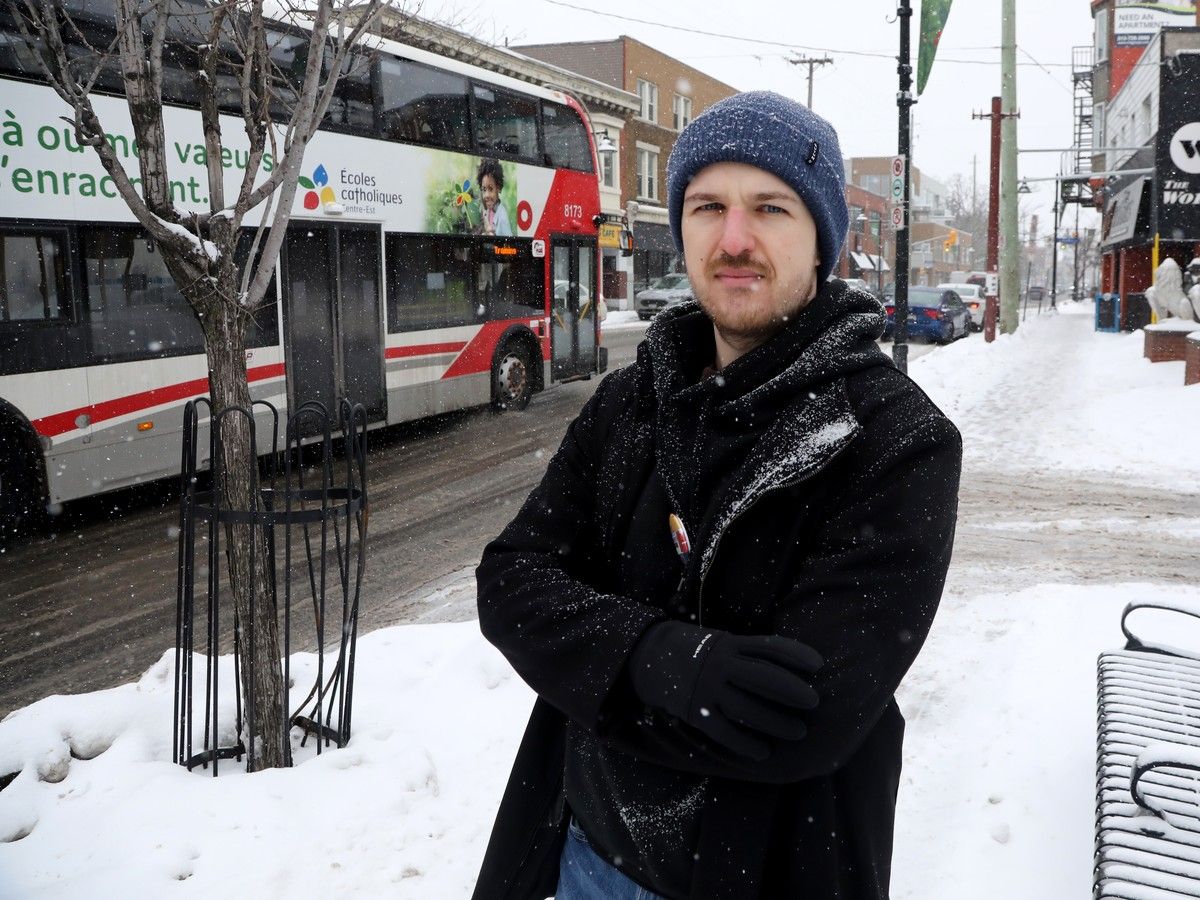
Peak period bus-only lanes may soon be introduced along Bank Street as the City of Ottawa explores ways to
improve OC Transpo service
and
reliability
through the busy Glebe corridor.
A proposed 15-month pilot project would establish bus-only lanes from 7 to 10 a.m. northbound and from 3 to 6 p.m. southbound along Bank Street between Highway 417 and the Rideau Canal, according to a report set to go before committee on March 30.
City staff are also proposing four permanent 24-hour bus-only segments along Bank near Fourth, Holmwood and Aylmer avenues, resulting in the removal of 17 on-street parking spaces.
But the plan is proving to be controversial with local community groups. Some argue further parking reductions are needed to improve transit reliability, while others worry that any loss in parking could hurt area businesses.
Bank Street ‘a challenging corridor with many priorities,’ staff say
Bank Street is one of Ottawa’s busiest corridors.
As the main artery through the Glebe, it carries a mix of cars, buses, pedestrians and cyclists. It also serves as a key access route to major events at Lansdowne Park, including
Charge
,
Redblacks
, Atlético and Rapid games.
On a typical weekday, more than 6,900 transit passengers are estimated to travel this corridor on bus routes 6 and 7— two of the highest ridership routes in the city.
However, both routes also ranked among OC Transpo’s top three for undelivered trips in February 2026, each posting a delivery rate just below 93 per cent, according to data presented to the transit committee on March 12.
Up to 720 vehicles per hour travel along Bank Street in the peak directions — northbound in the morning, southbound in the afternoon — according to staff. While all intersections in the corridor are reported to operate “under capacity,” delays still occur as cars wait to turn left off Bank or to enter and exit on-street parking.
Current rules prohibit on-street parking during two-hour peak windows in the peak direction. This allows for two general traffic lanes in the peak direction and one lane in the other direction.
Outside peak hours, including weekends, Bank is reduced to one lane in each direction, with curbside lanes accommodating about 146 on-street parking spaces.
“Because the corridor is narrow, choices must be made by council about how space is allocated to the different uses of the street,” the report states.
Plan doesn’t go far enough, advocates say
The advocacy group Strong Towns Ottawa is
urging the city to go further
by introducing 24-hour bus lanes along Bank Street.
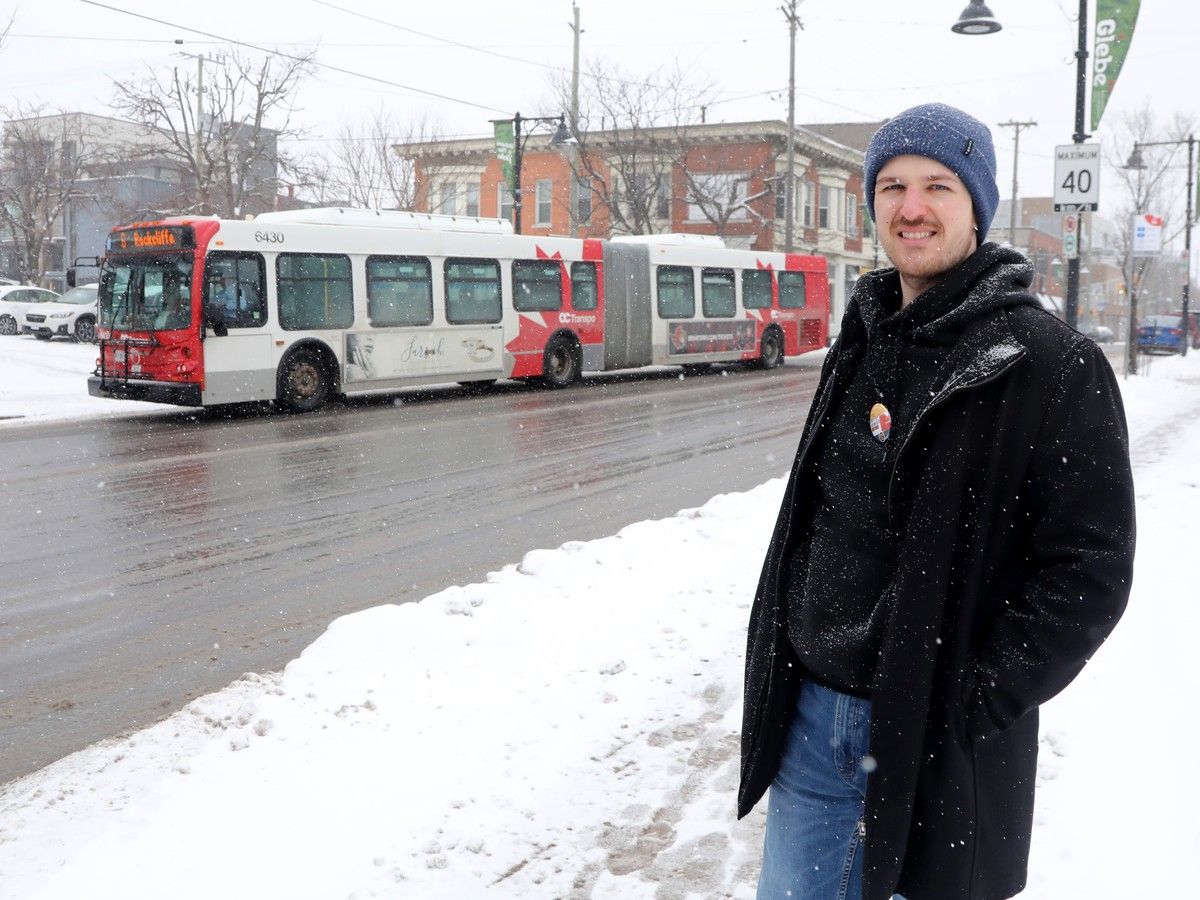
“What we’ve been pushing for is to have that parking lane turned into a bus lane for a substantial period of time,” said Marko Miljusevic, a Strong Towns Ottawa board member.
“You’d get a huge benefit through the reliability of your transit system, which, especially in recent history, we’ve seen get worse and worse.”
Miljusevic argues that temporary peak-period bus lanes like those proposed by the city don’t go far enough and could even contribute to congestion.
While peak hours see the highest traffic volumes, he says delays for buses on Bank Street are not limited to those times and often persist during off-peak periods.
“They actually get slowed down quite substantially after (peak) hours because, once that general travel lane turns into parking, now the buses have to basically merge in and out of the parking lane at any bus stop, and that’s really where a lot of the delay comes from,” Miljusevic said.
However, that approach comes with a significant trade-off: implementing 24-hour bus lanes would mean removing most on-street parking along Bank.
City staff say on-street parking on Bank is “well used,” with usage rates between 50 and 60 per cent during weekday daytime, increasing to between 70 and 85 per cent on weekday evenings and more than 90 per cent on weekends.
Miljusevic, however, argues that parking remains available nearby, including on side streets and in local garages, such as a facility on Second Avenue.
The city report acknowledges the interest in extending bus lanes and reducing on-street parking, but notes the issue is divisive.
“Any extension of the bus lane hours outside the peak period, peak direction must carefully weigh the tradeoffs associated with reducing on-street parking and curbside availability,” the report states.
Losing parking would be ‘detrimental,’ BIA says
The Glebe Business Improvement Association, which represents about 400 businesses and property owners, is raising concerns over any proposed reduction in parking on Bank Street.
The city’s plan proposes the permanent removal of 17 parking spots to accommodate the new bus-only segments. It also estimates that about 70 spaces on each side of the road will be unavailable for an additional hour each day as peak-period parking restrictions are extended.
“It’s not just 17 spots we’d be losing,” said Darrell Cox, executive director of the BIA. “It’s the potential of a couple hundred customers per day using those spaces, shopping in our stores, spending money and supporting our small-business economy in the Glebe.”
Cox said the spaces experienced high turnover throughout the day and also functioned as key loading zones for local businesses.
“We do support improvements to active transportation and transit, but it has to be balanced, and it can’t be at the expense of the business community,” he said.
Peak hours, Cox argues, aren’t just for the roads.
“With afternoon parking restrictions going from 3 to 6 p.m., that’s peak business time,” he said. “If we lose an hour of parking, that’s a huge potential loss of revenue for our businesses.”
The initiative is projected to cost the city $2 million, plus additional expenses for signage and pavement markings, according to the report. Cox said he’d prefer to see that funding directed toward other priorities in the neighbourhood, such as an increased police presence.
The Glebe is clearly recognized as a local, city-wide and regional destination,” he said. “It’s not designed to be a transit corridor. We need to maintain that main street feel that has accessible parking for everybody.”
The report will go before the public works and infrastructure committee on March 30. If the plan passes through council, the pilot project period is expected to begin in the summer of 2027.
Related
Our website is your destination for up-to-the-minute news, so make sure to bookmark our homepage and sign up for our newsletters so we can keep you informed.

