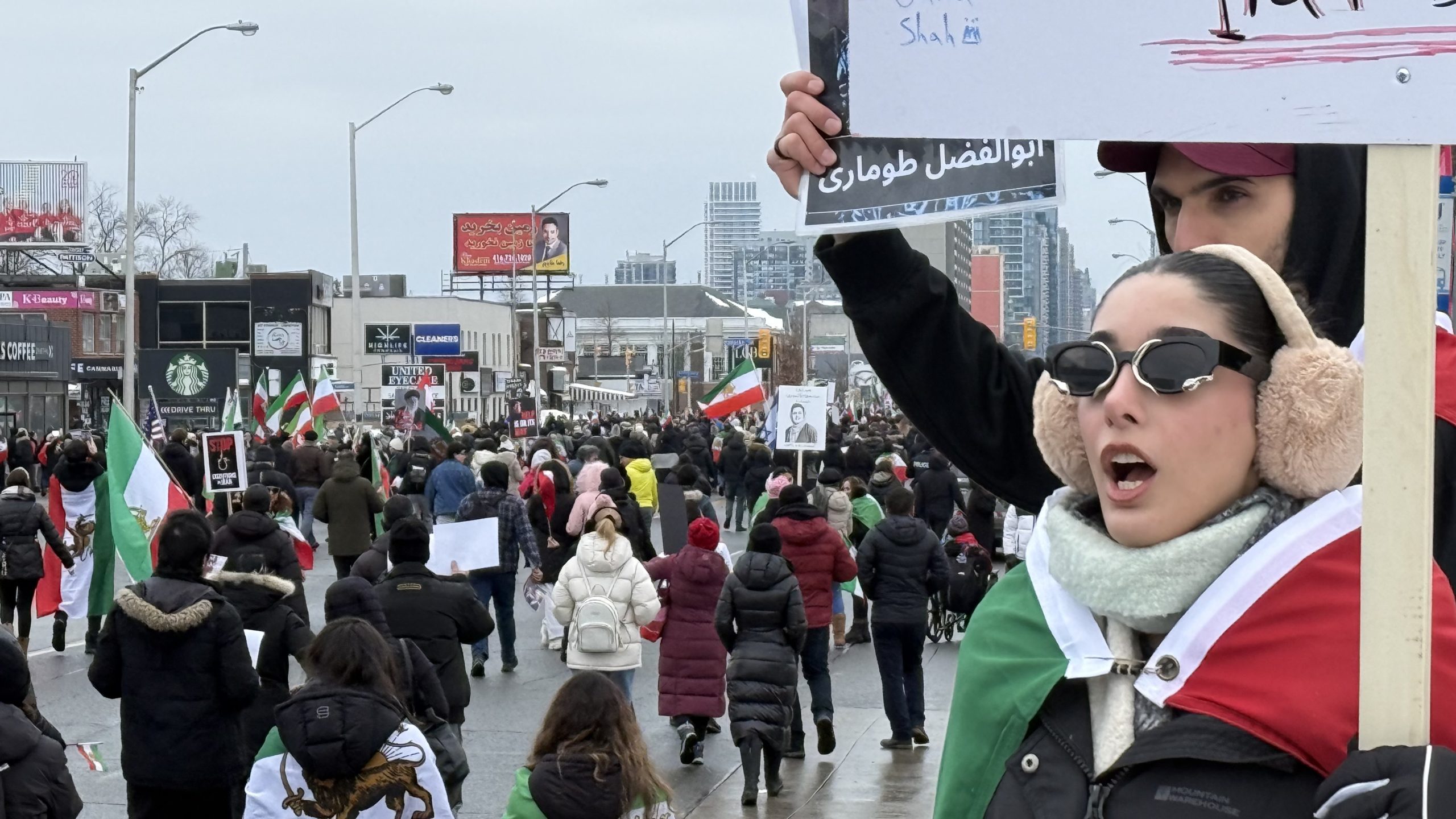
Toronto police Deputy Chief Frank Barredo defended a new ban on pro-Palestinian demonstrations in residential areas of a predominantly Jewish North York community, calling it a “reasonable limitation” on charter rights.
Barredo confirmed the ban during a news conference Tuesday, but said demonstrators and protesters could still attend the Bathurst Street and Sheppard Avenue area. They just can’t venture into quiet residential side streets.
“People can still protest at Bathurst and Sheppard, people can still protest along Bathurst and along Sheppard, but what we will be preventing is movement into residential areas, in and around the Bathurst and Sheppard area,” he said.
Barredo said anyone who defies the new rule would first receive a verbal warning but could face arrest and a charge of obstructing police if they don’t comply.
The area has been a hot spot for demonstrations and protests since the Oct. 7 Hamas attack in Israel.
Barredo said for now the ban is localized to that area and “not necessarily a blanket direction” across the entire city.
“At this time this is a localized direction,” he said, adding that it could be expanded as “necessary.”
Barredo said the Toronto Police Service (TPS) has carefully weighed the rights of both protesters and residents, and called the ban a “reasonable limitation” based on the “totality of the circumstances.”
“(This) is not so much about curtailing charter rights any more than absolutely necessary … we take limitations on that (charter rights) very seriously.”
He stressed that protests can still occur on the main streets, but police would be restricting “movement into quiet residential streets where there’s nothing more than people living in their homes.”
The move was celebrated by some, including city councillor James Pasternak, who told a local radio station that it was “long overdue” and opposed by others, including the Canadian Civil Liberties Association (CCLA) which raised concerns about violations of the Charter-protected rights of freedom of expression and assembly.
“Public space belongs to the people. A democracy is no longer healthy if the police silence peaceful dissent and act as the arbiter of acceptable protest speech and location,” Fundamental Freedoms Director at the CCLA, Bussières McNicoll, wrote in a release.
Barredo said those charter rights are still subject to “reasonable limits” and he thinks police have met that standard.
“We’ve thought long and hard about this and we’ve sought legal advice about how it balances,” he said.
“Civil libertarians might take quite an issue with what we are doing, however, we think that we are acting in a reasonable fashion at this time.”
Toronto Police announce new counter-terrorism security unit
Toronto Police Chief Myron Demkiw announced two new initiatives on Tuesday “to help prevent, detect and disrupt extremist violence and terrorism and to reassure our communities.”
Citing increased global volatility “and heightened polarization” around the world and in Toronto, Demkiw announced a new TPS counter-terrorism security unit that would provide more resources for terror and extremism.
Citing an increase in local hate-motivated incidents, including a rash of synagogue shootings, Demkiw said, “We need to have the proper resources to face these new realities.”
The stand-alone rapid response unit would improve how information is shared among police forces.
“This is about being proactive,” he said.
He also announced the launch of Task Force Guardian, which would increase police presence at places of worship and tourist hubs to deter violence and reassure communities.
Demkiw said the public can expect to see officers deployed with tactical capabilities, including patrol rifles.
“If you see these officers at places of worship or tourist hubs it does not mean there’s an imminent threat,” he stressed.