

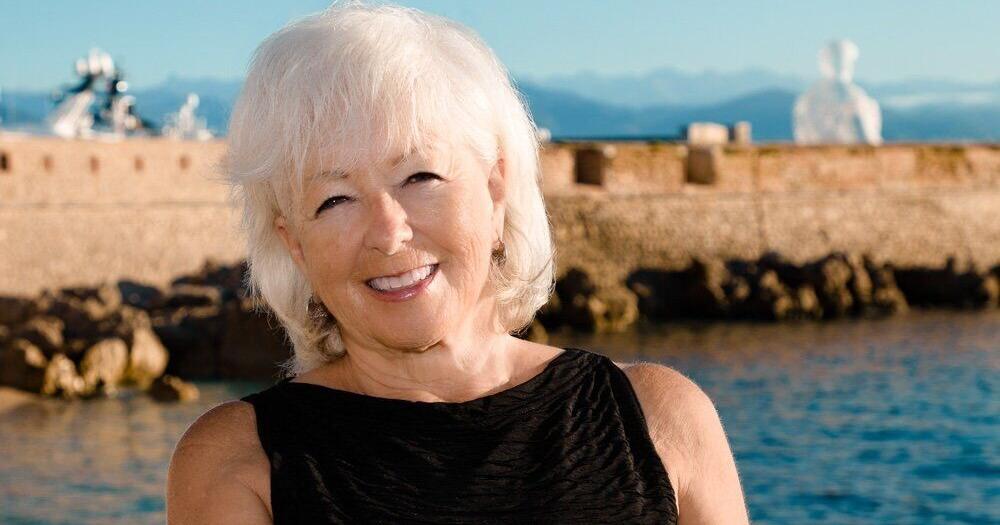
Patricia Sands’ story is one of reinvention. At 80, the Ontario author has conquered indie publishing — she recently released her 13th book, “The French Effect” — but only began her writing career at 65, a life and career pivot that she says came about “by accident.”
Self-publishing is the literary wild west, often filled with scams and stacks of unsold copies. But Sands’ work has found its readers, and they are legion.
Her Amazon rating sits at 4.3 out of 5, and fans there have left some 18,000 mostly glowing reviews of her books, calling her latest one “deeply relatable,” “a warm, hopeful invitation to discover joy” and “like a travelogue and a great story with believable characters all in one.”
Sands tends to write about women over 50, something that has clearly struck a chord. “I wanted to explore the opportunities open to women who may seek change in mid-life,” Sands explained from her home base in Collingwood, Ont. “And share how it’s never too late to begin a new chapter.”
Her own trajectory bears that out. Married at 25, Sands was a stay-at-home mother of two boys, “living our dream in a log house in the middle of a magic forest” north of Toronto. After her husband died at 49 of pancreatic cancer, Sands went back to university and earned her teaching degree, going on to teach elementary school.
She remarried, and between them she and her physician husband have seven children and nine grandkids. For decades, they travelled each year to the south of France, living like locals for extended periods. That became the setting for most of her later books. But for her debut, she started closer to home.
“The Bridge Club,” released in 2010, follows a group of eight women from their late teens to their 70s. It arose from a project Sands took on, interviewing her own tight-knit circle of friends about their lives, though the stories were eventually fictionalized. This was rich material — if you take any group of women, she said, chances are they are all going through something.
“It was a hobby project, but then I started reading chapters to book clubs and received very positive reactions,” Sands said. She sent out a few query letters to publishers, but was told the subject matter wasn’t on their radar. While she had heard “a lot of bad things” about independent publishing, she came across inspiring success stories, such as Canadian writer Terry Fallis, who self-published the political satire “The Best Laid Plans,” and American Lisa Genova, whose novel “Still Alice” became a hit in 2008, and later a film that won Julianne Moore an Oscar. Sands pulled her book back out of the drawer and took the plunge to self-publish it.
She got to work interacting with book clubs, networking with writers’ groups, and promoting her work online via social media, blogging and newsletters. For a few years in the mid 2010s, she partnered with Lake Union Publishing, a women’s fiction arm at Amazon Publishing, which helped her build on the “ground up” promo work she had been doing herself. The contract was a thrill, but she eventually decided she didn’t want to live by its deadlines and went back out on her own. “I could write at my leisure.”
Moving forward, Sands began to centre the south of France in her stories. “The Promise of Provence” grew into a three-book series because readers kept asking “What happened to her?” about its characters.
“I am totally besotted with France,” said Sands. “I don’t write romance or follow that formula, but I write a lot about love, and travel.” There are love interests, like the hot fromager that Sands based on a real-life expert, whom she interviewed about his profession to inform cheese-related plot points.
Her specialty is the quotidian, within a beautiful countryside setting served up with delicious food and wine. “They are quiet plots, not anything really exciting. It is just life,” she said. But that’s not to say there isn’t depth; Sands writes in themes of “cancer, divorce, adoption, dementia, alcoholism, medical assistance in dying, infidelity, coming out as gay later in life” alongside the escapism. “People want to see their lives reflected back, the bad with the good.”
Sands describes herself as a “possibilitarian,” or “someone who looks at life and realizes there are many possibilities and goes for it.” Retiring is not in the cards for her. “Now, in my 80s, I feel an even greater urgency to tell the stories of women my age,” she said. “My fiction has always centred on women whose lives are still unfolding and sometimes changing in new directions.”
There is freedom, defiance, humour and clarity that can only come from having lived. “At this age, the stakes are different but they are no less profound,” she said. “I want to explore that richness.”

