

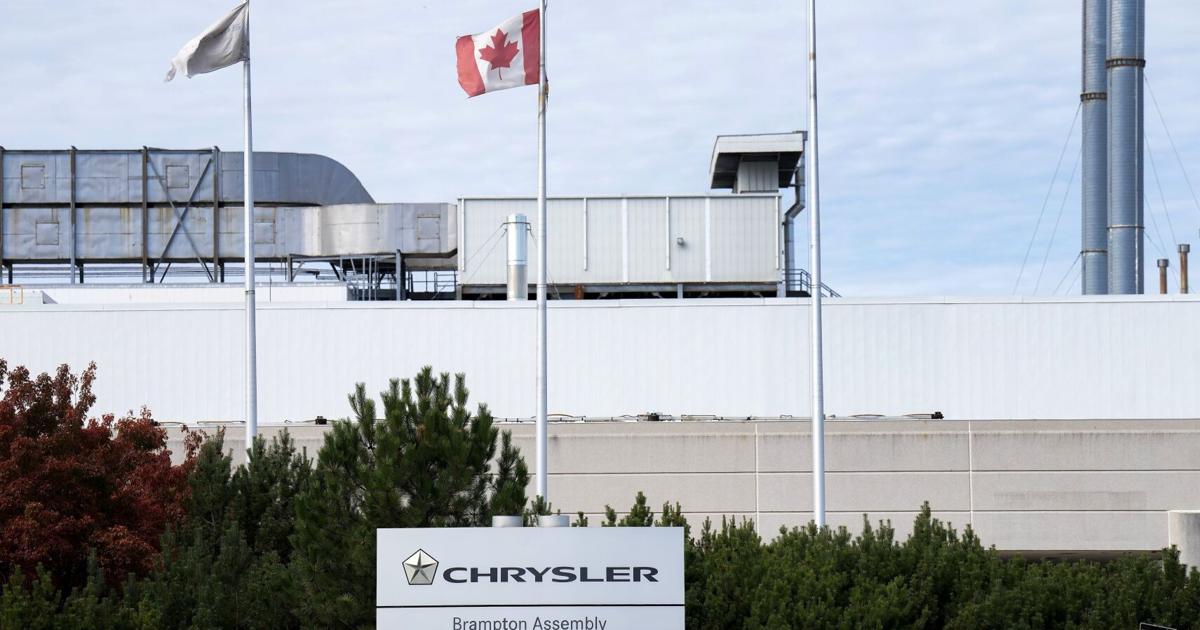
Stellantis is reportedly considering a deal to make Chinese electric vehicles at its idled assembly plant in Brampton, bringing furious condemnation from Canada’s automotive industry, a top union leader, and Ontario Premier Doug Ford.
Industry sources suggest a deal with Zhejiang Leapmotor Technology Co. would almost certainly be for “knock-down” assembly kits, meaning all the parts to build a finished vehicle would be shipped from China.
Stellantis didn’t confirm or deny the Bloomberg report, saying the company is looking at next steps for its Brampton plant, but has nothing to announce.
“Stellantis remains focused on a strong Canadian footprint and is actively evaluating future programs for Brampton with the objective to ensure that any investment decision is sustainable and a long-term commitment that supports workers and suppliers,” said Stellantis spokesperson LouAnn Gosselin.
In Dallas, on a trade mission to Texas, the Ontario premier expressed strong opposition to knock-down kits.
“It’s just not right that they’re shipping these cheap kits, I want to call them, and assembling here. They’re bringing over Chinese parts and they’re going to assemble in Brampton. It’s everything against what the federal government told the auto workers. This will cost autoworkers jobs,” Ford said in an interview.
“I know (Unifor national president) Lana Payne was saying the same thing,” said the premier, adding Chinese automakers are welcome to do what Japanese firms such as Honda and Toyota did decades ago and establish manufacturing facilities here.
“If China wants to come here and they want to do similar to Honda and Toyota 40 years ago — they came here, they opened a facility. They buy Ontario-made parts and produce Ontario-made cars with Ontario workers, I’m all for it. But when you have cheap Chinese parts being subsidized by the Chinese government … but also paying their workers $5 an hour and affecting autoworkers’ jobs here … I’m dead against it,” he said.
Ford said allowing the Brampton Stellantis facility to be repurposed like that “would hurt other auto companies here.”
The premier urged Ottawa to intervene and said the provincial government was “looking into it right now” to see what can be done to thwart the scheme.
In an emailed statement, a spokesperson for federal industry minister Mélanie Joly didn’t directly address the Stellantis-Leap discussions, but said the federal government is involved in a dispute resolution process with the company after it shifted production of its new Jeep Compass model from Brampton to Illinois.
“The Government is actively engaging with the company, Unifor and the Province of Ontario with a view to secure production, protect jobs and ensure long-term investment in Canada,” said Joly’s spokesperson, Isabella Orozco-Madison. “Any new auto investments will prioritize Canada’s supply chain, including Canadian labour and parts suppliers.”
Chinese automotive companies aren’t likely to build — or run — a full assembly line here, said veteran automotive analyst Robert Karwel. There’s a simple reason, he added: They don’t need to.
“How China will dominate global auto manufacturing is economies of scale and cheap labour,” said Karwel, head of automotive research at J.D. Power Canada, who wasn’t referring specifically to Leap. “You don’t do that by building full-scale plants all over the place. You do it by centralizing things in China. There’s no economic reason for a Chinese manufacturer to have a full assembly plant here.”
A knock-down kit, said Karwel, is nothing like a traditional assembly line.
“It’s all the parts in a box. It’s like Ikea furniture,” said Karwel.
The head of Canada’s largest private sector union slammed the idea of knock-down kits, saying they would decimate the Canadian automotive sector workforce.
“The jobs are kept in China where the parts are made, and the vehicle is pre-assembled before it is shipped overseas for kit assembly,” said Unifor national president Lana Payne. “These knock-down kit plants would employ a small fraction of workers while displacing tens of thousands of direct assembly and auto parts jobs.”
The head of the association representing Canada’s automotive parts makers blasted the idea.
“Chinese knock-downs might be a great idea in Brazil or Mexico, but we don’t need them here,” said Flavio Volpe, CEO of the Automotive Parts Manufacturers’ Association. “They wouldn’t be anything more than imports. I trust the government knows the difference, and that we don’t need a bad deal that freezes out … Canadian suppliers.”
Stellantis owns 20 per cent of Leapmotor, and has a 51 per cent stake in Leapmotor International.
Through Leapmotor International, Stellantis is already producing Leap EVs in Mexico, using knock-down kits.
Under a trade deal with China announced in January, 49,000 Chinese EVs will be allowed into Canada this year at the “most-favoured nation” tariff rate of 6.1 per cent.
There’s a plan for a review in year three to see if China is meeting its commitment to make a “considerable investment” in auto production in Canada.
A senior federal official told reporters following the China deal that the government wants Canadian secure software, like QNX, used in EVs manufactured here.
In November, Stellantis announced it would switch production of the new version of its popular Jeep Compass from Brampton to Illinois, just a week after U.S. President Donald Trump and his commerce secretary Howard Lutnick said they’re coming for Canada’s auto industry.
With files from Tonda MacCharles

