

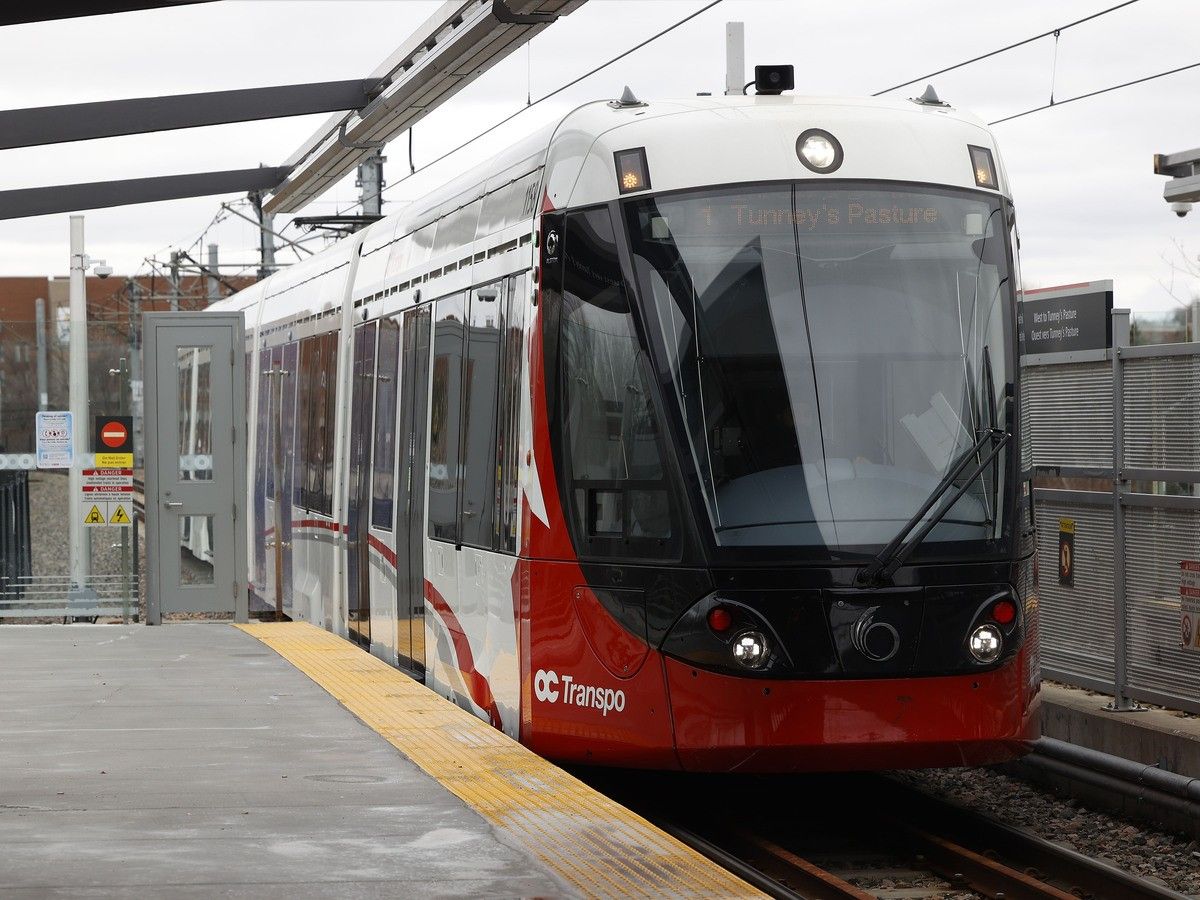
Help is on the way for OC Transpo’s beleaguered
LRT
service as provincial partners at Metrolinx are sending axles to Ottawa at a “critical time,” according to a social-media post from Mayor Mark Sutcliffe.
“Thank you to our provincial partners at Metrolinx for sending us axles for our LRT vehicles at this critical time,” Sutcliffe posted on Bluesky on Tuesday afternoon.
“These axles will help us restore full service on Line 1 faster. This demonstrates the value of having Metrolinx as a partner to improve transit for Ottawa residents.”
The mayor also touted the pending upload of Ottawa’s LRT to the provincial government, which Sutcliffe has called a “game-changing” deal that has yet to be finalized.
“The upload of Ottawa’s LRT to the provincial government and Metrolinx will increase that collaboration and lead to a more reliable service,” Sutcliffe said in the post. “The team at
OC Transpo
is moving as quickly as possible to safely restore full service and expand LRT.”
OC Transpo’s communications team confirmed the upload was still pending and said the mayor’s post expressed how the deal would be “beneficial” to the city once it was finalized.
OC Transpo’s east-west Line 1 service has been hampered by a “spalling” issue identified in January, forcing the transit authority to take all train cars that exceeded 100,000 kilometres out of service on Jan. 21.
OC Transpo took 41 train cars out of service for inspection and replacement of the cartridge bearing assemblies in the axles. That left Line 1 with 18 available train cars, which has since increased to 23.
The
Rideau Transit Group
recently discovered a more severe stage of spalling called “shelling,” which caused a delay in restoring full service until the end of May.
The much-anticipated east extension to Orléans was likewise delayed, with a time frame of two to five months before the next testing phase can begin.
Transit committee chair Glen Gower said the new axles from Metrolinx were mentioned as part of an update to the committee on April 9, when transit authorities also announced the more severe shelling damage.
Gower said he had no update on the LRT upload, but said Sutcliffe and city staff had held “ongoing discussions” with the province.
The delivery of axles will help RTG and manufacturer Alstom “bolster the supply of parts,” Gower said, as more trains are gradually returned to service.
OC Transpo requires 26 available trains, or 13 double-car trains, to restore full service, and it will require 46 available trains to perform trial running to the east extension.
Line 1 has continued to operate with single-car trains every three to four minutes during peak periods.
OC Transpo has installed several early detection methods to identify problems with the cartridge bearing assemblies, including acoustic monitoring by technicians onboard trains, “roll-by” inspections in the trainyard and a “smart bug” monitoring system that detects abnormal vibrations.
Spalling — the flaking of the metal surface of the cartridge bearing assembly — was discovered during an inspection related to a separate issue of “fretting,” which was identified as the cause of the first O-Train derailment in the summer of 2021.
Shelling is a form of spalling with larger flakes and more depth of damage and is the “most severe” damage inspectors have so far encountered with the Line 1 trains.
Troy Charter, director of transit service delivery and rail operations, said in a statement that OC Transpo was working with partners to secure additional parts for the required replacement of the cartridge bearing assemblies in the affected Line 1 trains.
The replacements will “allow Line 1 to operate safely and for the restoration of double-car train service,” Charter said.
“OC Transpo appreciates the support of Metrolinx, who have agreed to supply 11 axles to support the current replacement regime. Rideau Transit Group (RTG) is also pursuing additional supply chains to ensure adequate, ongoing supply of these parts.
“We continue to anticipate a return to regular Line 1 capacity by the end of May.”

