

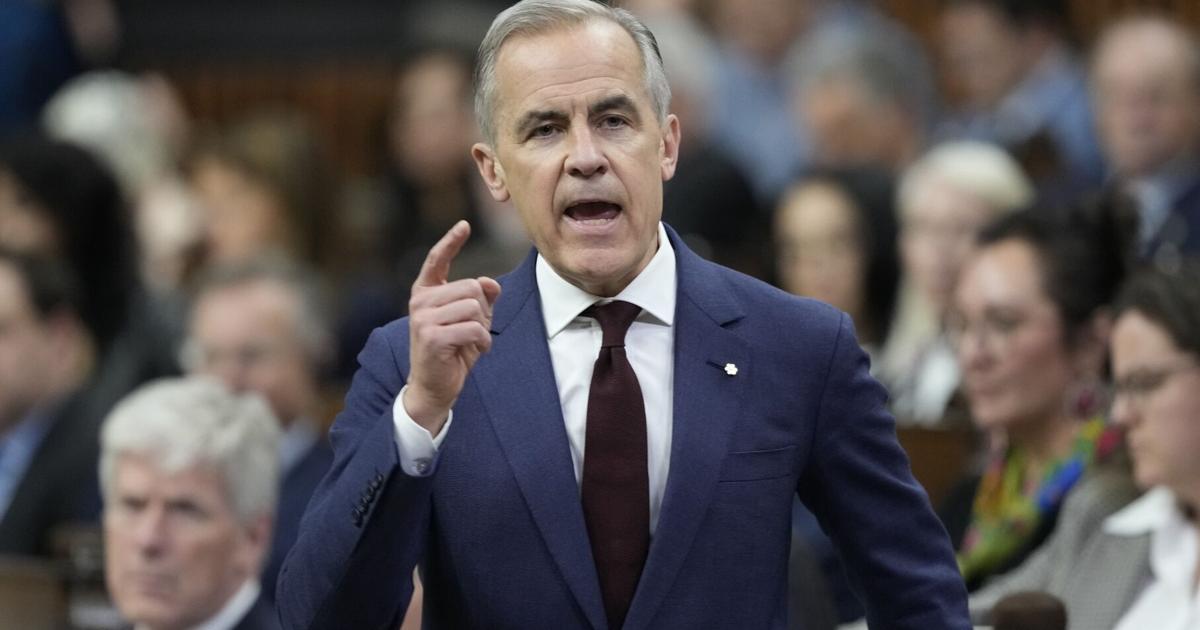
OTTAWA — Prime Minister Mark Carney is rebooting the Canada-U.S. trade advisory council that has been largely sitting on the sidelines since his predecessor Justin Trudeau left office last year, the Star has learned.
The new makeup of the council, which functioned as an important independent advisory group when the North American free trade pact was renegotiated during the first Trump Administration but played a lesser role in the second Trump era, may be unveiled as early as Tuesday, sources said.
The Star granted the sources anonymity to discuss a decision they were not authorized to discuss publicly.
Carney is frequently criticized at parliamentary committee hearings on international trade for failing to put in place formal consultation structures with industry and stakeholder groups, especially those hit hardest by Trump’s tariffs.
Now Carney intends to rejig the advisory council’s membership, the sources said.
Importantly, the council will be chaired by Canada-U.S. Trade Minister Dominic LeBlanc, not Carney, and its job will be to provide advice heading into the CUSMA review talks.
The prime minister is expected to drop some, like Canada’s former NAFTA chief negotiator Steve Verheul, who works in the private sector, former national security adviser Jody Thomas, or others once touted by Trudeau as useful entrepreneurial voices like Arlene Dickinson and Wes Hall, both of whom star on the reality television show Dragon’s Den.
However, Carney is expected to retain some members who advised Trudeau, such as former Quebec premier Jean Charest, Unifor president Lana Payne, who leads the largest private sector union in Canada, Automotive Parts Manufacturers’ Association head Flavio Volpe, and Tabatha Bull, who leads the Canadian Council for Indigenous Business.
It’s likely Carney’s hand-picked ambassador to Washington, Mark Wiseman, whom Carney had last year named to the council, will remain. The former investment manager at BlackRock and past CEO of the Canada Pension Plan Investment Board is now Carney’s lead envoy on Canada-U.S. relations in the U.S. capital.
It is not clear if others like former Canadian ambassadors Kirsten Hillman and David MacNaughton, or former premiers like Alberta’s Rachel Notley and Nova Scotia’s Stephen McNeil, would remain on board.
“The government understands that its success in the NAFTA renegotiations was materially improved by consulting formally with stakeholders at a common table,” said one insider, something that was lacking in the earlier negotiations on the comprehensive Asia-Pacific pact known as the Trans-Pacific Partnership.
Now, said that source, Carney’s timing “is a sign of where the intensity of the talks are headed.”
A second source said that in the early days of the NAFTA negotiations, the advisory council emphasized to the government the challenges for at-risk industries, and offered advice on a range of issues, including defence.
But in Trump’s second, more aggressively protectionist era, the focus of trade and tariff negotiations — and Canada’s response — has been centred at the prime minister’s office.
Recently, U.S. officials have publicly griped about Canada’s trade diversification strategy, with Commerce Secretary Howard Lutnick last week blasting Carney for looking to do more trade with China. Lutnick slammed Canada, saying, “They suck.”
U.S. Trade Representative Jamieson Greer has publicly said Canada is lagging behind Mexico in the effort to resolve bilateral trade irritants, but LeBlanc disputes that characterization.
Nonetheless, LeBlanc privately told N.B. Premier Susan Holt Monday that despite lots of meetings, there is “motion not movement” at the table.
Error! Sorry, there was an error processing your request.
There was a problem with the recaptcha. Please try again.
You may unsubscribe at any time. By signing up, you agree to our terms of use and privacy policy. This site is protected by reCAPTCHA and the Google privacy policy and terms of service apply.
Want more of the latest from us? Sign up for more at our newsletter page.

