

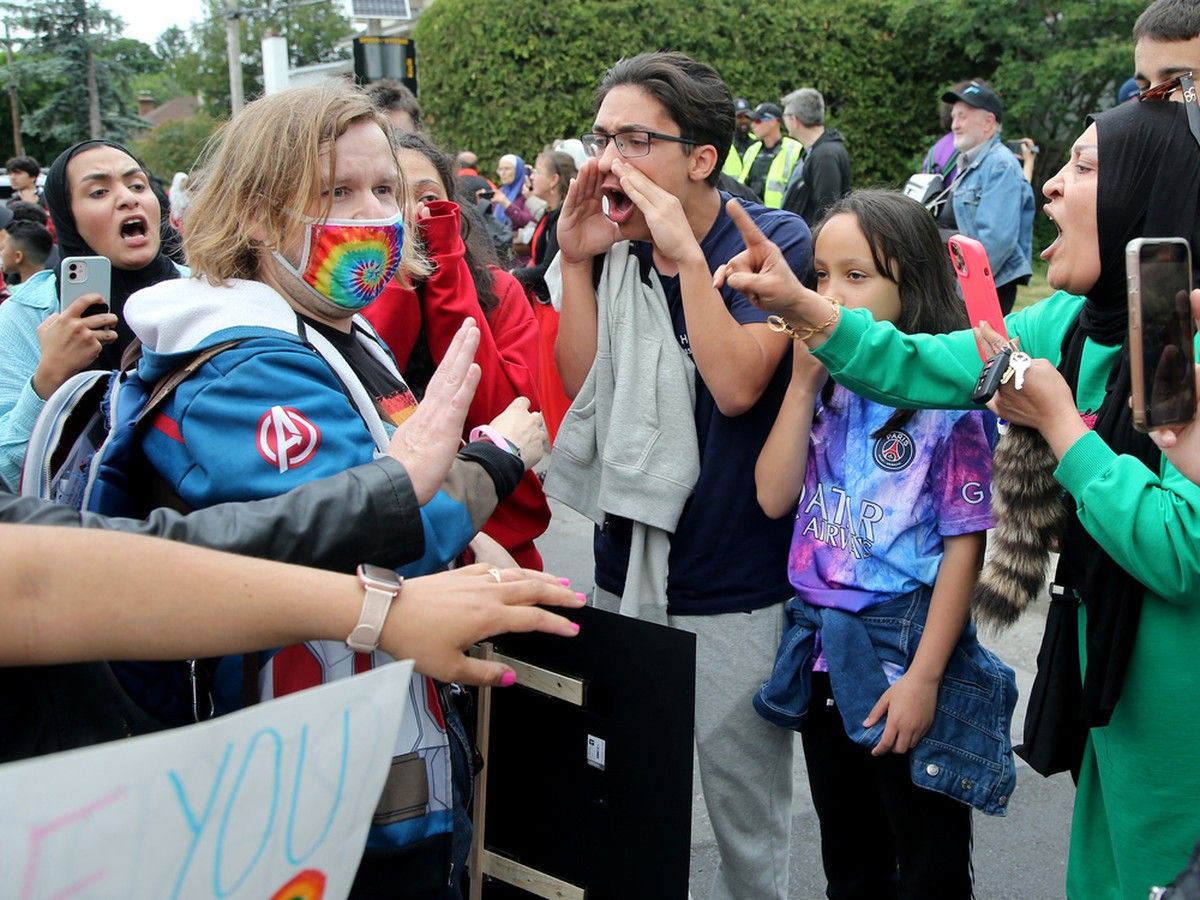
Ottawa’s controversial “bubble” bylaw passed through council with overwhelming support despite warnings of potential overreach and unintended consequences, and the possibility of future lawsuits and legal challenges.
The safe access to vulnerable infrastructure bylaw will take effect Aug. 1 and will prohibit demonstrations within 50 metres of schools, hospitals, long-term care centres and community health facilities.
Councillors approved the bylaw by a 20-4 vote, with Capital Coun. Shawn Menard, Knoxdale-Merivale Coun. Sean Devine, Gloucester-Southgate Coun. Jessica Bradley and Somerset Coun. Ariel Troster casting the dissenting votes.
Two motions that sought to amend the bylaw to roll back some of its restrictions were defeated by council.
Bradley introduced a motion to limit the bylaw to apply “only during periods when the social infrastructure is being used for its primary operational purpose and not during periods when the facility is being used for unrelated third-party activities.”
Bradley said the motion was about bringing “balance and clarity” to the bylaw.
“We all agree that people should be able to access essential services, schools, health care, places of worship safely and without intimidation. At the same time, we also have a responsibility to uphold the right to lawful, peaceful demonstration in a free and democratic society,” Bradley said.
“This isn’t about monitoring content or expression. It’s about ensuring that it is applied when it is appropriate,” Bradley said.
Councillors narrowly defeated that motion by a margin of 14-10.
Councillors also defeated a motion from Devine that would have addressed the “categorical prohibition on demonstrations” by removing a clause that “no person shall conduct or participate in a demonstration” within a safe access zone.
Devine said the bylaw represented a “slippery slope” and cited experts on constitutional law who previously warned committee members about the bylaw’s potential overreach.
“Today it is schools and places of worship, tomorrow it is convention centres, then city facilities. Eventually, anything that makes people uncomfortable becomes a reason to move dissent out of sight,” Devine said. “History shows us we do not become safer by gagging dissent.”
Devine’s motion was defeated 18-6.
Menard said expressing dissent is “fundamental” to democracy — particularly in the nation’s capital — and said it is already illegal to block safe access to a vulnerable place without invoking a bylaw.
“It would be naive to think that this restriction of free speech and dissent is about safe access,” Menard said. “This is about silencing dissent where legitimate peaceful assembly is both necessary — sometimes uncomfortable — and essential.”
Menard cited protests over “deplorable” conditions for seniors in long-term care homes, the sale of weapons of war, cuts to education funding, residential schools and abuse of church power.
“The city is about to ban dissent of these things, for more than half a football field, of the very institutions and actors that require checks and balances,” Menard said.
Barrhaven West Coun. David Hill, who championed the bubble bylaw and introduced the direction for city staff to draft the bylaw nearly a year ago, said he heard an “outcry” from vulnerable communities targeted by rising instances of hate speech and abusive behaviour.
Dozens of speakers
lined up to show their support and opposition to the bylaw at a committee meeting last week
, with faith leaders and education advocates urging council to approve measures to protect vulnerable institutions.
“What we heard in committee was an outcry from our minority, vulnerable communities for help,” Hill said. “They want to be safe when they go to their school to their place of worship, to their hospital, and they do not feel safe.”
Earlier this week, city solicitor Stuart Huxley shared a memo outlining a court decision in Alberta, which upheld the constitutionality of a similar safe and inclusive access bylaw in Calgary.
Calgary’s bylaw was challenged on charter grounds and the decision to side with the city, which was upheld on appeal, “is relevant to municipal efforts to balance freedom of expression and safe access,” Huxley wrote.
Facilities in Ottawa will have to apply for the safe-access zone status, which would be valid for one year with a chance to renew it. The designation would apply 24/7 to residential-care facilities and would be in effect between one hour before opening and one hour after closing time at others.
The bylaw does not apply to labour union strikes, information pickets or activities related to a labour dispute.
Related
- Ottawa’s ‘bubble bylaw’ could take effect this summer
- Is Ottawa’s ‘bubble’ bylaw constitutional? Councillors hear from all sides
Our website is your destination for up-to-the-minute news, so make sure to bookmark our homepage and sign up for our newsletters so we can keep you informed.

