It began with a near disaster.
On the eve of opening night, all the kitchen fridges at Hugh’s Room failed, spoiling most of the food. The dinner menu was scrapped. Owner Richard Carson and his chef cobbled together a handful of dishes as folk music icon Jesse Winchester took the stage.
“He was very, very quiet. He didn’t even have a pickup on his guitar, and everybody had to really listen. The room went dead quiet,” Carson said. “And that’s (what Hugh’s Room) became, right from there: a listening room.”
In that moment, one of Toronto’s most distinctive music venues found its identity.
Now in its 26th year and recently relocated, Hugh’s Room has become a home for original music across genres — from singer-songwriters to blues, jazz, world music and spoken word. Through financial strain, relocations and a pandemic, it has remained a touchpoint for the city’s music community.
Over the years, the room has hosted legends including Pete Seeger, Judy Collins and Gordon Lightfoot while also giving rising stars like Serena Ryder and J.P. Saxe a stage early in their careers.
It was born out of a “one of these days, we should” conversation between two brothers who liked to play guitar around the campfire: Carson and his brother Hugh. The vision was a folk club to showcase singer-songwriters and other artists performing original work — a place for local talent, touring musicians and those who no longer fit large theatres or arenas.
“Where does (multiple Juno Award-winning folk singer) Connie Kaldor play when she comes to Toronto?” Carson said. “There wasn’t a place that was the right size or the right personality.”
It was the loss of Hugh to cancer that lit the fire for Richard Carson to finally make their oft-discussed plan real. After substantial renovations, a former rough-and-tumble dance club space became an intimate, tiered 200-seat venue with strong acoustics, clear sightlines and a bistro-style menu.
He named it in honour of Hugh, who had been an organizer with the Eaglewood and Northwinds folk festivals. Richard’s own background was in theatre and live music production.
A culture of full attention to the stage quickly took hold. Audiences didn’t hesitate to shush anyone talking during a performance.
Word spread among fans, performers, managers and agents. Carson says an early appearance by Greenwich Village folkie Eric Andersen became the turning point.
“It was a packed house, and that was the night Joni Mitchell came to the show. She actually got up on stage and sang with him. The next morning, I was getting calls from the east coast and as far west as Calgary.
“Up until that point, it hadn’t been Hugh’s Room, it was ‘Whose Room?’” Carson laughs.
One night, a hesitant Marc Cohn (“Walking in Memphis”) agreed to play a short set, only to become so taken with the room’s intimacy and the audience’s warmth that he stayed onstage for more than two hours. “We almost had to bring out the hook to get him off the stage,” Carson says.
Gordon Lightfoot would quietly sit in the audience (and sometimes join in onstage) at the annual “The Way We Feel” tribute shows celebrating his music. Jimmy Webb played two nights in February of this year. Judy Collins and JD Souther are among the long list of luminaries who have performed on the Hugh’s Room stage.
But the venue has also weathered significant challenges. Despite a loyal audience and steady programming, financial pressures forced its closure in January 2017. Carson, who admits he “was never a businessman,” shut the doors on the Dundas Street location.
With help from supporters, a new model emerged.
Under the leadership of lawyer Brian Iler, Hugh’s was restructured from a private business to a non-profit, Hugh’s Room Live, which now has charitable status. A volunteer board of directors developed a more sustainable funding plan and struck a new deal with the landlord. The club was back in business three months later.
In early 2020, the building was sold and the rent raised beyond what the organization could sustain. The lease ended. The stage fell silent again — just as the pandemic hit.
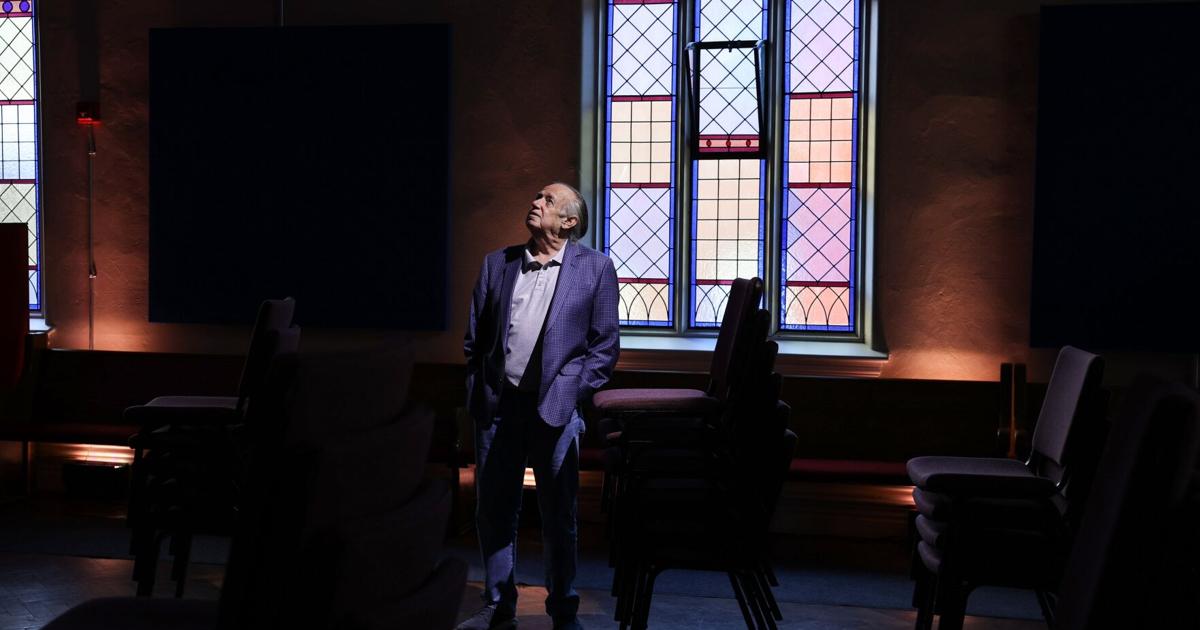
As restrictions eased, Hugh’s Room Live presented shows at other west-end venues, while searching for a new permanent home. A successful fundraising campaign made it possible to purchase a former church building across town at 296 Broadview Avenue. The new space, featuring a high arched ceiling and the same intimate sightlines, opened in September of 2023.
With a new home and a stable financial footing, the original mission continues.
“To present artists who are telling their own stories,” is how new Hugh’s Room Live chair Adam Moffatt describes it. “Toronto needs a space for storytelling — a listening room.”
Singer-songwriter Amanda Walther says Hugh’s Room has been an important meeting place for audiences and artists.
“Maybe it’s just because I’m an artist, but I really feel strongly that, in this really turbulent time, art and music especially have this ability to connect us in ways that nothing else can,” she said. “Hugh’s Room creates a space where that kind of connection just happens, every night.”
Carson sees it the same way.
“When you think of folk music in Canada, Hugh’s Room is in those thoughts,” he said.