More than $60 million in container deposits paid on alcohol purchases went unredeemed by Ontario consumers in 2025, a windfall kept by the province and The Beer Store, the Star has found.
The Star calculated the $60-million windfall using data published in a new report published by The Beer Store. It represents an accumulation of deposits charged to customers on more than 560 million alcohol containers sold by the LCBO, grocers, convenience stores and The Beer Store in 2025 that were not returned for redemption.
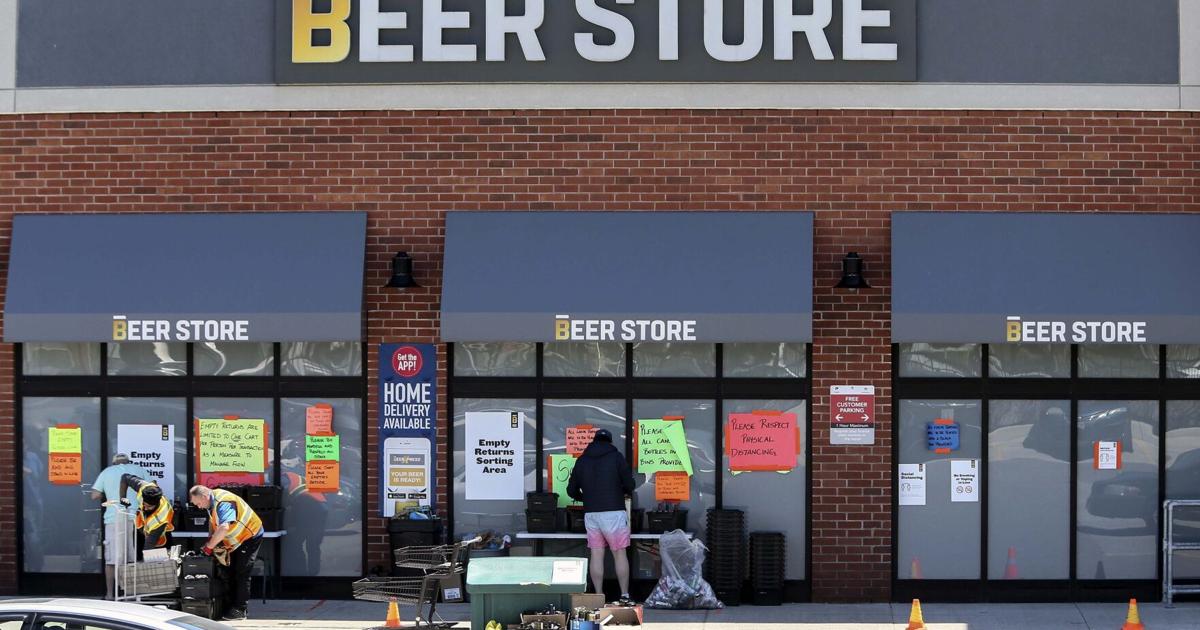
The numbers aren’t surprising, said an environmental critic, given that The Beer Store has closed more than 120 locations over the past year, making it harder for consumers to return empties.
But the decline in return rates — about 10 percentage points below where they were nine years ago — is a “worrying trend,” said Karen Wirsig, a senior program manager with the non-profit Environmental Defence.
Nine years ago, return rates for Ontario’s deposit programs were above 80 per cent.
“It’s pretty urgent for the beer store, the grocers, and the alcohol producers to work to restore accessible locations for people to return their empties,” said Wirsig.
At least $57 million in deposits weren’t redeemed in 2024, a two-year total for lost deposits of nearly $120 million.
The data, published in The Beer Store’s annual stewardship report, shows sales and redemptions — which refers to containers returned to The Beer Store for the 10-or-20-cent deposit depending on size — for two deposit programs.
One is the province’s Ontario Deposit Return Program (ODRP), which allows deposits to be charged on spirits, wine, cider and mixed drinks sold by grocers, convenience stores and the LCBO, and which is managed by The Beer Store.
In 2025, 188 million of those containers weren’t returned, totalling an estimated $23.6 million in unredeemed deposits.
Another 375 million beer containers, about a quarter of the total sold at The Beer Store and LCBO in 2025, weren’t returned to the retailer, which runs its own separate deposit program on beer containers. Those unredeemed deposits were worth at least $37.6 million.
Together, the total unredeemed deposits for both programs was more than $60 million in 2025.
However, the province, The Beer Store, and even critics, say the programs are still valuable.
The province’s Ministry of Finance, which oversees the ODRP, said in an email that the deposit program “continues to support high recovery rates, reduces litter, and helps to keep costs down for consumers by supporting the efficient drop off and collection of alcoholic containers.” The unredeemed deposits help run the program.
However, the province expanded alcohol sales to thousands of convenience stores and grocery stores while allowing The Beer Store to close locations as part of the deal to expand sales. That means returns can only be made to a limited number of Beer Store and redemption depots.
“Return patterns have become more complex,” said Ozzie Ahmed, The Beer Store’s vice-president of retail, in an email. “We recognize there is more to do to make returning empties as easy and convenient as possible.”
Ahmed said the beer retailer is actively trying to find new authorized empty return depots to partner with and will be launching a public awareness campaign this year to encourage Ontarians to participate in the program.
It’s hard to know where the nearly 600 million missing containers are ending up.
Some of the material, though, is landing in the blue box, according to Allan Langdon, CEO of Circular Materials, which manages Ontario’s privatized residential recycling system.
Millions of booze containers flood the blue box system
Langdon said in an email that an estimated 25,000 tonnes of used alcohol containers are expected in residential recycling this year, despite the fact that alcohol producers do not pay into the privatized program (empties have their own reuse and recycling stream through the Ontario and Beer Store deposit programs).
The tonnage “represents hundreds of millions of individual alcohol containers in the blue box system,” said Langdon.
Where the rest of the missing alcohol containers are — as in the garbage, or recycling from condos, apartment buildings, or institutional and commercial venues, which as Langdon notes are outside of Circular Material’s purview — is anyone’s guess.
Large sports and entertainment venues, such as the Rogers Centre and Rogers Stadium, may account for millions of the unredeemed alcohol containers.
Both venues say they recycle empties instead of returning them to The Beer Store, although Rogers Centre does return used liquor bottles for the deposit.
On the other hand, Maple Leaf Sports & Entertainment, which owns Scotiabank Arena and BMO Field, said it separates all the aluminum collected and returns beer and other cans to The Beer Store for the deposit.
In the last couple of years, Ontario’s deposit return programs have taken a hit as the Ford government expanded alcohol sales to convenience stores and more grocers.
Grocers who sold alcohol, as part of Ford’s plan to expand sales, were supposed to set up deposit return programs in January of this year. Instead, the grocers made a deal with The Beer Store, which agreed to take returns on their behalf for a fee.
Meanwhile, The Beer Store began closing stores in the first half of 2025, part of the deal it made with the province when the government decided to expand sales of alcohol including beer, ending the beer retailer’s monopoly on 12-packs and 24-packs of beer.
Deposit return programs are considered to be one of the most successful ways to get used beverage containers back, say experts. Return rates in provinces that have deposits on all beverages, not just alcoholic ones, achieve higher return rates than Ontario.
“It’s the best thing we have,” said Wirsig, of Ontario’s deposit programs. “We want to see that shored up.
“If you don’t have the ability to participate in the system because you don’t live in an area where you can actually return your containers, then it does become like a tax,” said Wirsig.