

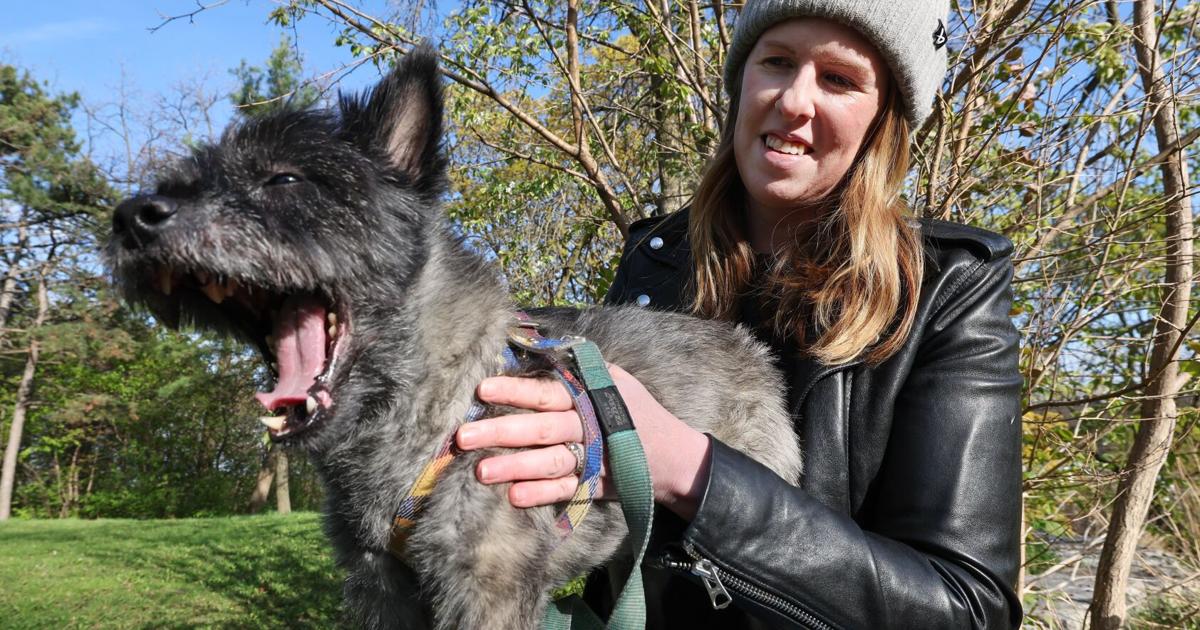
In 2021, Adrienne Middlebrook left her partner. But she couldn’t leave Garth.
They got the Cairn terrier three years prior to the breakup. Her ex, however, didn’t want to give up Garth, either — so they decided to split custody.
“It was never even a question for us that we would share Garth,” Middlebrook says.
That was almost five years ago and they’ve been sharing Garth ever since, even though Middlebrook is now married to someone else.
Middlebrook is one of a growing number of Toronto exes who split custody of their pets. A 2025 Kinship survey found that 35 per cent of American Gen Z pet owners already had a “pet-nup” in place to deal with any post-breakup custody arrangements. Even the dog-trainer community is seeing a shift. “There did seem to be a bit of an uptick in shared custody in 2024 and this year,” Andrea Dinan, founder of City Dogs Training & Behaviour and ParCORE Dogs, says. She estimates that 30 per cent of her canine clients are part of a shared-custody arrangement.
Two years ago, a British Columbia judge awarded 50/50 custody of golden retriever Stella in a landmark case. That same year, Toronto Metropolitan University started the law-student-run Pro Bone-o pet-dispute clinic. In Ontario, however, pets are still considered property under the law.
“This means that when a dispute arises over a pet, courts will focus on which of the parties has the stronger ownership claim over the pet, rather than what is in the best interests of the pet,” says lawyer Aris Gyamfi.
Gyamfi has noticed an increase in custody-related inquiries over the past year. “My sense is that there has been an increasing recognition of animal sentience and deepening of the human-animal bond, such that many people now consider their pets to be akin to family members,” Gyamfi says. “This can lead individuals to try to sustain a shared pet-custody arrangement even after a romantic relationship dissolves.”
Barrister and solicitor Jennifer Friedman has seen a noticeable rise in custody-related requests since the pandemic. But she says pursuing companion animal disputes through litigation is “cost-prohibitive, stressful and involves significant delays.”
This is why Gyamfi says it’s key to have a well-written agreement in place signed by both parties. The alternative? “You’re gambling on the philosophical ideology of the judge assigned to the case,” as Friedman puts it, “which, for at least one party, may come back to bite them.”
How to make shared pet custody work
For Middlebrook, communication with her ex strictly focuses on when Garth is being dropped off and picked up; she usually arranges the vet appointments and grooming, but her ex generally pays for half of everything.
Another plus: there’s no need for boarding services. “I like that it gives me flexibility when travelling … as I know my ex will take him and know exactly what his needs and quirks are,” Middlebrook says.
One tough aspect of shared pet custody is the duration equation: how long do you do it? Ninad Chitale came into a relationship with his dog Alfie, then got Nugget as a birthday gift for his then-partner. After they split, they “ended up in a full-blown co-parenting situation,” he says. “It turned into a pretty structured routine, including handoffs, updates and the occasional negotiation over who got the ‘fun weekend.’”
This winter, however, his ex started dating someone new and, after almost a year of shared custody, ended the arrangement out of respect for her new partner.
“We handled that maturely, too, but it hit me harder than I expected,” Chitale says. “I haven’t seen Nugget since Feb. 24, and I miss him a lot.”
The potential pitfalls of shared pet custody
Registered psychotherapist Melanie Hrymak, who adopted her cat and dog while single, says she has always made it clear she is not interested in any split custody post-breakup. What if you are attached to your ex-partner post-breakup in a way you don’t want to be, for example? “It may be extremely painful or even harmful to stay connected with that person,” she says.
She also encourages people to honestly reflect on what is truly in the best interest of their pet. Will it be upsetting for them to, say, move between households with different environments, routines and people? Are you prepared to share medical and financial decisions with your ex-partner for possibly years to come? How will you navigate disagreements? “There’s a lot to consider,” Hrymak says.
There’s also the final stage of some shared-custody arrangements to deal with: pet death. Amy Pemas of holistic pet funeral home In Good Hands Pet Loss, estimates that five to 10 per cent of her clients are shared-custody owners. In some cases, shared custody can ease the emotional weight by distributing the responsibility. She remembers a cat that was shrouded twice because each family brought a special blanket for them to be cremated in, both helping the other gently wrap their cat’s body. “I remember them both silently crying, hands shaking and exchanging soft smiles of gratitude,” Pemas says.
She’s also helped families divide ashes into equal portions. “I’ve witnessed some incredibly moving moments when ex-partners set aside old wounds, uniting in love for their pet,” she says. “It’s a profound reminder of how our companions inspire forgiveness and enduring bonds. Our companions are living archives of our stories, so their passing can feel like a poignant final chapter.”
A couple of weeks ago, Middlebrook learned her ex is leaving the city — and she would be getting Garth for good, starting in June. She was a little sad for her ex, given how much he loved Garth, yet also happy to have her pup full-time soon.
“But,” she says, “it felt like the end of an era.”

