

Just a few days after her daughter was born, Robyn Miller was awoken by frantic knocking at the front door. Her midwife was there with an urgent message to contact SickKids Hospital. Specialists were concerned about the results of a blood screening test her newborn had been given shortly after birth.
Miller, her husband Briam, and their baby drove from their home in Huntsville to Toronto. Testing at the children’s hospital confirmed those concerns: Their daughter had phenylketonuria (PKU), a rare metabolic disorder that prevents the body from breaking down an amino acid found in protein-rich foods. Without early treatment, the disorder can result in irreversible brain damage, severe intellectual disability and seizures.
Robyn said they headed to the hospital certain the suspicious test was just a fluke.
“We’ll go in, they’ll do tests and we’ll leave tonight and it won’t be any different,” she thought at the time. “Safe to say, that was not the case. Our world completely turned over when we got the diagnosis.”
And it almost didn’t happen.
When Briam first learned about dried blood spot screening of newborns, he admits he was skeptical. He initially hesitated, thinking it would give his daughter no more than a risk assessment for certain illnesses she might get over her lifetime. After further discussions and clarifications, both Robyn and Briam were convinced.
“I turned down doing that testing for our daughter,” he said. “Luckily, they continued to educate me on what it actually was and the importance of it.”
Now they know the newborn screening, which tests for serious but treatable diseases that might not otherwise be identified early, helped save their daughter. The couple asked that she not be named to protect her privacy.

The program that changed their daughter’s life could now be expanding to include significantly more treatable diseases. Researchers are starting to explore what could become the biggest expansion in newborn screening in Ontario’s history — to include genetic testing.
A research project to look at whether genomic newborn screening could be part of Ontario’s standard screening program is just getting underway. The research is the first of its kind in North America.
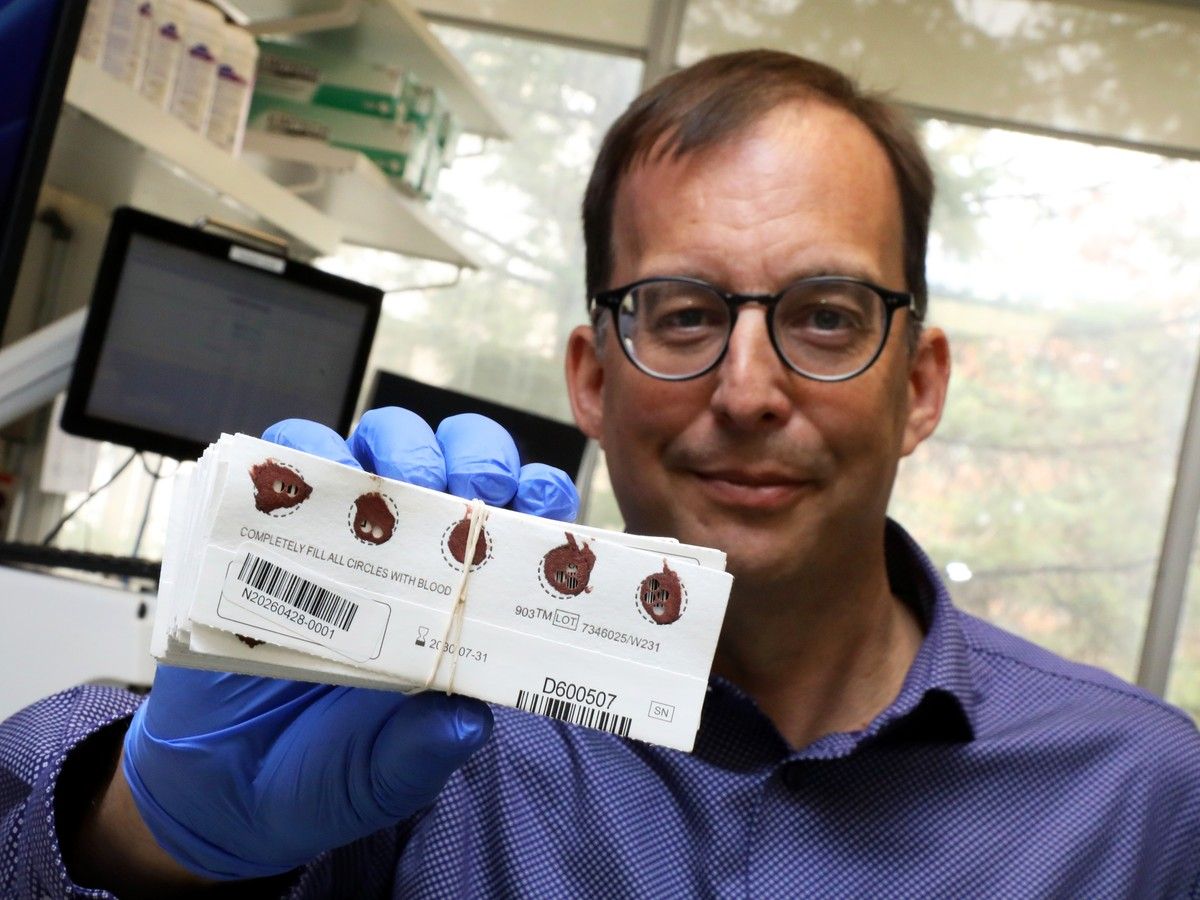
The study will offer whole genome screening to 10,000 Ontario newborns, using the same dried blood spot already collected for newborn screening, with consent.
The INFANT study, as it is called, will use non-commercial sequencing to look for pathogenic variants in 223 genes linked to serious but treatable early-onset childhood diseases.
The disease the Miller’s young daughter was diagnosed with, PKU, was the start of universal newborn screening in Ontario in 1965. At first, it was the only one babies were screened for, but the program has expanded from there.
Today, the program run by CHEO-based Newborn Screening Ontario, established 20 years ago, screens newborns for more than 25 treatable conditions. Those include metabolic diseases, endocrine diseases, sickle cell disease, cystic fibrosis and more.
Every year, roughly 145,000 Ontario babies are tested using blood taken from their heel 24 to 48 hours after birth. Roughly 350 of those infants are identified with a treatable disease because of the screening. In 2024, the Miller’s baby was among them.
Dr. Neal Sondheimer, medical director of Newborn Screening Ontario, calls PKU the perfect example of why newborn screening is so important.
“The consequences of it can be almost entirely be avoided if you know it’s there and start treatment very early on in life, he says. “To screen for something, you have to be able to do something about it that will make the child better. And, in general, the disease has to act in such a way that you wouldn’t know it was there if you didn’t do the screen.”
Children with PKU do not appear any different than children without PKU at one week of age, he said. But if you don’t start treating them at that stage, they will develop severe cognitive impairment and that becomes irreversible.
Every new disease that has been added to the screening program over the years must also meet those criteria – it must be treatable and early identification and intervention must make a significant difference.
The screening in the INFANT study is similar to what is already done, but instead of looking for chemical signatures of certain diseases, it will look at genetic markers.
Among serious illnesses the genetic screening could detect is retinoblastoma, a rare and highly curable cancer that develops in the retina of infants and young children, usually under the age of two. If undetected and untreated, it can cause blindness or result in the loss of an eye and can even be fatal, said Sondheimer.
Unlike PKU and other diseases that are currently part of newborn screening, there is no chemical signature for retinoblastoma. It can be detected using genetic testing.
Part of the research and the consideration of adding genetic testing to newborn screening is reassuring Ontario residents that the data collected through the testing is secure. The research uses non-commercial sequencing and strong data protection. The dried blood spot can be returned to families.
Sondheimer said genomic testing will be significantly more costly than the current screening program, although it would get cheaper over time. Cost may well be a factor in a decision about the eventual use of genomic testing as a newborn screening tool.
“We have to convince ourselves, and the care system, that ultimately this will be worth it, that the payoff will justify the expense.”
Prioritizing safety and privacy of the information, especially with genetic testing, will be key to maintaining support for the screening program. Currently there is a refusal rate in Ontario of about three per cent, said Sondheimer.
The Millers’ experience with the program has made them outspoken advocates for the screening program that has dramatically improved thousands of children’s lives since it began.
Now 18 months old, their daughter began a diet-based treatment immediately after being diagnosed. She is on a strict low-protein diet consisting of fruits, vegetables and special foods. She also drinks a medical formula containing crucial nutrients. She remains healthy, but the illness will require vigilance throughout her life.
“If we didn’t catch this, it would have ended up with her not being able to live the life we wanted for her,” said her mother. Their daughter will be able to do anything in life that she wants – with the exception of becoming a chef, she jokes.
For more information about the INFANT study: newbornscreening.on.ca/en/about-us/current-research/infant-study/
Related
Our website is your destination for up-to-the-minute news, so make sure to bookmark our homepage and sign up for our newsletters so we can keep you informed.

