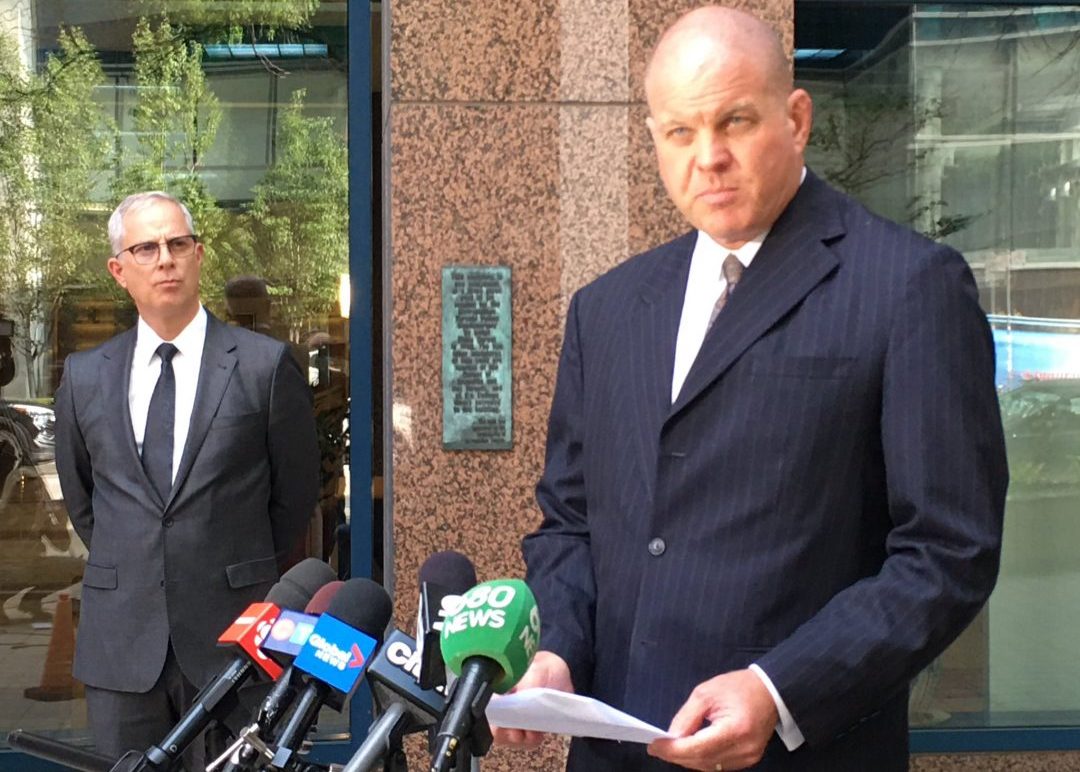
Parents, trustees and union leaders gathered outside a school on Friday, urging the province to preserve an award-winning program they say helps level the playing field in Toronto’s highest-needs neighbourhoods.
Speaking at Firgrove Public School in the Jane and Finch area, the group expressed “anger and frustration” over the dismantling of the Toronto District School Board’s Model Schools for Inner Cities program, which provides extra staff and resources to 150 elementary schools serving roughly 56,000 students.
“We want every kid to have amazing educational opportunities, even if some schools have less advantages than others,” said Omar Khan, co-chair of the board’s Inner-City Community Advisory Committee, noting that while some schools fundraise $300,000, others struggle to raise $300.
He credited the program with making Ontario a global “gold standard” for equity in the public school system, but said it is now being “gutted.”
The TDSB, which is under provincial supervision with trustees stripped of their powers, says it is “modernizing” its supports.
“We are modernizing the range of supports that are offered by the model schools program and moving away from the current model to ensure resources are directed where they are needed most,” said spokesperson Ryan Bird via email.
“Students will continue to receive the supports they need, and funding will be reallocated in a more targeted way based on student learning needs and outcomes. This change is part of the TDSB’s broader efforts to support student achievement, strengthen outcomes and ensure resources are focused where they will have the greatest impact in classrooms.”
The TDSB has said that next year staffing levels system-wide will be based on enrolment, class size and union agreements. The Elementary Teachers of Toronto says 145 teachers assigned to model schools are being cut — the TDSB disputes this number, but anticipates 289 fewer teaching positions across the system in elementary and secondary schools.
The TDSB is also cutting 40 vice-principals system-wide and eliminating 309 centrally assigned positions, which includes all 28 parent caregiver and community engagement workers assigned to model schools. The TDSB says staff reductions are linked to declining enrolment.
The model schools program provides additional staff, resources and funds to schools facing the greatest external barriers to student success. Sites are identified through the Learning Opportunities Index, which ranks schools based on socio-economic factors, such as household income, social assistance rates, parental education levels, and the prevalence of single-parent households.
For students, it has meant smaller classes, more staff support, mentorship opportunities and better access to resources from iPads to dedicated learning coaches and after-school programming that includes tutoring. For schools, it has meant bigger budgets — key in communities where fundraising is a challenge — to cover costs for classroom supplies, learning tools and field trips. And for parents, community support workers are there to help navigate the school system and social services. The schools operate as community hubs of sorts, offering nutrition programs, in-school medical clinics and free vision and dental screening.
Bibi Hanif, whose two children attend Firgrove, said as the parent of an autistic child, “I know how important supportive school environments and inclusive resources are,” noting cuts to these supports “disproportionately impact” families already facing barriers.
Anna-Kay Brown, whose kids attend other nearby model schools, said losing their community worker is devastating. She said these workers do everything from helping families secure housing and emergency grocery cards, to checking in on at-risk students in class to ensure “that they’re learning and on the right path.”
Trustee Alexis Dawson, who helped organize Friday’s event, emphasized that the program has improved student well-being and increased academic achievement. That, she noted, proves “high-needs schools can achieve strong outcomes with the right supports and resources.”
Sejal Patel, director and associate professor at the School of Early Childhood Studies at Toronto Metropolitan University, worries that ministry funding to school boards for equity-deserving students will be used at the TDSB to balance its budget.
“It would be a shame not to build on an existing evidence-based award-winning equity program,” she said. If anything, it “should be built on and sustained with central support and appropriate staffing.”