

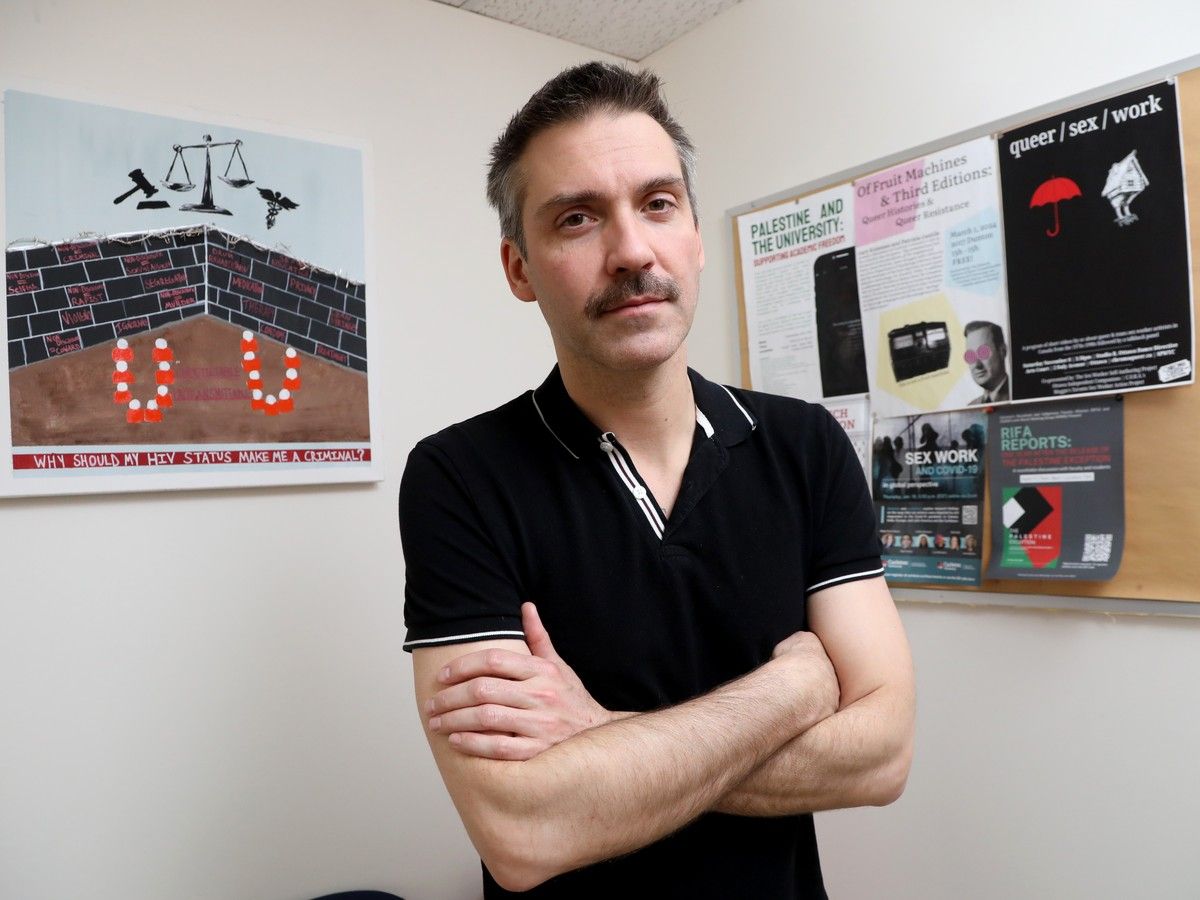
Ten years after Carleton University offered a vague apology for a former professor’s role in dishonourable Cold War-era research about queer people , two professors are trying to paint a full picture of Frank Robert Wake’s life on campus.
Ryan Conrad, a professor of sexuality studies at Carleton, who co-led the project, says the university’s reluctance to acknowledge Wake’s long shadow on campus is “horrifying.”
The federal government hired Wake, who was then the chair of Carleton’s psychology department, to devise a method to identify LGBTQ+ people working for the public service, military and RCMP.
Wake came up with the “fruit machine”: a battery of psychological tests, including techniques to measure a person’s output of sweat and detect how a subject’s pupils responded to certain words or images of naked men and women.
His creation did not work and was later abandoned. And yet throughout the 1950s and 1960s the government used it in compiling a list of thousands of suspected or confirmed LGBTQ+ people in the Ottawa area. Hundreds of people were demoted or fired from their positions and suffered psychological harm — with some dying by suicide.
In 2017, Prime Minister Justin Trudeau formally apologized to Canadians who suffered discrimination and injustice based on their sexual orientation, and the following year survivors of the LGBTQ+ won a major class-action lawsuit.
Wake’s government research was kept secret from the university, but Carleton professors say his federal contract to surveil people suspected of being queer is inseparable from his deep involvement with the university.
Conrad and Alexander McClelland, both LGBTQ+ professors at Carleton, have spent the past year poring over documents to paint a picture of his influence on campus life. The two academics have undertaken the research, which has not yet been publicized, on their own time and without funding.
Through digitized yearbooks, campus newspaper articles, conference presentations and other records, the professors found that Wake coached the university golf team and lectured about sex and dating in Ottawa high schools. Wake gave hundreds of interviews about his work, which focused largely on smoking cessation, to local newspapers and published more than 50 academic journal articles, according to their findings.
In Conrad’s view, Wake’s high-level role at Carleton — located in a government town — is the reason he was appointed to conduct the fruit machine research. Conrad said the university’s position that it was not responsible for academics’ research outside of their duties at Carleton was misplaced.
“One of the key people responsible for ruining the lives of thousands of Canadians because they were queer or gender non-conforming was a Carleton professor,” Conrad said.
“This guy would not have gotten that funding if he was not a professor at Carleton University, and having a more complete picture of him makes Carleton even more culpable.”
Wake was “very prolific at Carleton — he was very engaged in the life of the university,” said McClelland, who studies surveillance and criminalization. “He wasn’t some distant researcher.”
McClelland said the professor was foundational for Carleton’s psychology department and mentored and lectured countless students.
“That’s a complicated, troubled and fraught history,” McClelland said. “But I think there should be honesty and transparency about it.”
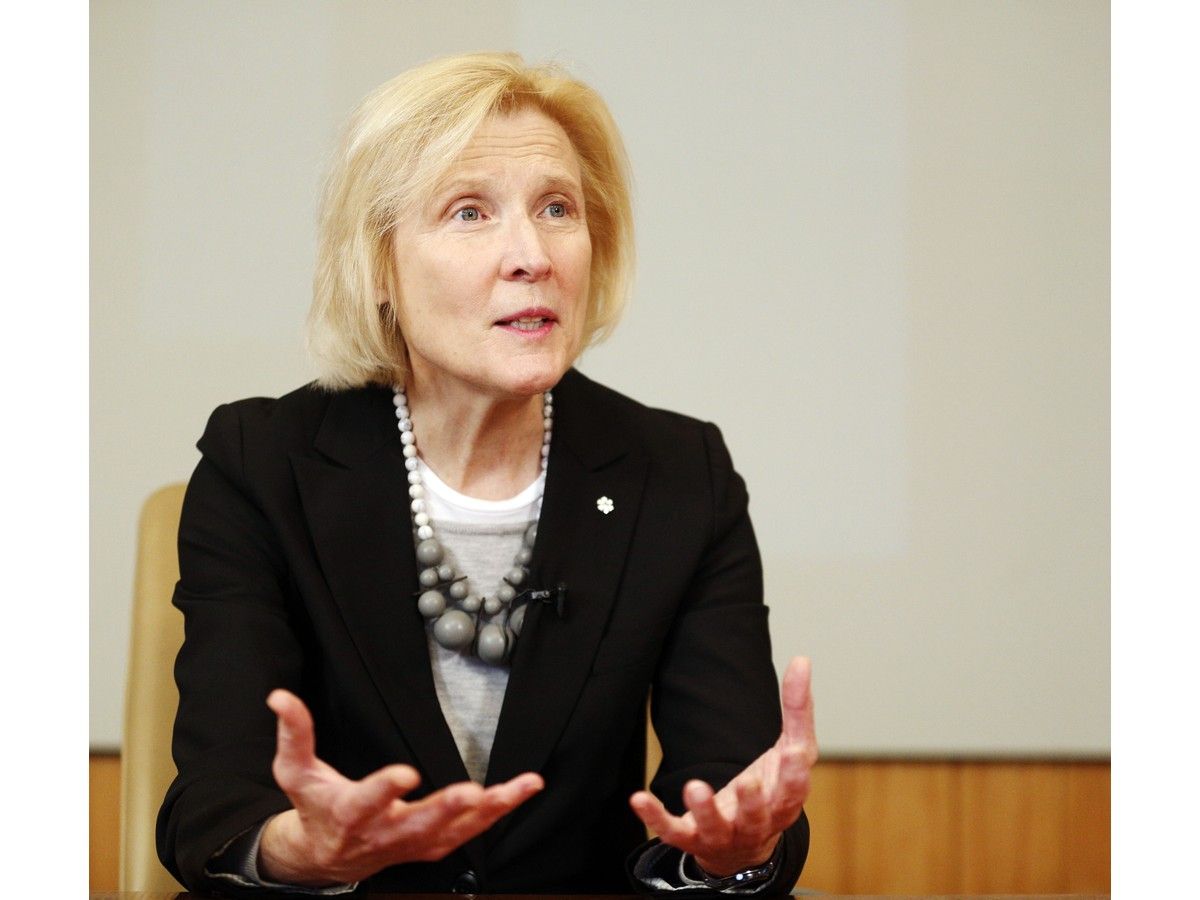
In April, 2016, Carleton president Roseann Runte made a vague statement in an end-of-year message to the university community after three students asked her to issue an apology for Wake’s work.
“I personally express my deeply-felt apology for the ignorance, prejudice and cruelty of humans over the centuries, the world over. If members of the Carleton University community in the past promoted any sort of prejudice, I sincerely regret this,” Runte said.
Conrad called the university’s handling of the students’ request “baffling.”
“I remember the first time I read it and thinking, ‘Whoa. That’s impressively bad,’” Conrad said. “I think it’s strange that the university wouldn’t do the most minimal gesture.”
In a statement, Carleton media-relations officer Steven Reid said the university was a safe campus environment that did not tolerate discrimination, harassment or sexual violence and called Carleton a “champion” of diversity, equity and inclusion.
“We do thank you for your outreach,” he said. “However, the university is unable to provide any comment on this shameful government project.”
Conrad and McClelland said that, as queer scholars at the institution, they would like to see Carleton publicly reckon with Wake’s work.
Carleton could apologize through better funding for its sexuality studies program, which Conrad called “a barely functioning minor with no full-time faculty,” or offering bursaries for LGBTQ+ students, he said.
Conrad said that Wake and the fruit machine were little-known among the general university population, and the psychology professor’s influence on Carleton’s early history meant community members deserved to know his history.
“It’s hard to ask for an apology if you don’t know you’re owed one,” Conrad said.
But it doesn’t matter that the university didn’t know about Wake’s outside research at the time, said Patrizia Gentile, a professor of cultural and gender history at Carleton and an author of The Canadian War on Queers: National Security as Sexual Regulation.
“We may not have known we harmed someone in the past, but that doesn’t mean we didn’t harm them,” she said. “Now we know it’s happened, and this is a chance for us to talk about it.”
Gentile said she was in favour of Carleton issuing an apology if it would be meaningful to LGBTQ+ people on campus. However, she personally hopes the university will materially invest in initiatives like an educational campaign about ethically researching LGBTQ+ people, which, she said, is an opportunity for Carleton to become a national leader in that area of study.
She said accountability and a sustained program like an educational campaign mattered more than a token apology.
“This marginalized community needs research that is based on ethics and an understanding about their lives,” she said.
“Atonement means this won’t happen again.”
Related
Our website is your destination for up-to-the-minute news, so make sure to bookmark our homepage and sign up for our newsletters so we can keep you informed.

