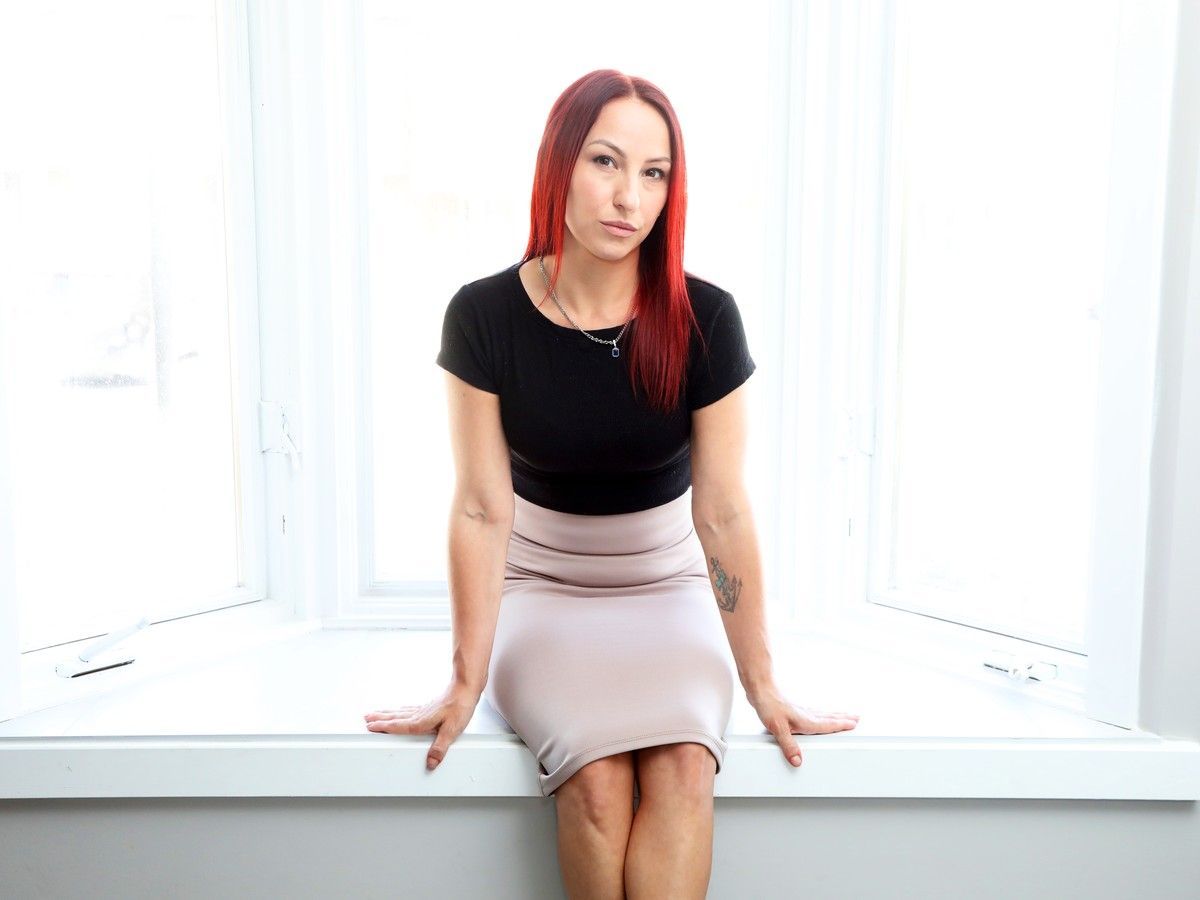
Karissa Renaud was 25 years old when she first experienced pain in her pelvic area so severe that trips to the emergency room at various Ottawa hospitals became routine.
Doctors couldn’t quite figure out the cause. Instead, she was prescribed antidepressants and birth control and labelled a hypochondriac by her closest friends. Doctors told her it was stress or anxiety .
“I had a point where I actually believed what was going around, about me making it up. And I was like, ‘Maybe I am imagining this. Maybe it is me.’ And that was hard,” Renaud says.
This happened as the pain spread into her legs, up her back, and along her ribs.
“I reached a point where I couldn’t function anymore. I was physically, emotionally and mentally exhausted out of options,” she says.
In 2024, her family doctor referred her to a gynaecologist, and it would still be another year until that appointment.
That’s when Renaud heard the debilitating pain she’s been dealing with for about a decade was likely the cause of endometriosis.
And while she is now on medication for it, the 34-year-old Gloucester resident can’t technically say she has it.
“The only way to fully diagnose is with surgery. Doctors do anything they can to not go there, which means a lot of women are frustrated, because they’re forced to try other options,” Renaud says. “But without a diagnosis, insurance doesn’t care.”
Endometriosis is a chronic disease in which tissue similar to that in the uterus grows elsewhere in the body. It affects about 1 in 10 Canadian women, according to the Endometriosis Network Canada, plus unmeasured two-spirited, gender-diverse and transgender Canadians. (Though much rarer, there are also cases of men with endometriosis diagnoses.)
Despite misconceptions, it isn’t a reproductive disease — it does not need a uterus to grow, spreads outside the reproductive system, and can fuse organs together.
It can even be fatal, as was the case for Kenyan radio host Jahmby Koikai, who in 2024 passed away at age 38 when her lung collapsed from a form of endometriosis.
Although advancements have been made since Renaud first experienced symptoms, Canada has no action plan for this common disease.
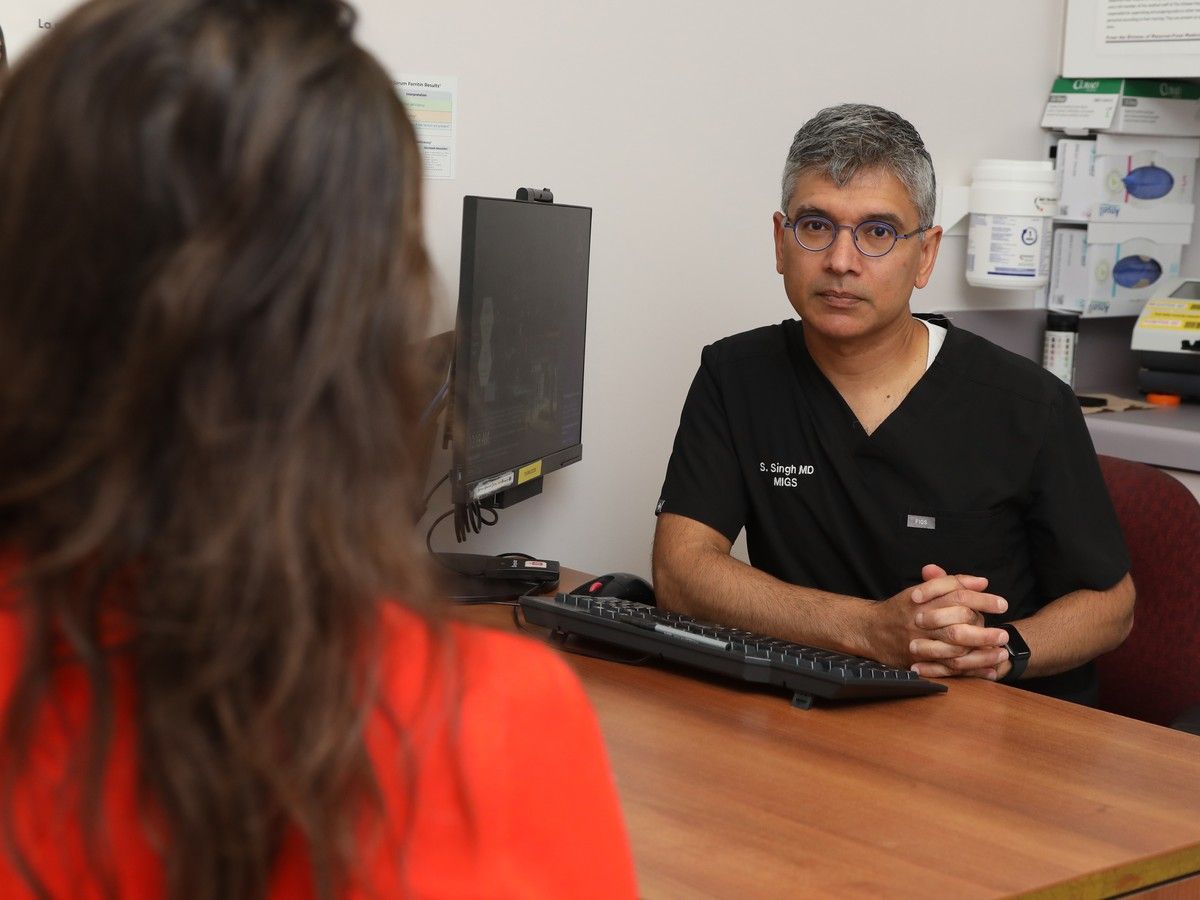
“I think we need political action. We need leaders, patients, and their loved ones to all advocate to prioritize this,” says Dr. Sony Singh, the head of obstetrics, gynaecology and newborn care at The Ottawa Hospital.
“We simply need somebody at the provincial level to write and to sign that this is a priority problem,” Singh adds, noting that Australia, France, the U.K., and Denmark all have national plans for endometriosis.
There is now hope for action through a petition that will be tabled in the House of Commons on July 8 by Green party MP Elizabeth May.
With 25,000 signatures, the hope is that the disease becomes recognized as a disability under federal and provincial programs.
There are calls for action coming from within the government, too. At a Federal Standing Committee on Health last November, the No. 1 recommendation from the women’s health report was to establish a national action plan on endometriosis.
The road to diagnosis
Because of a lack of funding and research, it takes about seven to ten years for individuals to get a diagnosis and access to endometriosis care here in Canada, says Singh, who performs minimally invasive diagnostic surgeries for the disease.
He says that although endometriosis is about as common as a migraine, it’s not considered a priority in Canadian health care.
“We are living in a system that is working in the way which we designed it, so we have nothing that incentivizes it to make this diagnosis, because once you make a diagnosis, the access to care to see a specialist and for surgery is years.”
Things that are funded, like eye conditions, will be diagnosed because there’s money going into paying them to have surgery immediately, Singh explains.
Singh and his colleagues wrote a guideline on endometriosis through the Society of Obstetrics and Gynaecology of Canada. Published last year, the focus was on urging for earlier diagnosis.
These barriers to relief are more severe for Black people, says Josephine Etowa, a professor at the University of Ottawa’s school of nursing.
In March, the Black Women’s Institute for Health surveyed 2,000 participants and found that anti-Black racism in Canadian health care is rampant, with half surveyed saying they delay care for fear of discrimination.
This means that Black women might be more hesitant to seek a diagnosis for endometriosis, says Etowa, who is also the Canada Research Chair in advancing Black women’s health.
“We know the issue is minimized and the symptoms are generally dismissed. So, when you add the layer that Black people face, of harm due to racial bias in the health-care system, we know they are less likely to have their pain believed and to receive adequate pain treatment. They’re also more likely to experience a delay in diagnosis,” Etowa explains.

Those who do seek a diagnosis might look elsewhere to find it.
Etowa spoke of a former colleague who, two years ago, suspected she had endometriosis. Her symptoms were severe, but the delay to surgical diagnosis was so long in Canada that she went to Nigeria for surgery. She passed away before receiving treatment because of the pain.
“We have people dying as a result of this,” Etowa says.
No clear way forward
Even after waiting a decade for surgery and diagnosis, there is often little relief beyond confirmation.
“In 2016, after I had my first surgery, I experienced the worst endo-symptoms I’ve ever had,” said Summar Bourada, a Nepean resident who advocates to end the disease.
Before diagnosis, Bourada struggled with worsening pain for a decade, which began in her stomach and spread as numbness in her legs.
When a doctor first told her about endometriosis, she had no idea what it was — and said no one really did, even 10 years ago.
After receiving an off-putting joke about removing her uterus that she didn’t find funny, she got her diagnosis.
Then, she found out her condition was more severe than she thought, and she was put on another surgery wait-list.

While waiting, Bourada said she would often black out in pain, couldn’t walk properly, and took the maximum amount of prescription painkillers she could.
Though she said a second surgery at The Ottawa Hospital helped, she still lives in constant pain and now needs a third operation.
“I’ve had multiple internal ultrasounds. I just had an MRI a couple of weeks ago, but they’ve confirmed that my endo is back. It’s stage four,” says the 32-year-old.
But Bourada isn’t discouraged. She’s busy organizing the annual “Run to End Endo” in Ottawa on May 30.
The run is a national initiative that brings the community together in support of The Endometriosis Network Canada.
For Singh, community is exactly what’s important.
“What we need to stress amongst people is that this is not a disease of an individual. It’s not about gender. It’s a community disease,” he says. “It’s a condition that impacts individuals, families, and society at large.”
Related
Our website is your destination for up-to-the-minute news, so make sure to bookmark our homepage and sign up for our newsletters so we can keep you informed.