OTTAWA — The Carney government presented new proposals to the U.S. on Tuesday that it said should address trade complaints of the Trump administration and are aimed at restarting formal trade talks on the continental trade pact.
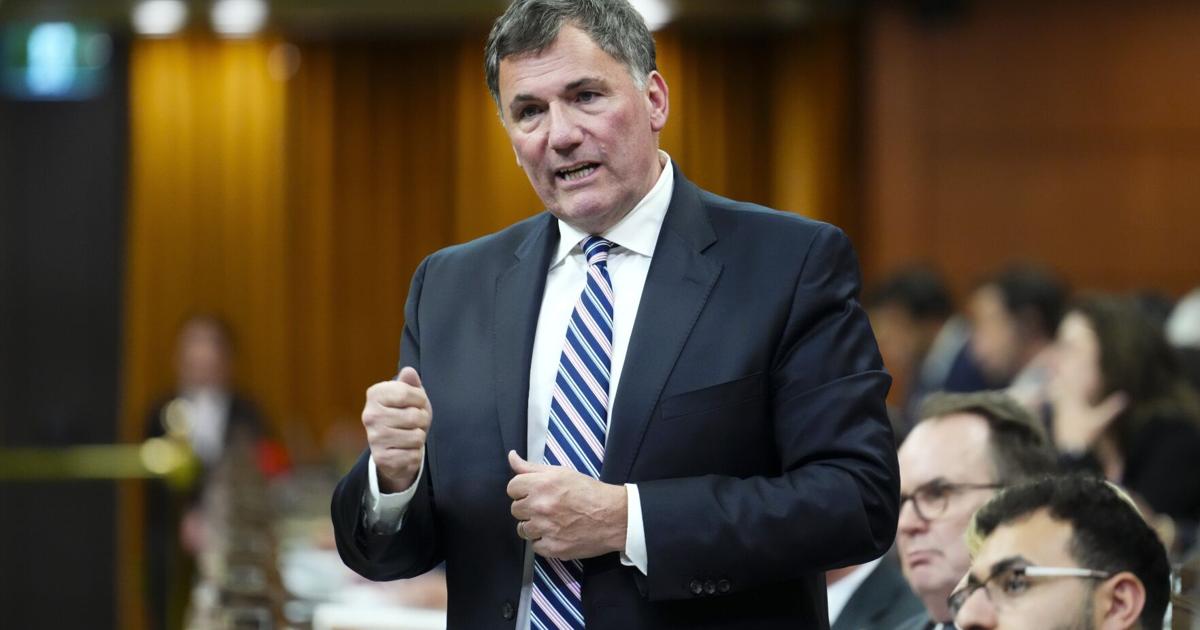
“We presented a number of specific proposals to (U.S. Trade Representative Jamieson) Greer that we think are good in the broader context of the North American economy and respond to some long-standing issues that the United States has raised with us,” said Canada-U.S. Trade Minister Dominic LeBlanc.
But LeBlanc refused to publicly detail the proposals or say which U.S. complaints they address. The U.S. has a laundry list of irritants, including Canada’s regulation of big U.S.-based tech firms, quotas imposed for American producers in protected agriculture sectors like dairy, the leasing of Crown forested lands to lumber companies, and even provincial government bans on U.S. alcohol sales.
LeBlanc said the proposals are “measures that should give the Americans a lot of comfort.”
And the minister denied bilateral trade talks are stalled, saying they have been effectively underway again since he and Greer began talking in March, following a five-month suspension ordered by President Donald Trump in protest of Ontario’s anti-tariff ad blitz.
The U.S. insists formal trade negotiations are only underway with Mexico, as its officials continue to complain Canada has yet to address trade irritants.
Speaking at the Canadian embassy in Washington following a meeting with Greer, LeBlanc told reporters he and Janice Charette, Canada’s chief trade negotiator, also raised American sectoral tariffs on autos, steel, aluminum and lumber products — which apply globally but are “extremely difficult” for sectors that are “essential to the Canadian economy,” LeBlanc said. Prime Minister Mark Carney has said those are in violation of the Canada-United States-Mexico Agreement, known as CUSMA in Canada.
But LeBlanc would neither say what he proposed nor how Greer responded, citing a promise to keep their discussions confidential, which he said is essential to building trust.
LeBlanc said they agreed to continue “exchanges” this week as Greer heads to Europe, and to be in touch next week.
The meeting, which LeBlanc described as “long” and “positive,” came after Canada formally notified the United States and Mexico it wishes to renew the trade pact for another 16 years, but is open to improvements. Reuters reported Tuesday that Mexico has also said it would like to renew the deal for 16 years.
In a letter Monday to his counterparts, LeBlanc stressed the mutual benefits to all three economies of the free trade region that spans North America.
At the Washington news conference, LeBlanc revealed Mexico and the U.S. have also communicated formally their intentions to Canada but declined to reveal what the correspondence said.
Canada’s letter, released Tuesday morning as LeBlanc and Charette were in Washington, amounts to legal notice under the 2018 agreement that requires all parties to signal their intent before July 1 whether they wish to renew or engage in annual reviews of the trading arrangement. Any party could withdraw altogether with six months’ notice.
The letter was released before LeBlanc and Charette met at 3 p.m. with Greer against another backdrop of taunts by Trump.
Late Monday night, amid a stream of posts endorsing various U.S. politicians, Trump posted “51st state!” on his social media platform, Truth Social, as he linked to a Bloomberg story reporting Canada has dipped into a “technical recession” for the first time since 2020 after two consecutive quarters of contraction in economic activity.
U.S. Ambassador to Canada Pete Hoekstra, who previously shrugged off Trump’s 51st state talk as joking, reposted the president’s comment on X.
In Montreal in the afternoon, the prime minister declined to directly respond to the jab, saying the president is “an exceptionally active user of social media,” particularly in recent months “and we’re not going to respond or react to everything that he posts.” And Carney answered “No” to a media question about whether the ambassador should be asked to leave.
“It’s an administration that we have to work with. It’s our biggest trading relationship, it’s our biggest security relationship, many other relationships, and we work with that administration. We take the administration as it is,” Carney said.
But at Queen’s Park, Premier Doug Ford fired back at Trump’s latest “51st state” statement. “Enough of the nonsense — rubbish I should say — from President Trump. I get tired of that guy,” said Ford.
Nevertheless, the Canadian government insists it is having constructive contacts with the Americans, despite the lack of formal bilateral negotiations that Mexico is having with the U.S.
Leblanc, in his letter, reminded his counterparts that a renegotiated CUSMA is a key to prosperity, calling it “highly beneficial to our countries and to the integrated North American economy. North America is one of the largest and most successful economic regions in the world.
“Together, we can compete globally,” wrote LeBlanc, in an echo of Carney’s pitch last week in New York for the U.S. to view Canada as a key competitive asset and ally in global trade.
Leblanc said the joint review process is a chance to assess “whether there are ways to strengthen it and consider where improvements may be warranted, to keep up with evolving economic conditions,” without specifying what areas Canada wants to improve.
And while the Carney government is willing to consider “any proposal that can be beneficial to all three nations’ long-term prosperity,” LeBlanc stressed that addressing the punitive American sectoral tariffs “will be essential.”
Leblanc did not specify which of those tariffs are deal-breakers.
The Trump administration has levied hefty duties on steel, aluminum, autos, lumber, copper and cabinetry manufacturing. On Monday night, the U.S. slightly adjusted certain tariffs hitting farm and construction equipment, as economic pressures mount on food producers.
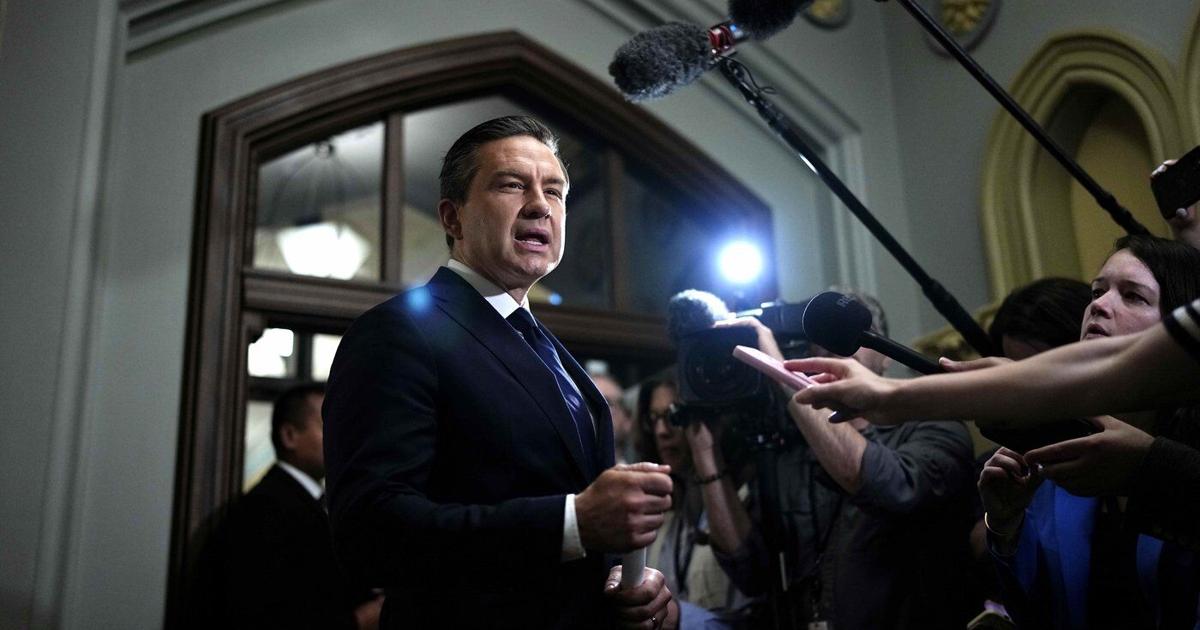
Conservative Leader Pierre Poilievre told reporters that Trump’s ongoing “51st state” statements are “ridiculous” and Canadians must not let themselves be distracted by that talk.
Poilievre said he is “concerned” that LeBlanc is travelling to Washington “at a time when Mark Carney has led us into the only recession in the G7,” which Poilievre said puts Canada in a position of weakness.
But Carney suggested Tuesday that Canada’s economic position is a complicated picture, with some of the weakness due to his government’s decisions to rein in immigration, which has dampened population growth, and government spending.
Carney acknowledged “choppiness in terms of how investment is happening, but we’re also seeing at the same time the foundations coming into place, settling in for that stronger, more resilient economy.”
With files from Robert Benzie
Error! Sorry, there was an error processing your request.
There was a problem with the recaptcha. Please try again.
You may unsubscribe at any time. By signing up, you agree to our terms of use and privacy policy. This site is protected by reCAPTCHA and the Google privacy policy and terms of service apply.
Want more of the latest from us? Sign up for more at our newsletter page.