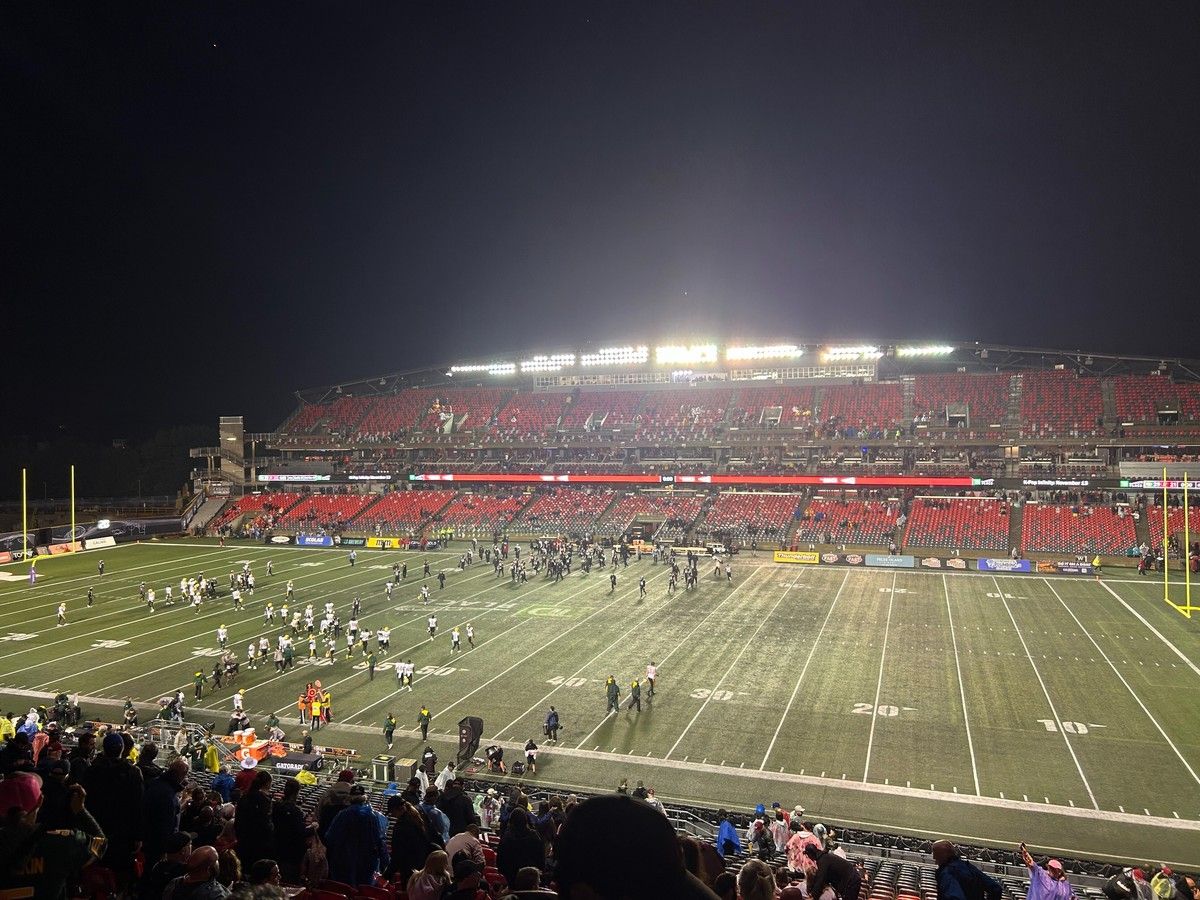
As rain poured during the Ottawa Redblacks’ home opener Saturday , longtime season-ticket holder Lanny Underhill couldn’t help but notice the contrast.
From his seat high under the roof on the north side of the stadium, he watched fans pack into covered sections while much of the exposed seating on the south side sat noticeably empty.
“Tons and tons of south-side people and north-side people that were down below were coming up and asking, ‘Are these seats taken? Are these seats taken?’ because they were just trying to get out of the rain,” Underhill said.
For Underhill, the scene underscored what he sees as one of the biggest flaws in Lansdowne 2.0 . The $418.8-million redevelopment project will replace TD Place’s aging north-side grandstand with a new 12,400-seat structure, but the new stands will be built without a roof.
The existing north-side grandstand includes an overhanging roof that covers a large portion of the seating area.
“We’ll probably have to re-evaluate,” Underhill said when asked about his future as a season- ticket holder.
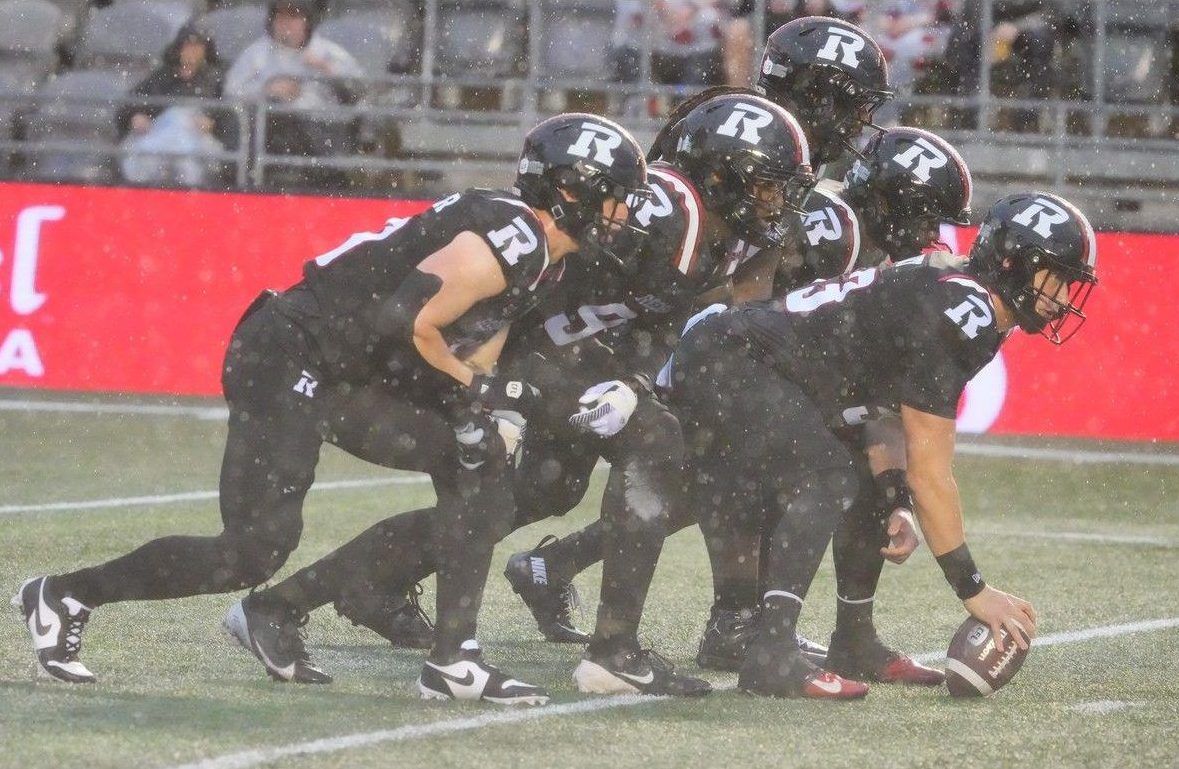
Underhill’s comments came as the Redblacks continued to battle what has become a seemingly endless streak of bad weather luck. Rain, lightning delays and gloomy forecasts have become a recurring feature of home games in recent years, often affecting attendance and fan experience.
“It is statistically improbable that we could have the amount of rain on Redblacks game days that we’ve had over the last three or four years,” Ottawa Sports and Entertainment Group president and CEO Mark Goudie said.
The weather can have a direct impact on attendance, particularly in the CFL where many fans buy tickets shortly before kickoff.
“The big problem in CFL football and in Ottawa is a big portion of your crowd is walk-up,” Goudie said. “When you’ve got a forecast that’s forecasting rain on game day, that just kills your sales.”
While Goudie acknowledged the appeal of a covered grandstand, he noted that most open-air stadiums across North America do not have roofs over their seating areas.
For Underhill, avoiding Ottawa’s unpredictable weather was exactly why he moved his season tickets years ago.
Originally seated lower in the north-side stands, he and his wife eventually relocated farther back beneath the overhang.
“Why sit in the rain when you could sit perfectly dry?” he said.
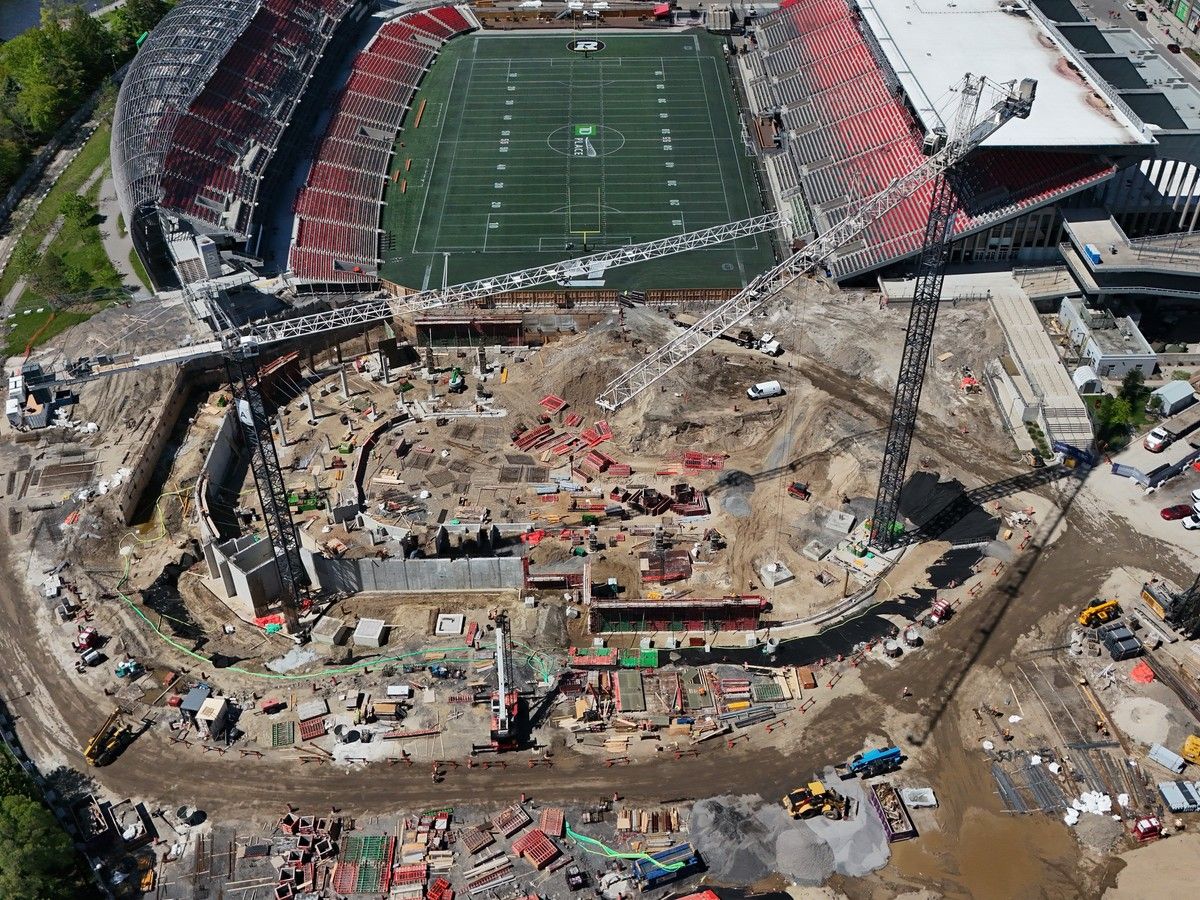
As construction continues around Lansdowne, reminders of the site’s future are already impossible to miss.
Beyond the east end zone, a large construction pit has become a familiar sight for fans this season. When kicks disappear into the excavation area, the jumbotron flashes “In The Pit” before public address announcer Mike Sutherland bellows the phrase in his booming voice.
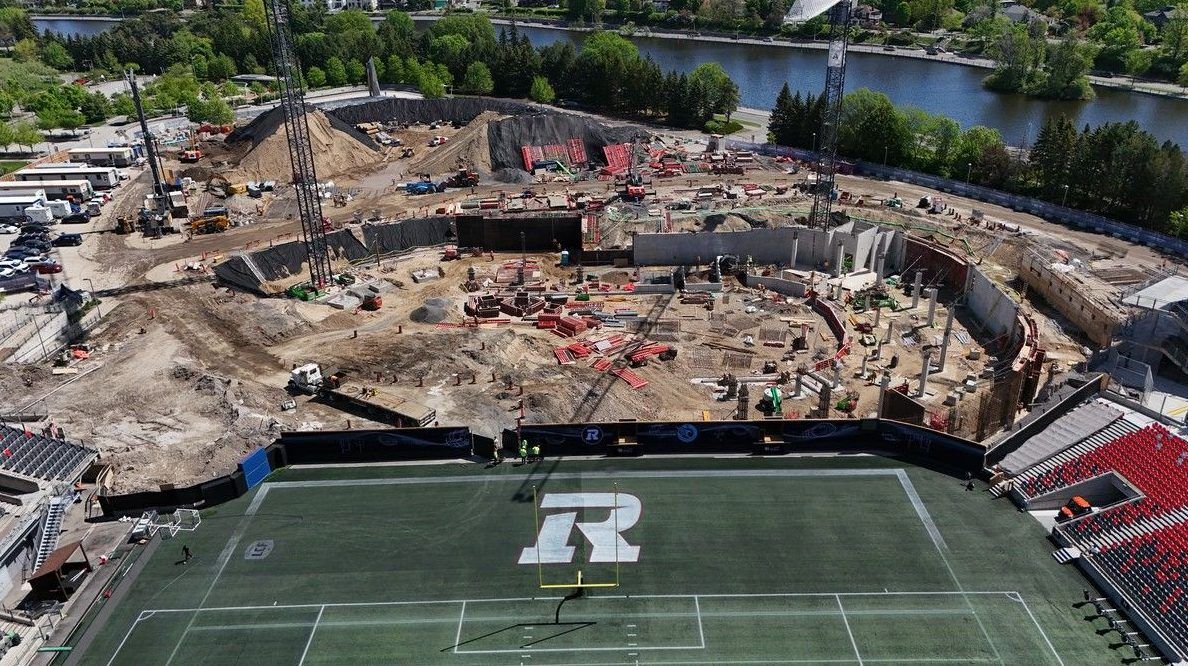
The pit is part of the first phase of Lansdowne 2.0, which will replace the aging arena and eventually see the north-side stands rebuilt.
Before council approved the project, Capital Coun. Shawn Menard introduced a motion calling for a roof over the new north-side grandstand similar to the one that exists today.
“If you’re going to do this new development, which I didn’t agree with, you should have a roof, because we have a roof now,” Menard said.
Menard said the issue has become increasingly important as Ottawa experiences more extreme weather events.
He pointed to Atlético Ottawa’s “icicle kick” match last year, when snow fell during a memorable Canadian Premier League final at TD Place.
“I was sitting under the roof at that point with my son when it was snowing,” Menard said. “What a cool experience, but great to have that roof over your head.”
Menard said experiences like that underscore the importance of weather protection at outdoor venues.
“We’re seeing more and more storms come through,” he said. “Climate change is a big factor.”
Goudie said a new roof over the north-side stands carried an estimated cost of roughly $20 million.
Still, Goudie said the idea is not necessarily gone forever.
“We did some work with the city and with the city’s architect to understand whether we could put a roof on the north-side stands after the fact,” he said. “It is possible.”
According to Goudie, engineers determined a future roof could be added through an exoskeleton-style design anchored independently from the grandstand structure itself.
“That remains a long-term possibility,” he said.
Saturday’s storm also led to some confusion before kickoff.
Some fans said they were left waiting in the rain for up to 20 minutes after gates were scheduled to open at 6 p.m. while heavy rain moved through the Glebe.
Goudie said a shelter-in-place order was implemented under standard stadium management procedures, meaning gates remained closed and fans were directed to nearby shelter locations such as the Aberdeen Pavilion until conditions improved.
However, he said a miscommunication at one entrance resulted in some fans being allowed inside during the shelter-in-place order, leading others to believe the stadium had officially opened.
For Underhill, the evening illustrated exactly why the roof matters.
After waiting outside in the rain before kickoff, he spent much of the game watching fans crowd beneath the north-side overhang while large sections of the exposed south side sat empty.
With the current north-side grandstand slated for demolition, Underhill worries future fans won’t have the same shelter from Ottawa’s unpredictable weather.
“Having the luxury of the roof is the big thing,” he said. “We know pretty much above all else we’re sitting high and dry.”
Our website is your destination for up-to-the-minute news, so make sure to bookmark our homepage and sign up for our newsletters so we can keep you informed.