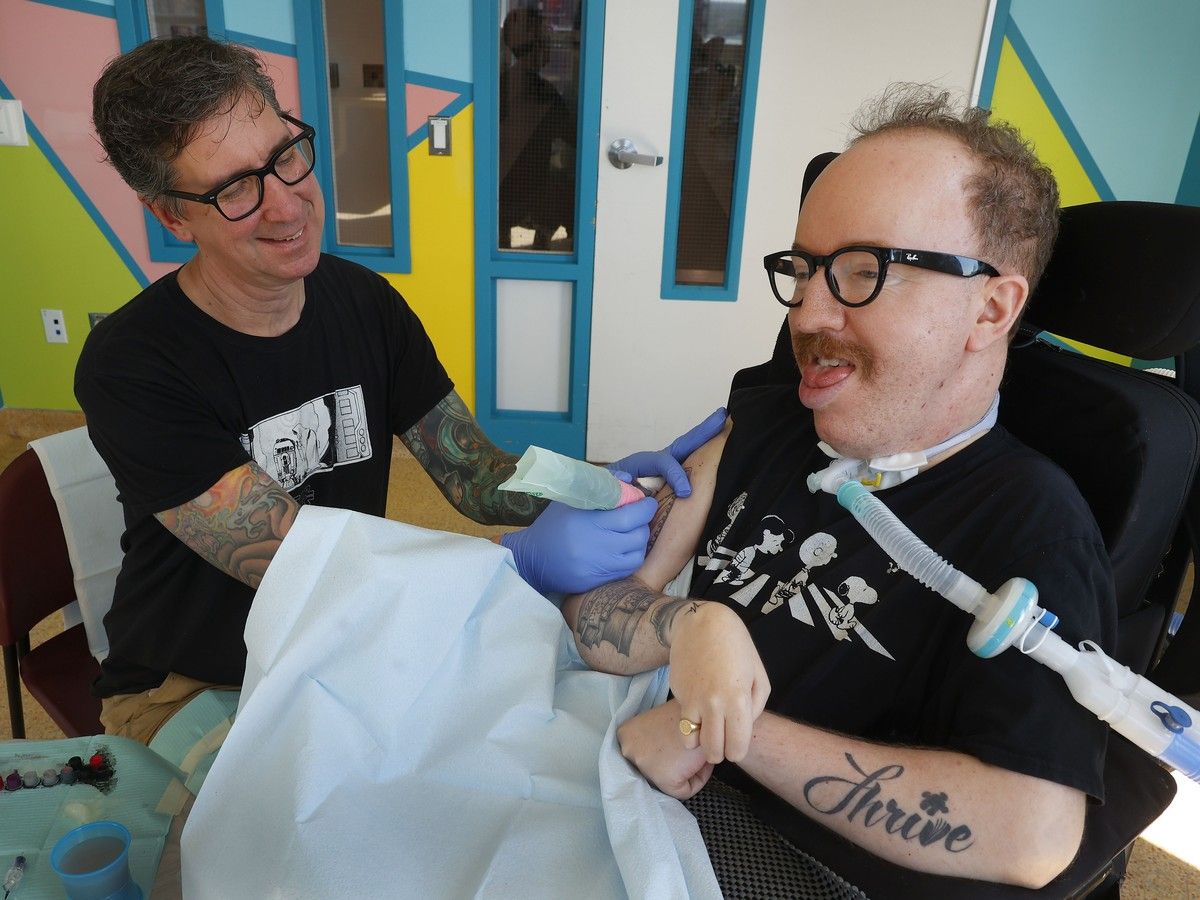
On a recent afternoon in a family room on the fifth floor of the Bruyère Health Centretown campus in Chinatown — formerly St. Vincent Hospital — Hollis Peirce got his fifth tattoo.
The new ink, on his right bicep, shows an opened zipper, underneath which muscle tissue is revealed. Tattooer Glen Paradis drew the image overtop of a scar that is nearly four decades old — so old that Peirce doesn’t remember getting it.

It goes back to when Peirce was six months old and, following a muscle biopsy, was diagnosed with congenital muscular dystrophy .
I asked him whether the new tattoo was a cover-up of the scar — not an uncommon practice among patients who have undergone surgery. He assured me it wasn’t. Quite the opposite, the scar was being incorporated into something new. It was part of the design.
“I just want to unzip my history,” he said.
This was not the first tattoo that Paradis had done at the hospital. For three years now, he’s been making occasional visits to the fifth floor — specifically 5North, where some of Bruyère Heath’s most medically complex continuing-care patients live. He estimates he’s done about a dozen tattoos there on a handful of patients.
Peirce wasn’t only Paradis’ most recent client at the hospital — he was also his first.
To be clear, there is no tattoo program at Bruyère — no funding, no policy initiative, nothing officially sanctioned. The tattoos exist because one person wanted one, one chaplain decided to help, and one tattooer agreed to come.
It began in 2023 when Peirce told Roshene Lawson, a clinical chaplain at Bruyère with ink of her own, that he wanted to get a tattoo. He liked Lawson’s tattoos and those of his occupational therapist.
Now 38, Peirce had moved into the hospital only a year earlier after his health needs increased to the point that independent living was no longer possible. He was still adjusting to life there, and while he knew he wanted a tattoo, he didn’t know if that would be permitted or even possible, given the medical, accessibility and mobility issues involved.
So Lawson began calling and visiting tattoo shops to try to make that happen. About a dozen declined before she walked into Paradis’ Barnstormer Studio in the Glebe. She wasn’t asking for charity, she explained — Peirce would pay for the tattoo. She just needed a tattoo artist willing to make a house — or hospital — call.
“He just wants to get a tattoo and feel normal for a day,” she recalls telling Paradis.
Paradis couldn’t think of a single reason to say no.
“Someone wants a tattoo? Cool. That makes them happy,” he said. “At the end of the day, it’s a small thing to do, right?”
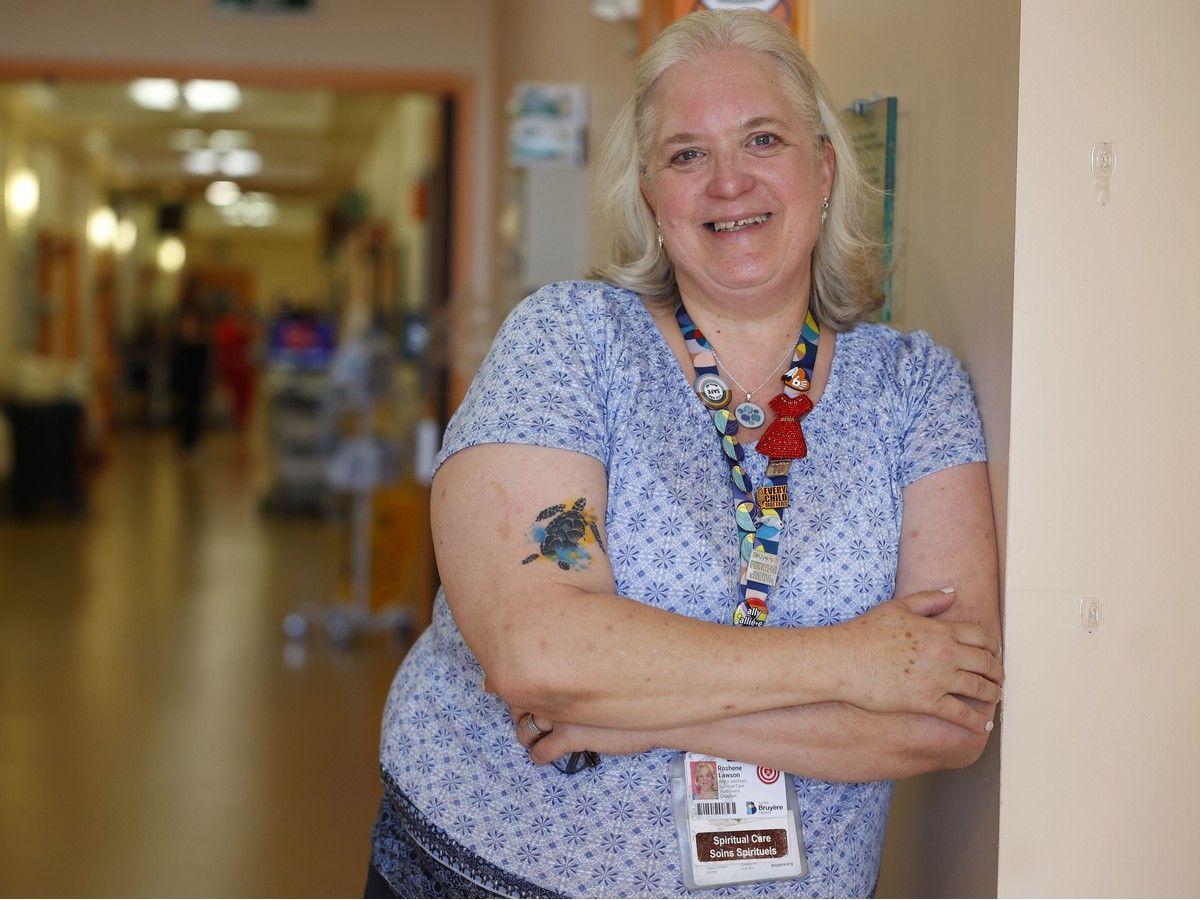
The first tattoo he inked on Peirce was the single word on his left forearm: Thrive.
For Peirce, it was both a rebellion and an inspiration.
“The reason ‘Thrive’ is so meaningful to me is when my doctors diagnosed me, they told my parents that I would have an inability to thrive.”
His master’s degree from Carleton University might argue the point. So, too, the podcast on disability — 21st Century Disability — that he hosts from his hospital room, or his participation in motorized wheelchair hockey. His advocacy for those with disabilities earned him a Governor General’s award for meritorious service.
The design of the ‘Thrive’ tattoo, meanwhile, is filled with personal symbolism. The dot above the “i” is a jigsaw puzzle piece representing muscular dystrophy. The “v” resembles an open book, a nod to his academic life. The “t” and “h,” he said, depict him in his wheelchair.
The tattoo is a middle finger, but it’s also encouragement to thrive, to do better.
Neither Lawson nor Paradis is surprised that people on 5North want tattoos. They’re more taken by how excited patients are to get them, with Paradis describing them as “ridiculously” happy.
Paradis, who also does coverups of tattoos on women who were sex trafficked, and nipples and other designs on those who’ve undergone mastectomies, only charges patients $50 for the tattoos, far below his usual rate.
His experience at the hospital, meanwhile, had an unexpected result: after doing a couple of tattoos there, he began returning once or twice a week as a volunteer. Sometimes he plays cards with patients. Sometimes they’ll talk about music or movies — Paradis is a certified Star Wars tattoo artist. Other times, the conversations are heavier.
He remembers speaking with one patient with ALS, since deceased, about dying and being frightened .
“Sometimes I have to go for a walk after,” he said. “It’s not a weight like a burden. But it can be a heavy conversation and sometimes I just need to process it.”
The tattoos themselves, he added, aren’t all that different than those people get anywhere else.
“They’re reminders of a person, a place or a thing that is meaningful,” he said. “They’re the same kinds of things everyone gets. But I think they’re more attached to it.
“There are often tears after it’s done — happy tears.”
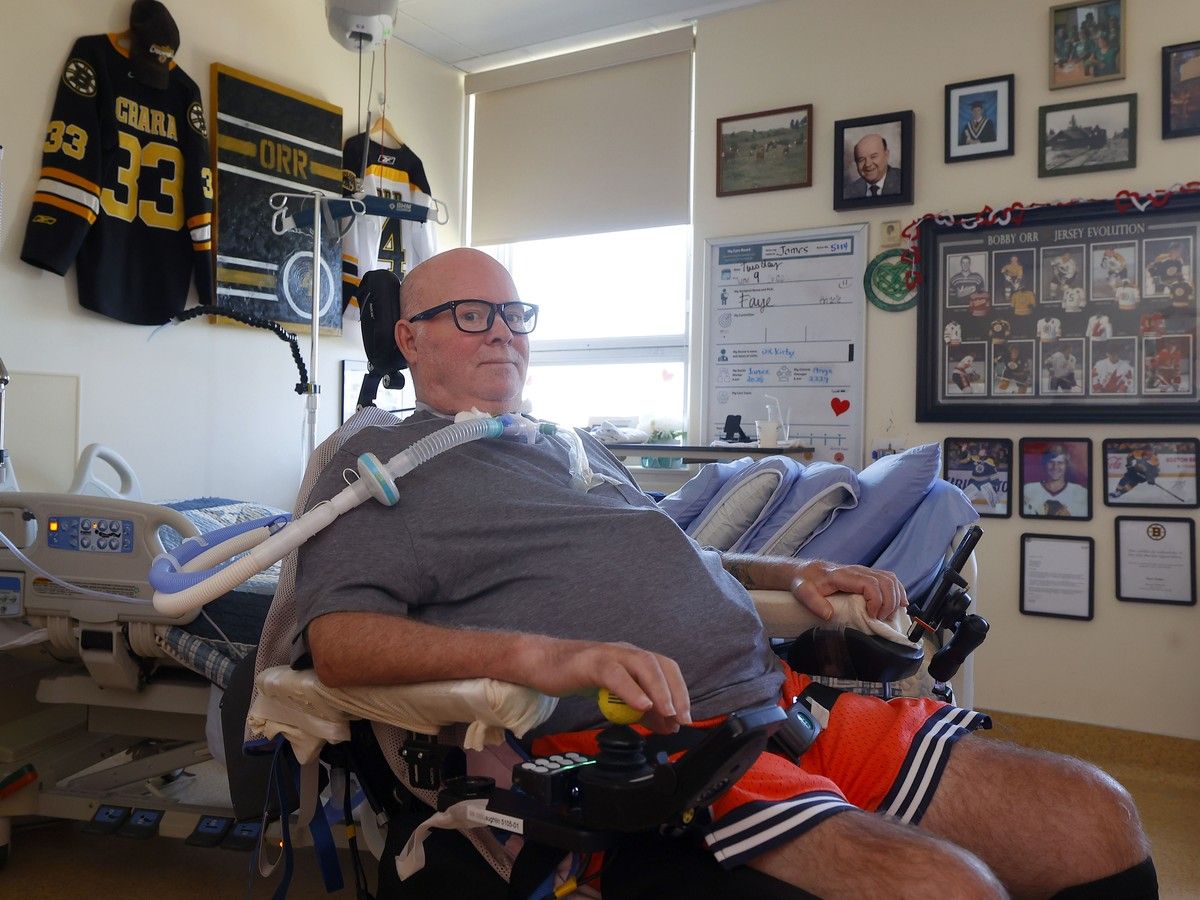
Down the hallway from Peirce’s room, James McLaughlin shows off the Boston Bruins’ tattoo on his left arm. A fan of all things Irish, his tat also bears the Boston Celtics’ mascot, Lucky the Leprechaun, holding a hockey stick and puck.
Now 64, McLaughlin, who has ALS, spent four decades working at the Civic Hospital before becoming a patient himself.
“I’d seen some of the others’ tattoos,” he said, “like Roshene’s and Hollis’s, and I thought, ‘Why not?’ It was kind of on a whim.
“I just never got around to doing it until this happened to me. I thought I’d better do one now because, otherwise, time might not allow.”

But if his showdown with mortality helped spark him to get a tattoo, it wasn’t the reason. It was simply a matter of living the way he wanted.
“It was just doing something that wasn’t hospital- or ALS-related,” he said.
The walls of his room are covered with Bruins and Bobby Orr memorabilia. The tattoo simply joined the collection.
Another patient, Tim Berry, was preparing for his first tattoo — an owl.
“It’s my favourite animal,” he said, “my spirit animal.”
Berry was diagnosed with muscular dystrophy when he was five. Now 27, he has lived in the hospital for the past five years.
He confessed he was somewhat nervous about the tattoo — but not about the pain or the final product.
“It’s my first one,” he said.
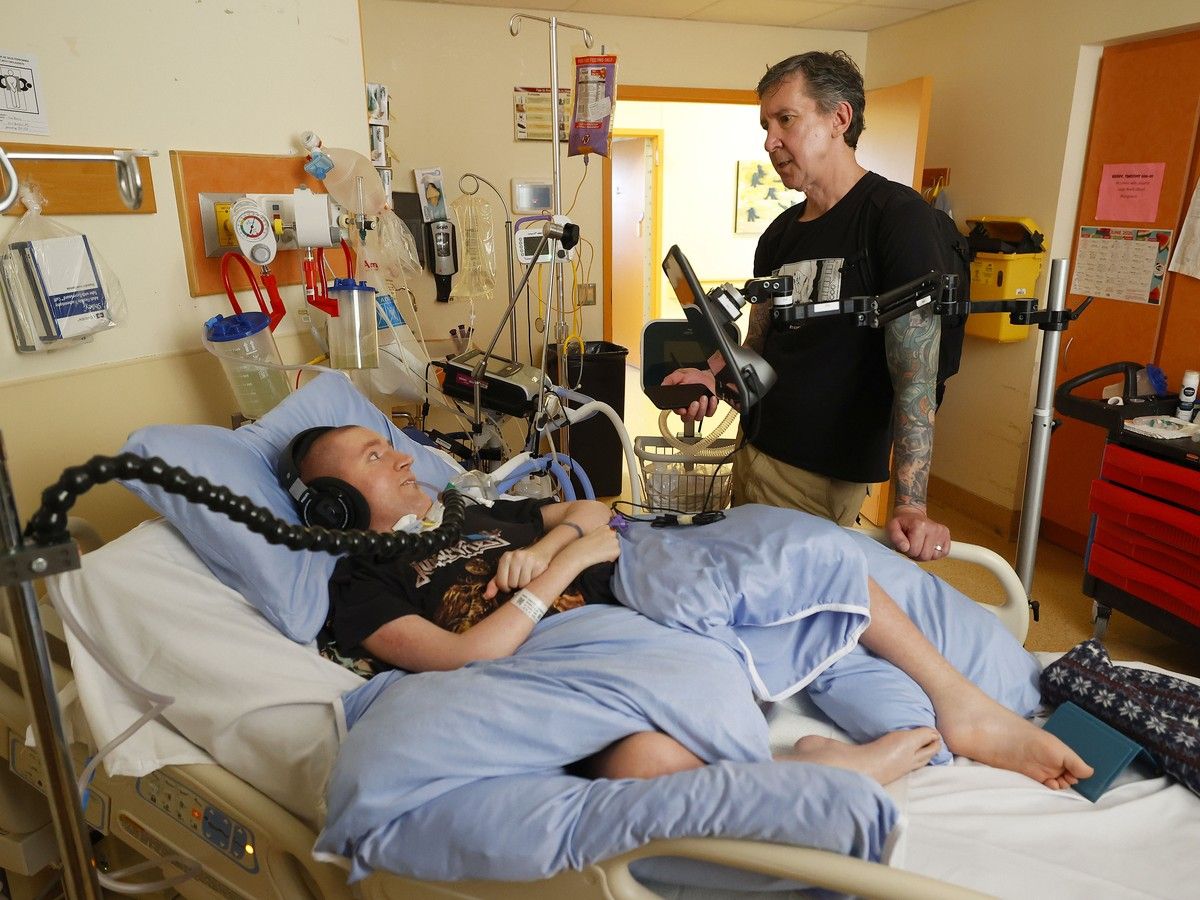
The realities of his condition also helped push him toward getting a tattoo — if he was going to do it, why wait? — but like McLaughlin, the tattoo represents a welcome break from the routines of hospital life.
That’s why Lawson sees the tattoos as a form of spiritual care. They’re not about illness or death; they’re about living.
“When you’re living in care,” she said, “there are only so many times you can talk about how your medicalized life is going.”
Those conversations matter, she added, but they eventually beg other questions. “How do you want to live? What do you want to do?”
The patients on 5North know things that most of us typically don’t have to dwell on. Their diagnoses come with trajectories that are difficult to ignore.
By getting tattoos — of mountains, owls, sports logos, zodiac signs, flowers, heartbeats and, yes, zippers — they’re not trying to erase their illnesses or pretend mortality doesn’t exist. They’re simply refusing to let those be the whole story.
Our website is your destination for up-to-the-minute news, so make sure to bookmark our homepage and sign up for our newsletters so we can keep you informed.