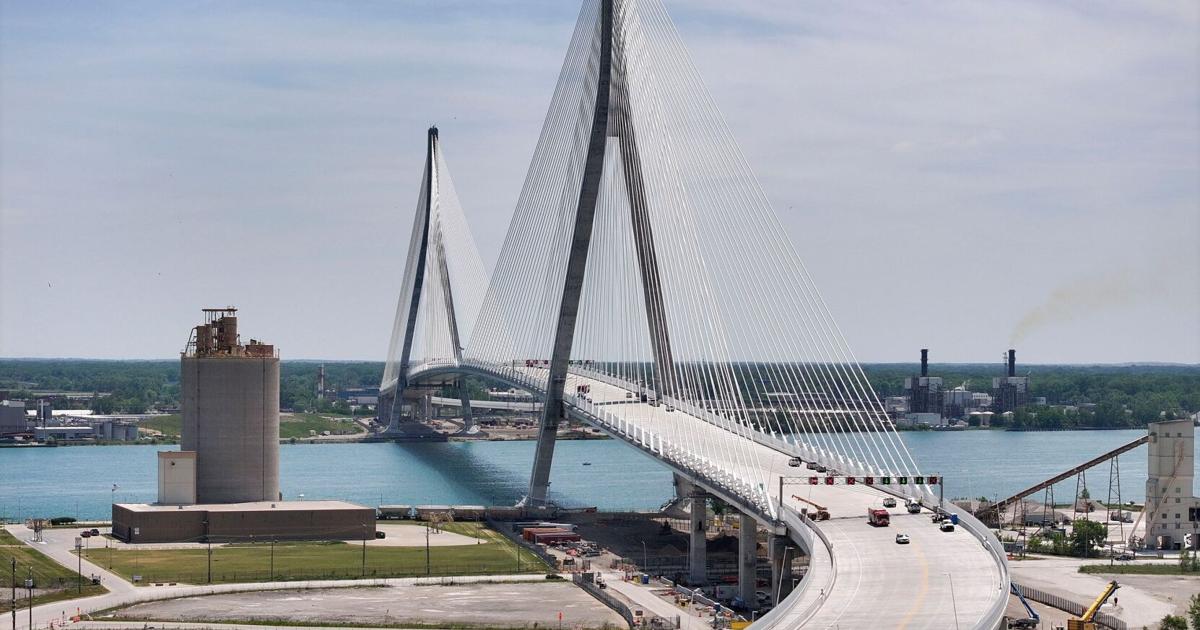
For border businesses and truckers, nothing has been more eagerly anticipated than the opening of the new bridge linking Windsor and Detroit.
Yet last Friday, they saw their long-awaited hopes dashed again following an earlier delay last fall. The gleaming Gordie Howe International Bridge — built and paid for by Canada to speed the flow of trade between the two countries — was ready for traffic. But its opening was postponed at the request of the Trump administration, giving both sides more time to resolve “outstanding issues,” according to Prime Minister Mark Carney.
“It’s a symbol of the short-sighted damage that this administration is doing to the world’s most important bilateral trading relationship,” said Daniel Tisch, the president of the Ontario Chamber of Commerce.
“Businesses in Ontario are angry. My American business friends and partners, they say the same thing,” Tisch said. “They’re angry about unacceptable delays in the opening of infrastructure that is essential to their economy and to ours.”
The disappointment among Canadian business groups is profound, given the efficiency gains and economic benefits the Gordie Howe Bridge could have delivered, regional leaders told the Star.
Every day of delay means higher toll costs for truckers and businesses using the existing corridor, the 97-year-old Ambassador Bridge — and more time lost in congestion on the bridge’s limited four-lane width.
The supply chain linking Windsor and Detroit is so integrated that “everybody gets hurt whenever there’s a disruption,” said Peter Frise, a mechanical engineering professor at the University of Windsor.
But the existing bridge is outdated, he said. Crews still have to place orange traffic cones by hand to change the direction of traffic before the evening rush.
The Ambassador Bridge handles over $390 million of trade every day, representing 26 per cent of Canada’s exports by road as of 2021, according to Transport Canada.
That bridge built in 1929 does not have the capacity to handle the current volume of trade between the two countries, said Fraser Johnson, a supply chain expert and professor at Western University’s Ivey Business School.
“If you think about all the automotive parts that come from Canadian plants, the border should not be a bottleneck in the transportation process,” said Johnson.
While the delay is disappointing, Dennis Darby, the president of Canadian Manufacturers and Exports, said what matters most is that Gordie Howe opens as soon as possible to deliver the long-term benefits.
“We would love to see the bridge open,” said Ryan Donally, the president of the Windsor Essex Chamber of Commerce, adding that the Gordie Howe Bridge’s six lanes and advanced screening facilities would reduce travel times and greenhouse gas emissions.
“It’s a bridge that’s built for the future,” said Donally.
Mike Parent, president of the Windsor Transportation Club, said local residents and truckers were anticipating the efficiencies the bridge will bring, as its connection between Ontario’s Highway 401 and Interstate 75 will divert heavy truck traffic away from Windsor’s city streets.
It remains unclear what the U.S. hopes to gain by delaying the bridge’s opening. The Moroun family, owners of the rival Ambassador Bridge, have spent years fighting the Gordie Howe Bridge project through lawsuits and lobbying efforts aimed at the White House.
In February, Donald Trump said on Truth Social that the bridge would not open unless the U.S. was “fully compensated.” Michigan Republican House Speaker Matt Hall said last Thursday that the U.S. should receive half of the new bridge’s toll revenue.
In 2012, Ottawa and Michigan signed an agreement to share ownership of the Gordie Howe Bridge. Canada would be solely responsible for designing, building and financing the project, while toll revenues would be shared with the State of Michigan after Canada recovers its construction costs.
Following years of delays and cost increases, Canada ultimately spent $6.4 billion to build the bridge.
Tisch of the Ontario Chamber of Commerce said it would be a “disregard for the rule of law” to put an agreement that has already been signed back on the table.
“It yet again appears the private interest is being prioritized over the public interest of both Americans and Canadians,” he said.
“What will be really sad here is if there is any significant delay in getting this infrastructure open at the exact time that businesses in both countries are struggling and trying to invest in their own growth.”
With files from The Canadian Press