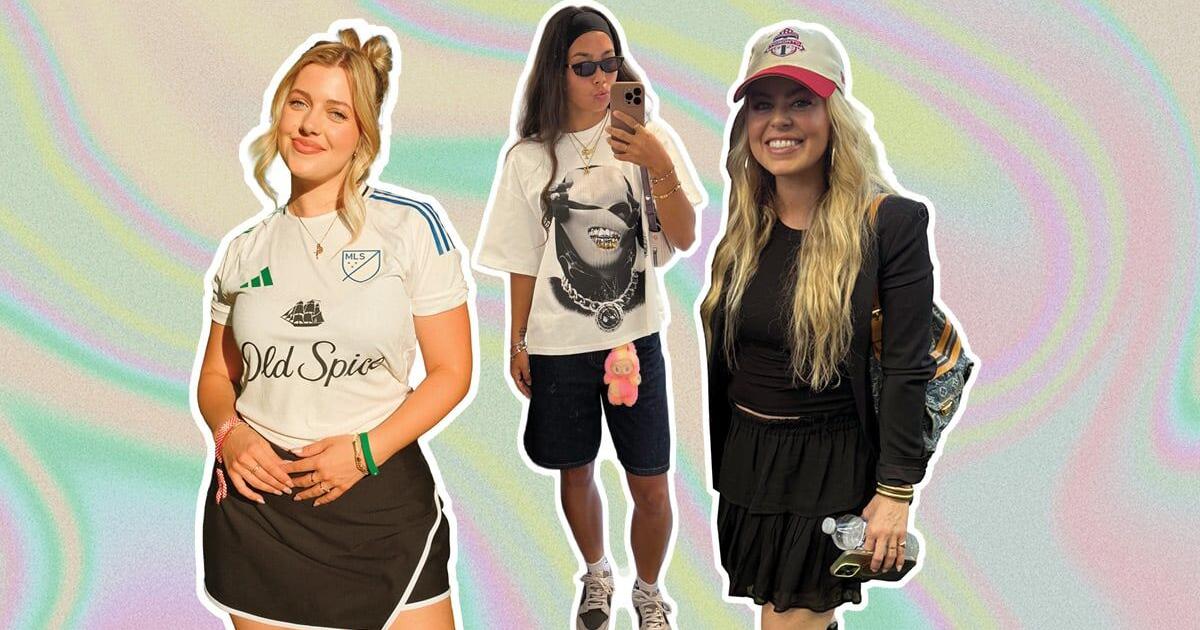
Toronto had a handful of lesbian bars over the years, from the Rose and Felines in the ‘80s and ‘90s to Slack’s and the queer-friendly Beaver and Hen House in the 2000s. In 2022, the last one, Lavender Menace, closed.
Yet the disappearance of lesbian bars hasn’t meant the disappearance of sapphic community. Since the pandemic, a sprawling network of pop-ups, parties, film screenings, collaborations and social events has emerged across the city, extending far beyond the bar-based revelry of decades past.
Why lesbian bars have evolved into sapphic spaces
While opening a lesbian bar in the Church-Wellesley Village, known as the Gay Village, or nearby may once have been a no-brainer, the scene has increasingly shifted toward events rather than permanent venues because soaring costs have made brick-and-mortar spaces financially unfeasible, says DJ and Toronto nightlife historian Denise Benson, who co-founded the long-running dance party Cherry Bomb for queer women with DJ Cozmic Cat.
“And that’s not just lesbian spaces, that’s gay, lesbian, trans, queer, the whole spectrum; it’s a very expensive part of the city, rent-wise, retail-wise.”
Opening anywhere in Toronto feels equally impossible now, she says, given the affordability crisis; one recent study showed that commercial rents in the city have spiked around 140 per cent over five years.
Queer relationship patterns can also affect revenue, says About Last Night founder Chantelle Wright, who throws the popular Hide & Seek parties for queer women. “The irony of our spaces, particularly for women, is it’s a victim of your own success: you’ll come out, you’ll meet your best friends, you’ll meet your partner, and then we won’t see you again until the breakup,” she laughs.
Wright says running queer-women’s events has become more challenging in an era of growing online misogyny and manosphere culture, which she believes has emboldened some men to harass organizers and attendees. (Just this week, a House of Commons committee urged Ottawa to fund programs that counter the online manosphere and antifeminist content that experts say can contribute to misogyny and gender-based violence.) She has recently dealt with cisgender heterosexual men grabbing or spitting on her when she refuses to let them in.
Co-owners of queer bar Three Dollar Bill in Parkdale Meaghan Murray and M. Castle have also experienced cisgender heterosexual men behaving inappropriately in the space. (They) definitely come in and be creepy tourists,” Murray says. “And make a scene when asked to leave.”
The new LGBTQ+ women event era
While there once may have only been a handful of dedicated lesbian venues in the city, hundreds of sapphic events now take place across Toronto every year.
“The range of events happening in the city for women, trans, non-binary people, like there’s actually a ton happening; it’s just more one-offs: monthlies, pop-ups, socials,” Benson says.
The diversity of events means more people may find spaces tailored to their interests and communities, Benson says, pointing to the wide array of sapphic events on offer, from the long-running social at Bampot House and the Paradise Grapevine queer wine nights to sapphic trivia at Ground Control and Lez Beach at Hanlan’s, along with queer-friendly bars and coffee houses that regularly host events catering to women like the Brockton Haunt and Three Dollar Bill. There are also more options geared toward specific communities, including QBIPOC attendees.
The evolution of queer bars
As dedicated lesbian bars vanished, some queer venues began filling part of that role without defining themselves exclusively around queer women.
Given the vacuum of a dedicated lesbian bar, Three Dollar Bill inadvertently became the closest thing the city has to an unofficial one, thanks to their queer-woman-forward programming and clientele. Its co-owners are adamant, however, that it is not a lesbian bar, but a queer-friendly space, with room for all.
“(We’ve been) getting sidelined into (being thought of as a lesbian bar) based on the perception and then people were like, ‘oh, OK, so this can be my local lesbian watering hole,’ but that’s not sustainable in the reality of things,” Castle says.
There are still frequent moments of joy for them doing this work, however, whether it’s welcoming the trans women who have ventured out in a dress and makeup for the first time or introducing out-of-towners to regulars. The bar hosts people of all ages and backgrounds at everything from collage evenings to karaoke blow-outs; they try to schedule events that allow for community-building and conversation, like intergenerational potlucks and stitch-n-bitch events.
This week, they hosted the latest sold-out installment of the monthly Dykeumentary lesbian-film screening series. The film? “Thank God I’m A Lesbian.” Attendee Jada Francis embraced a new pal: “Hey, we met at Sweaty Betty’s a few nights ago!”
She has been enchanted by the vast array of activities for queer women on offer in our city and how welcoming everyone is, especially compared to her home country of the Bahamas. “Sapphic spaces are important because everyone deserves to have a space where they feel like seen and around people that they’re comfortable with,” she says.
How to can keep these spaces alive
While once queer women may have been restricted to one or two bars, the wealth of events now can lead to prioritizing the new instead of continuing to support the old, Benson says. And in an era where queer people are increasingly under attack once more, “you can’t take our spaces for granted.”
Wright, who frequently rotates through venues to keep ticket sales up, despite the challenging logistics, agrees: “It’s hard to sustain because I find people get sick and tired of going to the same place.”
In the end, there’s only one way to continue the new event era, as Murray puts it bluntly: “For sapphic spaces to survive, you have to support them.”