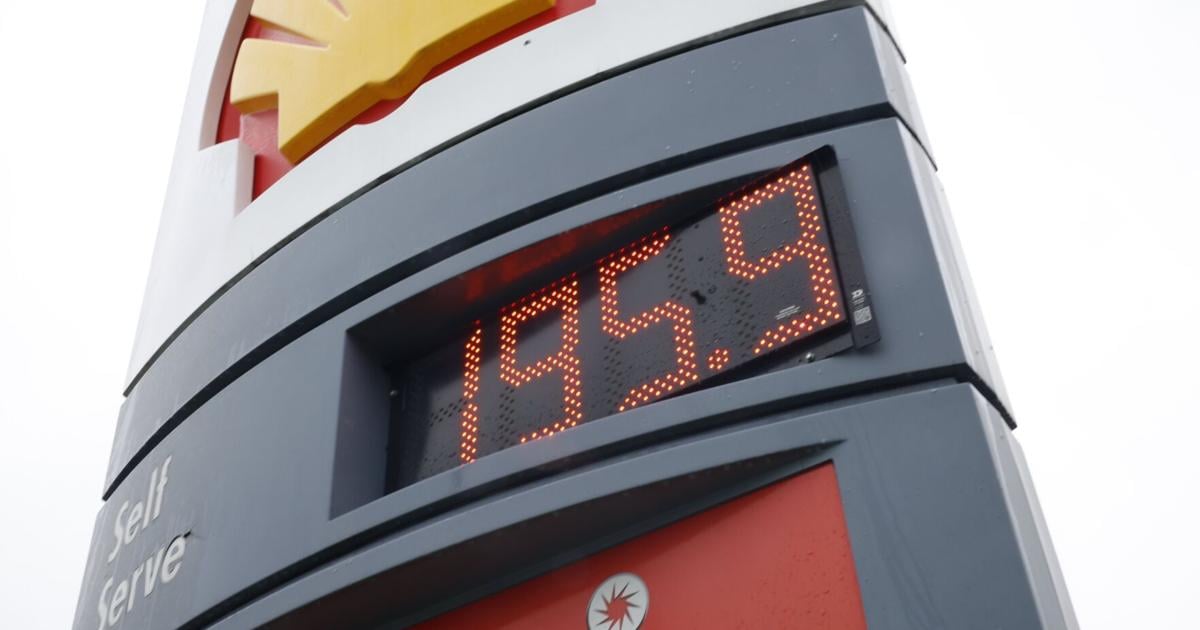
Canada’s annual inflation rate rose to 3.2 per cent in May on higher gasoline prices, Statistics Canada said on Monday.
Headline inflation surpassed economists’ expectations of three per cent, hitting the highest point since late 2023.
The rate surged from 2.8 per cent in April and is now officially above the Bank of Canada’s target range of one to three per cent.
“Supply uncertainty stemming from the conflict in the Middle East, specifically the closure of the Strait of Hormuz, put upward pressure on gasoline prices for the third consecutive month,” StatCan wrote in the release.
The agency added that consumers paid the highest prices for gasoline last month since June 2022, when Russia’s invasion of Ukraine disrupted supply chains.
Gasoline prices rose by 33.2 per cent in May on a year-over-year basis, versus 28.6 per cent in April.
Excluding gasoline, StatCan said overall inflation was 2.2 per cent, compared with two per cent in April.
Following the release, economists noted that the Bank of Canada’s “preferred measures of inflation,” which account for volatility in prices, were steady.
“Canadian central bankers shouldn’t get too fussed about the acceleration in total inflation,” Royce Mendes, managing director and head of macro strategy at Desjardins, said in a note to clients.
“Moreover, with global oil prices falling in recent weeks, the spike in gasoline and jet fuel prices has begun to reverse.”
This is a developing story.