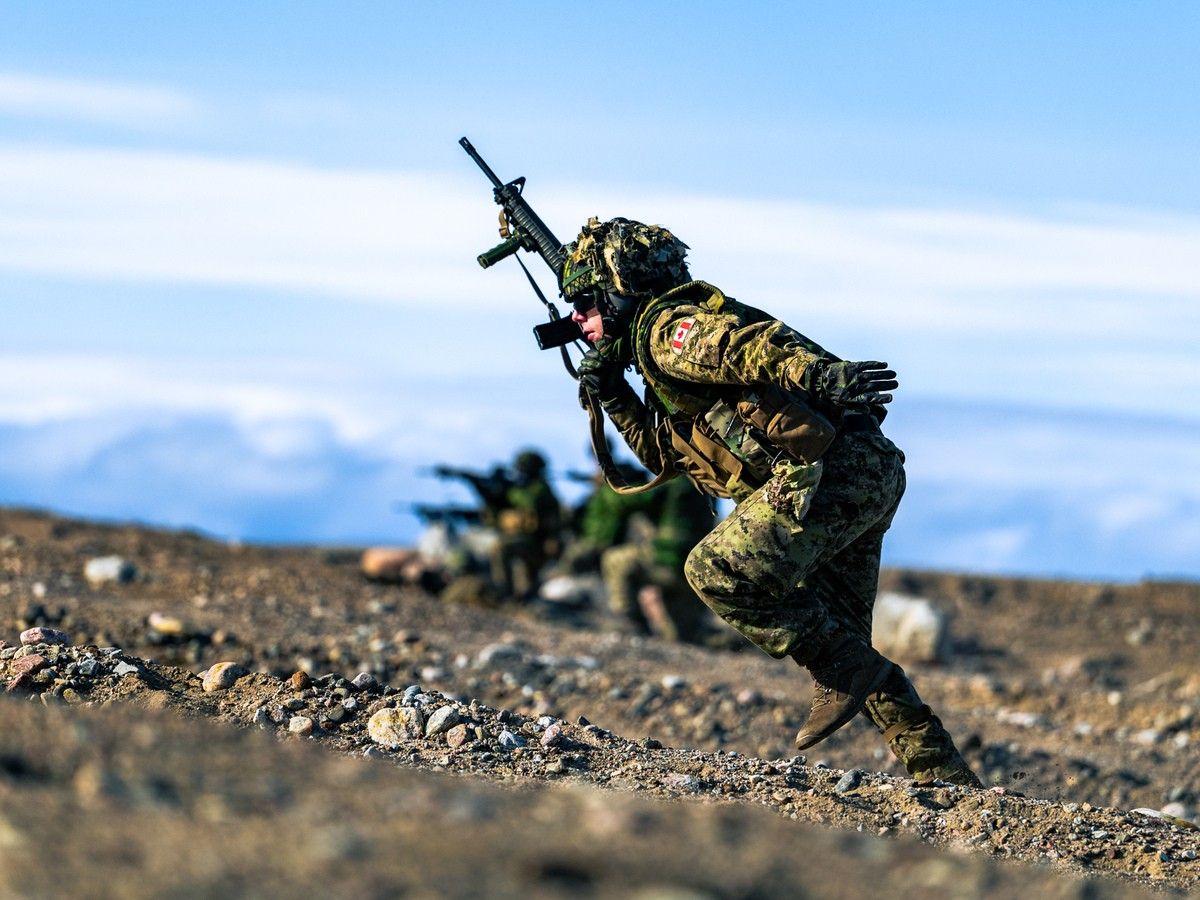
The military should review equipment it plans to get rid of and instead consider providing that gear to the new mobilization force, Canada’s top soldier has been told.
Chief of the Defence Staff Gen. Jennie Carignan has been promoting the plan that would create a pool of 300,000 volunteers who were minimally trained and who could be used during national emergencies.
The mobilization reserve force, also known as M Res, was first reported by the Ottawa Citizen in October 2025.
Those working on the mobilization initiative have raised concerns about whether there will be enough equipment for the 300,000 recruits. They have proposed examining turning over stocks of surplus gear so the new force can be properly trained.
“Current and future divestments of equipment should be reviewed and deferred if the affected equipment may be of use to enhance a pool available for training of the M Res,” the planners noted in a May 2025 report. Examples of such equipment would include uniforms and previous generations of small arms, they added.
Another consideration is to keep the equipment relatively basic. “Consideration should be given to procuring training, and potentially operational, equipment that is simple and where possible similar to civilian systems to leverage familiarity,” the planners noted. ”It is also anticipated that in the case of large-scale conflict it will not be possible to produce high complexity equipment at the rate required to replace losses.”
The planners also recommended changes to streamline the military’s enrollment system to handle such a large number of new recruits. “The need for efficiency must be balanced against the risk of enrolling unsuitable candidates,” they pointed out. “However, the risk tolerance for the M Res should differ from that applied to the Regular Force or Primary Reserve. It is preferable to accept a higher volume of applicants and allow for some ineligible individuals, rather than implement an overly complex process that delays enrollment.”
Those deemed unfit to serve could be redirected to the Department of National Defence or other federal departments to support efforts needed to activate the mobilization plan if required, according to the documents.
In May 2026, Carignan told CBC she was finalizing recommendations for the new force and expected to present various options to the Liberal government in June.
Department of National Defence spokeswoman Andrée-Anne Poulin stated in an email to the Ottawa Citizen that mobilization planning was still in the early assessment stage. “As part of prudent planning, DND/CAF are conducting research and analysis, which includes examining best practices from allies and partners, while accounting for Canada’s unique circumstances, such as its vast geography and Arctic and northern realities,” she wrote. “Any mobilization framework would require sustained development and phased implementation.”
Such work is ongoing and “details on the timeline to present a potential proposal to the Government of Canada have not yet been finalized,” Poulin added.
It is envisioned that those in the mobilization reserve force would receive minimal training involving “basic skills (e.g. shoot, move and communicate; drive a truck; fly a drone; etc.).” The records suggested training recruits for one week a year .
That is different from the primary reserves, who are volunteers serving part-time in established military units. They train weekly and sometimes on weekends.
DND staff noted that a specialized campaign to attract recruits was needed early on as well as a comprehensive plan to communicate the initiative to Canadians. “Develop a national narrative that inspires belief and trust,” they recommended.
But the public rollout of the mobilization plan has been controversial. During a defence conference in Ottawa in March 2026, former Chief of the Defence Staff Gen. Tom Lawson praised Carignan for issuing the mobilization concept.
But the plan was never actually formally released. Instead, defence sources leaked the mobilization scheme to the Ottawa Citizen, pointing out that Carignan was keeping it under wraps and that the concept was poorly planned.
Former senior military public affairs officers have also questioned how the Canadian Forces was caught off-guard without a proper communication plan for the public about such a major initiative.
Carignan, speaking to CTV on Nov. 11, 2025, originally claimed the details in Ottawa Citizen articles about the mobilization plan were “not quite correct.” She later backtracked on that claim after the newspaper published actual portions of the document .
David Pugliese is an award-winning journalist covering Canadian Forces and military issues in Canada. To support his work, including exclusive content for subscribers only, sign up here: ottawacitizen.com/subscribe
Related
- Afghan war veteran battling DND over privacy violation and benefit payment snafu
- Senior Canadian Forces officer in Ottawa charged with sexual assault