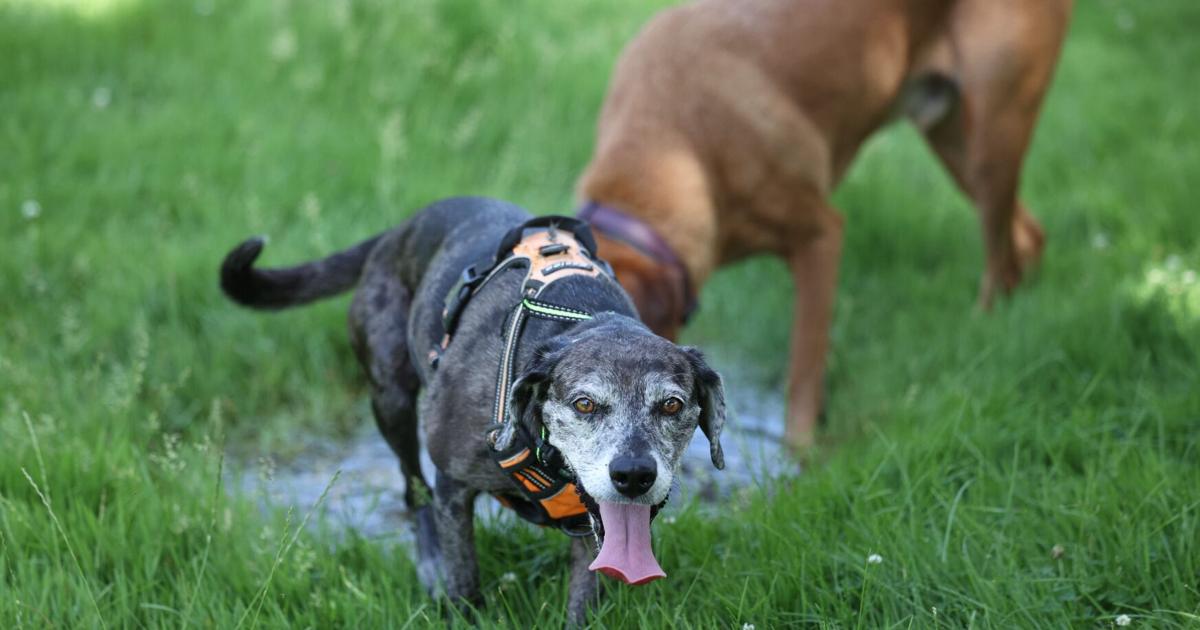
If you think this heat is bad, imagine how much worse it might feel for your dog.
As Torontonians sweat through a prolonged heat wave that’s projected to last through Saturday, local veterinarians are urging pet owners to be extra mindful of their animal companions in this weather.
“Heat stroke can be incredibly problematic for animals and can require hospitalization,” said Karen Ward, chief veterinary officer for the Toronto Humane Society. “It can happen really fast — you can go from ‘it’s OK’ to ‘oh my goodness, it’s an emergency’ in an instant.”
Research suggests the risk of death for dogs increases by nearly 10 per cent on days above 32 C, with the risk gradually increasing for every degree exceeding 25 C. Unlike humans, dogs have fewer methods of dealing with heat and their bodies can quickly become overwhelmed, potentially leading to severe illness and death.
We asked experts for the most common and dangerous mistakes pet owners make in a heat wave, and how to avoid them. Here’s what you need to know.
Leaving your pet in a hot car
Temperatures inside a parked vehicle can quickly soar higher than the temperature outside, even if the windows are left slightly open.
“Cars are deadly on days like today,” said Shane Bateman on Friday, a professor at the University of Guelph’s Ontario Veterinary College and an emergency and critical care specialist . “There should be absolutely no pets in a car unless the car is started and properly air-conditioned when the animal enters the vehicle.”
Leaving your pet inside a hot car, even for a short time, could put them at risk of serious illness or death, according to Ontario’s Solicitor General: “If pets cannot leave the car and go with their owners, then leave them at home where they will be safe, cool, and comfortable.”
Ignoring the signs of heat stress in pets
Much like us, pets can suffer heat-related illnesses, many of which are preventable, said Elana Trainoff, manager of Partnerships and Animal Services at Toronto Animal Services. Signs of overheating in pets include the following:
- Excessive panting or difficulty breathing
- Increased heart and respiratory rate
- Drooling
- Mild weakness, stupor or collapse
- Seizures
- Bloody diarrhea or vomiting
“Immediate action is critical if these symptoms appear,” Trainoff said over email. She recommended moving your pet to a cool or shaded area, turning on fans if available and offering them small amounts of lukewarm water.
You can help cool your pet by applying “cool, damp towels or water to their belly, groin and ears,” she said.
If their symptoms are not rapidly improving within the first three to five minutes of the cooling effort, “you need to call a veterinarian and seek their guidance,” said Bateman.
To avoid overheating, make sure to provide your pets plenty of fresh, clean water and access to a cool, shaded area on hot days.
Walking your dog without protection
We have shoes to protect our feet, but what about our dogs? Too much time walking on hot asphalt without paw protection could burn their sensitive pads — just imagine walking on the scorching road or sidewalk in your bare feet, Ward said.
If you don’t have paw protectors for your pets, Ward recommends sticking to early mornings or late evenings for your walks, and staying in cool, shaded areas where possible.
Not making allowances for “smushed face” pets
Pets with “smushed” faces, like pugs or Persian cats, are especially vulnerable to overheating. “They have a really difficult time breathing, even on a regular day, because the normal air passages they should have have all been compressed and shrunken down,” Bateman said.
Panting is one of the main ways dogs cool their bodies down. “They don’t have sweat glands like we do,” Bateman said. “If they’re already struggling to breathe and now they’re forced to breathe even harder through that little straw that is their nose,” the exertion could raise their internal temperature, putting them at risk of heat exhaustion even if they aren’t actively exercising.
Shaving your dog’s fur
You might think you’re doing your pooch a favour by giving them a haircut, but you may be doing them more harm than good. “The layers of dogs’ coats protect them from overheating and sunburn,” Trainoff said. “Do not shave your dog’s fur.”
Leaving caged pets to overheat
Animals left in enclosures are limited in their ability to seek cooler spaces, Ward noted — especially if their cage is in direct sunlight.
“I would be really cognizant of how they are housed and what’s the temperature like in their enclosure,” Ward said. “An enclosure that’s not really well ventilated can have a different sort of microclimate than your home.”
Ignoring your pet’s specific challenges
Not all pets are the same, nor can they tolerate heat in the same way. Young, elderly and overweight animals are especially at risk of overheating and should be given extra attention during heat waves.
Meanwhile, fit animals can present a different challenge. “A really young, fit Labrador might just run and run until they collapse. They can get such joy out of engaging in activities they love that they don’t stop when they should, and can push themselves too far,” Ward said. Be extra careful and watch for the signs of heat stress.
Try to see things from your pet’s perspective, Ward suggested. “Thinking about the world that they inhabit from their lens and their view can be helpful.”