For 15 years in the 1980s and ‘90s, pedestrians navigating the underpass at Rideau Street and Colonel By Drive were met by Terry Fox .
Sculptor John Hooper’s likeness of the marathoner of hope stood at the southwest corner of the intersection, a reminder of perseverance at what was supposed to be one of the grand entrances to Canada’s capital.
The statue was moved in 1998 to Wellington Street across from Parliament Hill and, more recently, to Sparks Street . But a marathon of hope of a different kind still exists at the original corner — the hope that the city, the NCC and Public Services and Procurement Canada will finally muster the political will to correct one of the city’s oldest urban design failures.
One can hardly argue with the decision to give Terry Fox a more prominent home. Since its construction in the early 1980s as part of the Rideau Area Project that included the Rideau Centre and Congress Centre , the underpass has been a frustrating eyesore and public safety concern. Everyone acknowledges the problem, but no one has taken ownership.
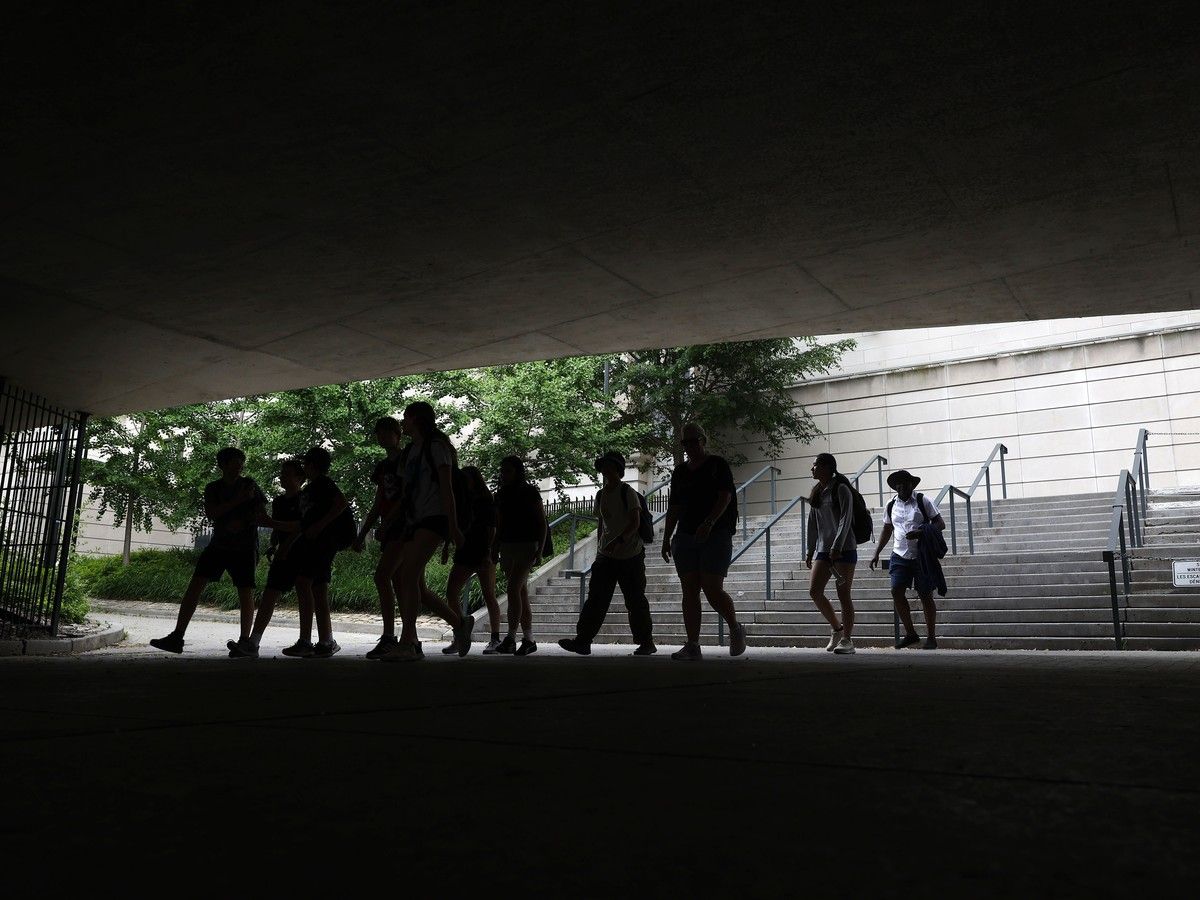
Today, as it has been for decades, it remains a grim, uninviting subterranean conduit decorated with “No Loitering – Walk Through Only” warning signs, staircases in need of repair, a locked iron fence to discourage people from sleeping there, another sign warning of electronic security monitoring, and the lingering smell of damp concrete.
Many pedestrians go out of their way to avoid it, either by crossing to the other side of Rideau Street altogether, or taking their chances on the adjacent street-level bicycle lane.
If you’re looking for a place in Ottawa that visitors might tell their friends about when they return home, this could be high on the list, but for all the wrong reasons.
When the former Union Station was being considered as the future home of Canada’s Sports Hall of Fame, the area was described as a “pedestrian no-man’s land.” Architect George Baird famously called it “a cranky intersection.”
And in 1996, when Terry Fox still kept a bronze-eyed vigil over the corner, Citizen columnist Shelley Page called the area an “urban armpit.”
“This,” she wrote, “is no place for a hero.”
Thirty years later, it still isn’t.
But it could use one.
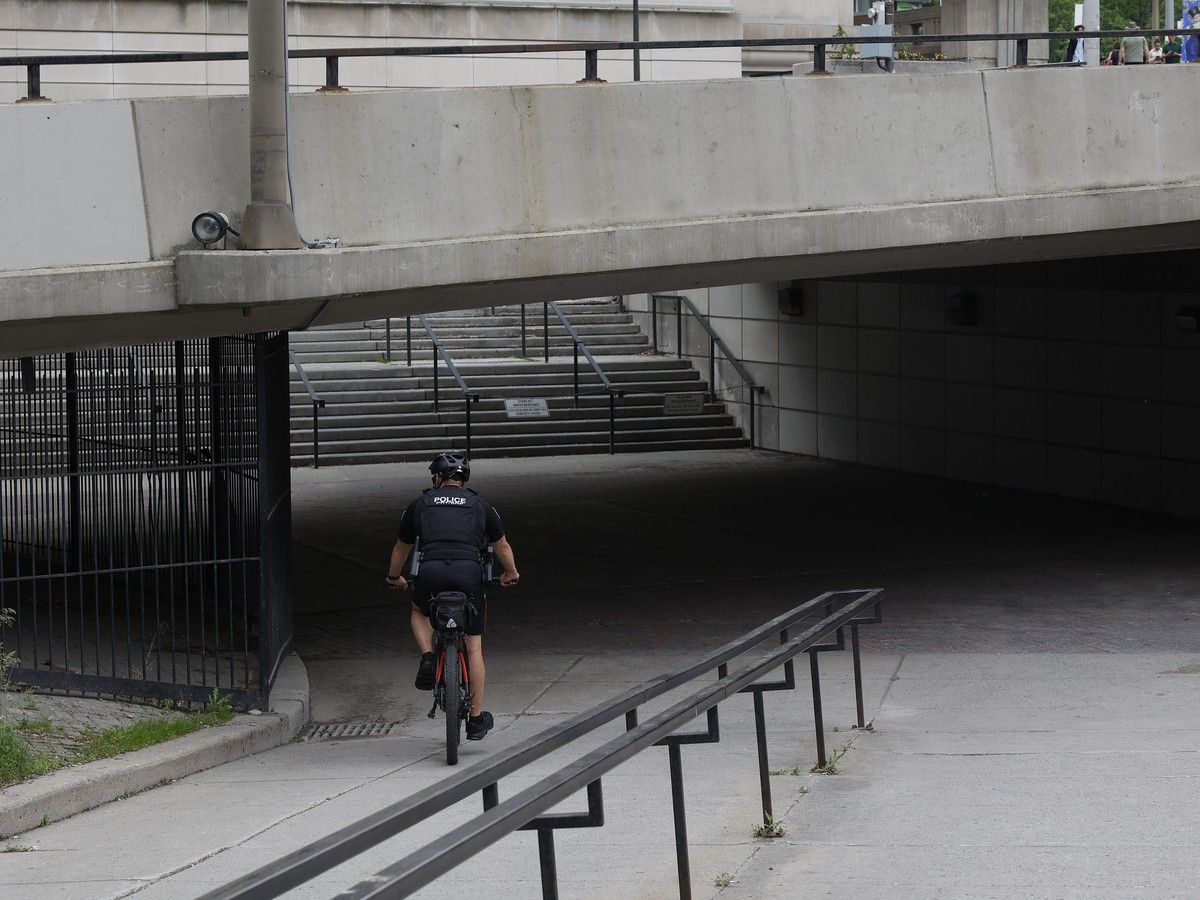
The problem isn’t just that the underpass has become shabby. It’s that it was designed around the movement of automobiles rather than the comfort and safety of pedestrians.
“It’s a design problem, for sure,” says Steve Willis, a senior principal and planning consultant at the engineering consulting firm Stantec.
Willis should know. Interspersed throughout his career at Stantec, Willis worked for the City of Ottawa as general manager of planning, infrastructure and economic development, and for the NCC as executive director of capital planning.
“When you look at something that’s at the front door of our city, when you think about curb appeal, I think everybody walks by and shakes their head and says ‘This could be better,’” he says.
“There are accessibility problems — that staircase is not universally accessible and is also difficult to maintain in winter. Pedestrians don’t know where to walk — they don’t know where to go.”
Ottawa has had opportunities to rethink the corner. The 2016 Rideau Street sinkhole would have been a good time to reconsider the whole intersection, but officials then were understandably focused on simply getting traffic moving again. Improvements made during preparations to move the Senate into the old Union Station in 2019 helped, but failed to address the fundamental problem of the slip lane that made the underpass necessary in the first place.
“Everybody can see the problem,”says Willis, “but the solution isn’t as easy to find. But I’m convinced that if you put the right options on the table and ask people what they think, we’re bound to find something that’s better than what’s there today.”
Mayor Mark Sutcliffe last December announced $200,000 for improvements to the underpass — enough, perhaps, for better lighting, signage, maybe public art. Recent police sweeps have netted citations for trespassing and alcohol violations. As welcome as some of these may be, the basic problem remains.
At least the city and NCC now appear to be rowing in the same direction. Both the city’s ByWard Market Public Realm Plan and the NCC’s Core Area Plan — the second volume of which was approved just in June — envision essentially the same thing: the elimination of the Mackenzie Avenue slip lane; an at-grade pedestrian plaza with improved accessibility; a commemorative monument, and maybe even an outdoor cafe — all intended to turn what is now a gloomy tunnel into an inviting civic gateway. The ByWard plan, after all, even refers to the area as the Rideau-Sussex Gateway. Let’s turn it into one.
Another window of opportunity, meanwhile, is approaching. Construction on the replacement of the nearby Alexandra Bridge is to begin in 2028. The bridge serves as a feeder for traffic along Mackenzie Avenue and the slip lane. There’s no better occasion for the federal government, NCC and city to coordinate a comprehensive reconfiguration of the underpass than when the bridge is closed.
The Terry Fox statue left the underpass more than 25 years ago, but the sense of perseverance remains. In the place of the statue today is an installation by Ottawa artist Erin Robertson , depicting three white angels, appropriately named Faith, Hope and Charity.
We can only hope that Hope doesn’t abandoned the corner. Forty-three years is a long time for Ottawa to keep waiting.
Our website is your destination for up-to-the-minute news, so make sure to bookmark our homepage and sign up for our newsletters so we can keep you informed.