A Kevin Hardcastle book can be many things: tough-nosed, emotionally devastating and populated with characters carrying barge-sized chips on their shoulders.
Almost a decade since releasing his last novel, the award-winning “In the Cage,” the Toronto-based writer has returned with “County Road Six” (Bond Street/Doubleday Canada), a wrenching tale of generational violence set in North Simcoe County, a mere stone’s throw from tourist-friendly Georgian Bay.
Thirty-year-old Mara O’Hare has returned home after taking a job out west, in part because her homosexuality would not be accepted in a small provincial community. Her sisters Beth and Emma, meanwhile, are dealing with the financial fallout from the death of their father, Arthur, a hard man with a fiendish reputation.
The O’Hare sisters believe the only hitch to the handling of his estate will be the fact there is no will instructing how the large property should be divided. But soon, strangers start approaching, making menacing remarks about the land the sisters stand to inherit. Things become more ominous when an arsonist burns down a shed on the property and rabbit carcasses are nailed to its exterior.
In the course of the sisters’ investigation into Arthur’s secretive life, they discover that an assumed identity and a grisly murder from his past may be at the heart of these disturbing visitations.
What did you last read and what made you read it?
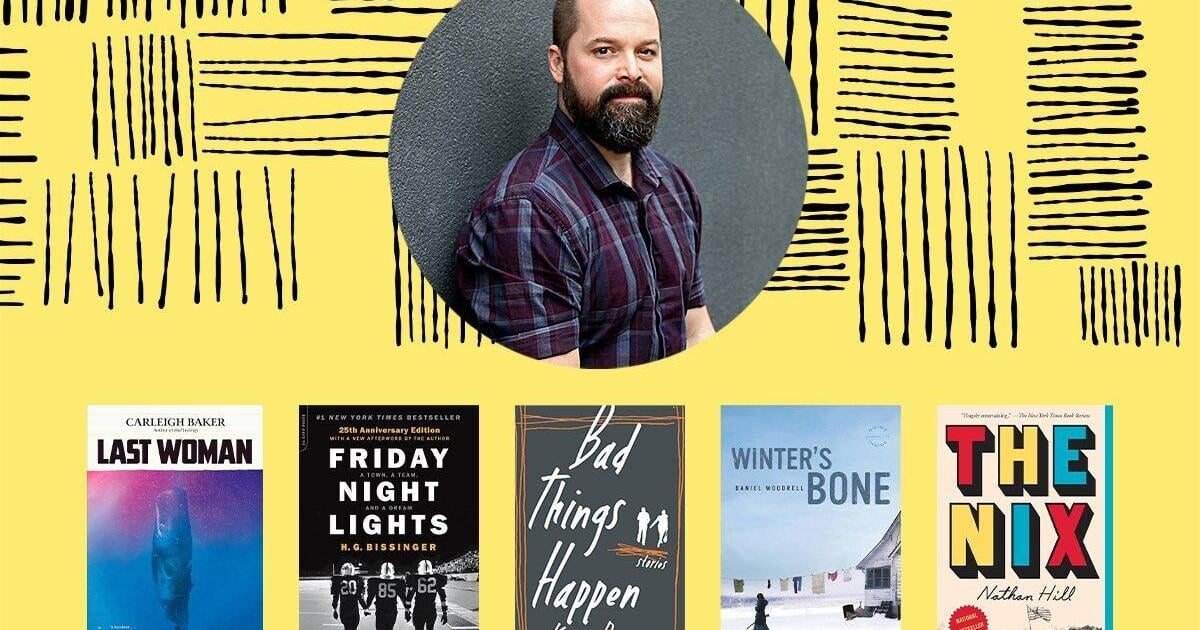
Lately I was revisiting stories from Carleigh Baker’s latest collection, “Last Woman.” She is amazing, as is her writing and storytelling, and I am very jazzed up for the novel she’s working on.
What book would your readers be shocked to find in your collection?
I don’t know if this would be a huge shock, but one that stood out in scanning the shelves is “Friday Night Lights” by H.G. Bissinger. Bissinger’s expansive look into the real lives of folks in a West Texas football town, underpinned by the Permian Basin boom, seemed a real salvo to those who did not recognize the scars and damage their ambitions would leave on their communities and the people in them over the long haul. It also turned out to be my favourite TV series ever, but that’s a whole other thing.
When was the last time you devoured a book in one, or very few, sittings?
There’s a few that are so poignant, precise and immersive that you can blow through the pages with such ease, which I did with “The Diapause” by the very talented Andrew Forbes. It’s so real and lived-in, with a heartfelt take on a post-pandemic era and affecting reflections on complicated family bonds and what our future together may well be.
Who’s the one author or what’s the one book you’ll never understand, despite the praise?
I have yet to run into an author worth their salt who writes about the rural poor who doesn’t hate “Hillbilly Elegy.” And I’m talking pure vitriol from authors in the U.S. and Canada who care for and empathize with people off the beaten path, and want to honestly depict the places that they live in. These writers are all so good because they go for empathy and not the snake-oil of a “bootstraps” mentality, and they seem to be as furious as I am about the exploitative, pandering, manipulative take from JD Vance about people he claims to be from, but seems to have no understanding of whatsoever.
What’s the one book that has not garnered the success that it deserves?
Weirdo and excellent craftsman Kris Bertin has been a masterful short story writer for as long as I’ve been publishing. I found his work first through journals and then was proud to do a little indie tour with him when his book “Bad Things Happen” came out at the same time as (my short story collection) “Debris.”
What book would you give anything to read again for the first time?
I remember when I first started reading “The Lost Salt Gift of Blood” by Alistair MacLeod, and what that collection did to me from word one. I was having some bleak times out on the prairie and found a little paperback of it in a used bookstore that changed me on the spot. When I was just getting my footing in the writing world, I was lucky enough to be gifted a ticket from the Writers’ Trust to a Journey Prize anniversary celebration where MacLeod was one of the readers, and afterward I got him to sign that copy. It was the one and only time I’ve ever been dumbstruck by meeting another writer, and he was so kind and hilarious all the while.
When you were 10 years old, what was your favourite book?
I don’t think I can really narrow this one down, but I might as well just say everything I could get my hands on by Stephen King. I wanted to be a horror writer back then, and was reading those kinds of books way too young. I think that the reason I gravitated toward King’s work, and why I still think it can be unfairly maligned by literary snobs, is that he writes working-class characters and small towns so earnestly and skilfully that the chaos they go through puts the reader in there with them.
What fictional character would you like to be friends with?
Ree Dolly from “Winter’s Bone” by Daniel Woodrell. So many of the books I read have characters that are really in the thick of it and battling against long odds. Ree is no different, but her loyalty to family and friends, and bravery in putting her neck on the line for those she loves at all costs, is more than most could hope for in their pals. She takes no bulls—t and suffers no fools, and is as clever and resourceful as they come.
Do you have a comfort read that you revisit?
Maybe out of nostalgia for when I read the trilogy as a younger man, I’d go with “The Lord of the Rings” (and “The Hobbit”). While those books deal with some dire circumstances and the characters go through a hell of a lot, there’s something comforting about spending so much time with their party as they adventure through Middle Earth and set about shining a light against a growing darkness. The arc of the series hits beats that feel so true and familiar, and there is plenty of walking to calm your nerves between battles and the thwarting of evil foes.
What was the last book that made you laugh or cry?
Nathan Hill’s work had made me laugh and feel feelings all at once, especially “The Nix,” from its ludicrously real insights into modern life and windows into the past, to ancient, ancestral places where all of the ingredients of certain characters’ lives find their origins.
What is the one book you wish you had written?
“Winter’s Bone” by Daniel Woodrell gets another mention here. This was a novel I thought of always while writing the women in “County Road Six.” That said, I don’t know that I truly wish I’d written any of my favourite novels, mainly because I wouldn’t have those unique voices to instruct and inspire my own approach to writing stories.
What three authors living or dead would you like to have a coffee with?
These are all authors who I have at least met once. The first two are writers that we’ve lost within the last 15 years or so: Alastair MacLeod and (very recently) Daniel Woodrell. Eden Robinson is the third, and is very much alive and laughing her ass off somewhere. I love Eden and her work, and have been lucky enough to serve on the CBC Short Story Prize jury with her, but we’ve never had the chance to speak in person at length.
What does your definition of personal literary success look like?
Making a living at this so that I can write with more freedom and be untethered to as much uncertainty in the day-to-day while trying to work. And to try to show that there is a path for other rural, working-class writers in Canada who have seen their stories under-represented in our literature.
Error! Sorry, there was an error processing your request.
There was a problem with the recaptcha. Please try again.
You may unsubscribe at any time. By signing up, you agree to our terms of use and privacy policy. This site is protected by reCAPTCHA and the Google privacy policy and terms of service apply.
Want more of the latest from us? Sign up for more at our newsletter page.