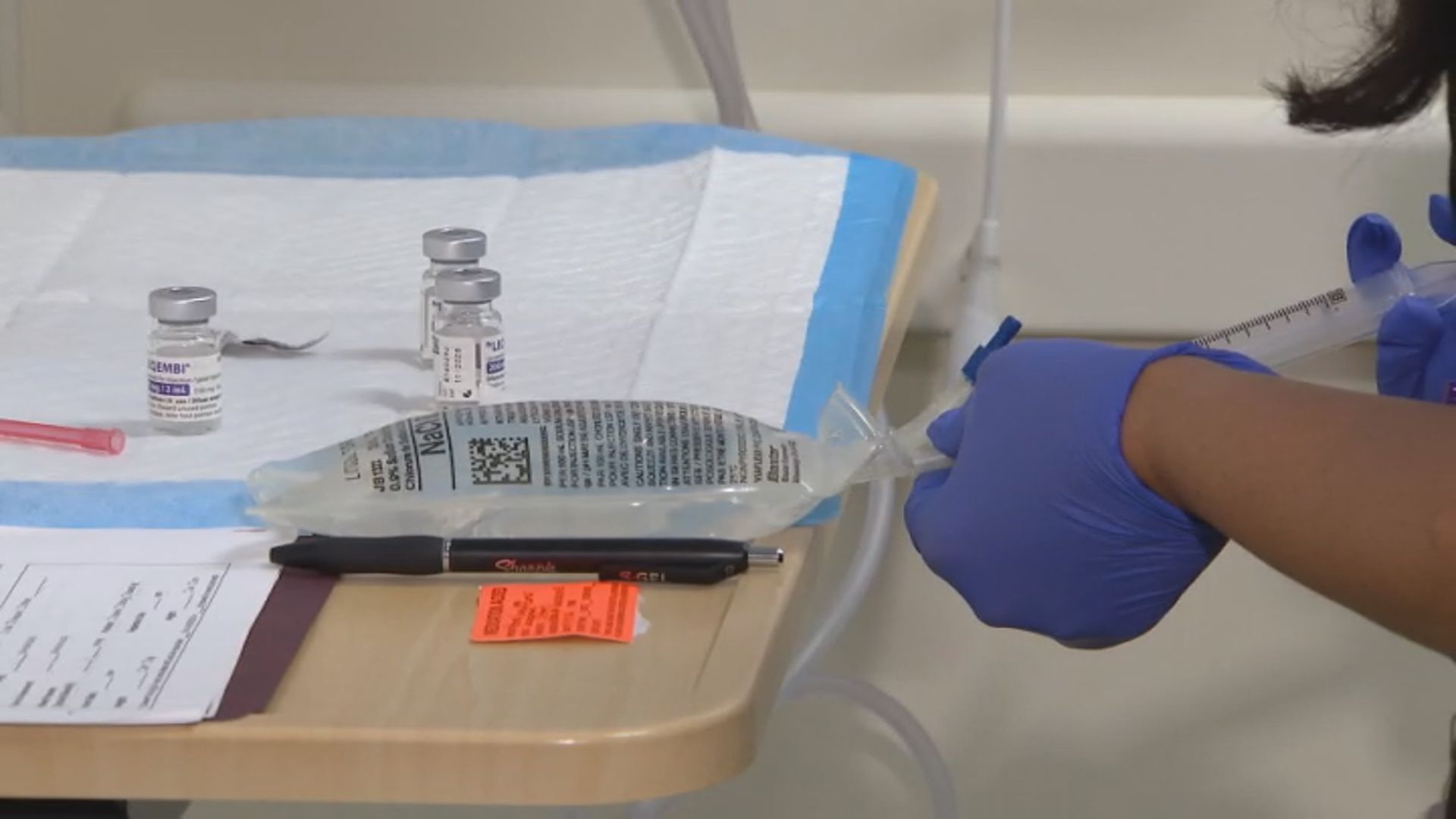
This month, the William Osler Health System became the first community hospital in Canada to offer Alzheimer’s patients hope through infusions of lecanemab — a drug that slows down the progression of the debilitating disease.
“For the first time, we now have therapies that can slow down the progression of the disease,” explains Dr. Sudip Saha, division head and medical director for senior’s health at William Osler Health System.
“And by that, what I mean is that if you were to take the infusions as prescribed, you would be able to maintain and preserve function for a lot longer than if you didn’t. And in that way, it slows down the progression of the disease.”
Dr. Saha points to clinical studies that show up to 81 per cent of patients did not progress to more serious stages of Alzheimer’s after four years of treatment — enabling them to maintain their memories and cognitive function much longer.
“Barry,” a patient who has not shared his diagnosis of early stage Alzheimer’s with his community and asked us to use a pseudonym, underwent treatment for the first time this week.
“Barry” appeared nervous as the start of the treatment, delivered in a private medical examination room, but hopeful.
“(My doctor) advised me to have this treatment so that I can have good memory in future of my life, longer than 10 years or so, five to 10 years,” he said, with an intravenous in his arm. At the end of the treatment, we watched him stand and appear well as he spoke with his daughter.
The infusion is trypically administered once every two weeks — initially in the hospital and then in the community, with regular MRIs, monitoring and testing conducted in hospital.
“The responsibility of providing these drugs has to be taken very carefully. Oslo’s role is to provide hope, not hype,” Dr. Saha says.
“In the context of these drugs, they have to be rigorously monitored going forward in terms of any consequences that could happen to the patient and in terms of side effects. We wanted to be sure that we had the entire infrastructure in place so that we could continue to monitor our patients carefully. And deliver the drug responsibly.”
About half a million Canadians are living with dementia, which is an umbrella term for several diseases that affect cognitive functioning, like Alzheimer’s.
“The population of seniors at the Region of Peel, the prevalence of dementia is expected to triple by the year 2050. Now I take that responsibility very seriously and our responsibility is to provide cutting-edge treatments to this vulnerable population at Osler, and that’s what we’re looking to do,” said Dr. Saha.
The drug is only to be used by patients who meet a very specific list of criteria; including a diagnosis in the early stages of Alzheimer’s. Early diagnosis is the only silver lining Barry’s daughter has found in the otherwise devastating news.
“He was having difficulty multitasking, sequencing things. He would get lost, like he appeared a bit lost when it comes to like doing even his everyday things and he needed a little bit more cueing and reminders for things and then we also started noticing the day-to-day conversation he was being forgetful,” his daughter explains.
“Getting the diagnosis, official diagnosis was devastating for the family, for sure. It was very important for us to figure out anything possible that we could slow the cognitive decline to keep him more functional for longer.”
In this case, that means funding about $37,000 in drug costs for the year. Lecanemab is not currently covered by any provincial drug plan or most private plans, but that could soon change. On Thursday, the Canadian Drug Agency reversed its earlier decision and is now recommending the provincial drug plans reimburse patients undergoing the therapy.
CityNews reached out to the Ministry of Health to see if that recommendation will result in reimbursement, and how long that could take. The Ministry has not yet responded to our queries.
Barry’s family will continue to pay regardless of the outcome of the province’s decision.
“I know this is not a cure. There’s no cure to this disease, but I feel like as long as it delays its progression, we get more quality time with him. I think that’s very meaningful to us,” his daughter says.
Patients interested in undergoing this treatment need a referral from their primary care physician to the Peel Memorial Memory Clinic.
Add CityNews Toronto as a trusted source on Google to see more local stories from us.