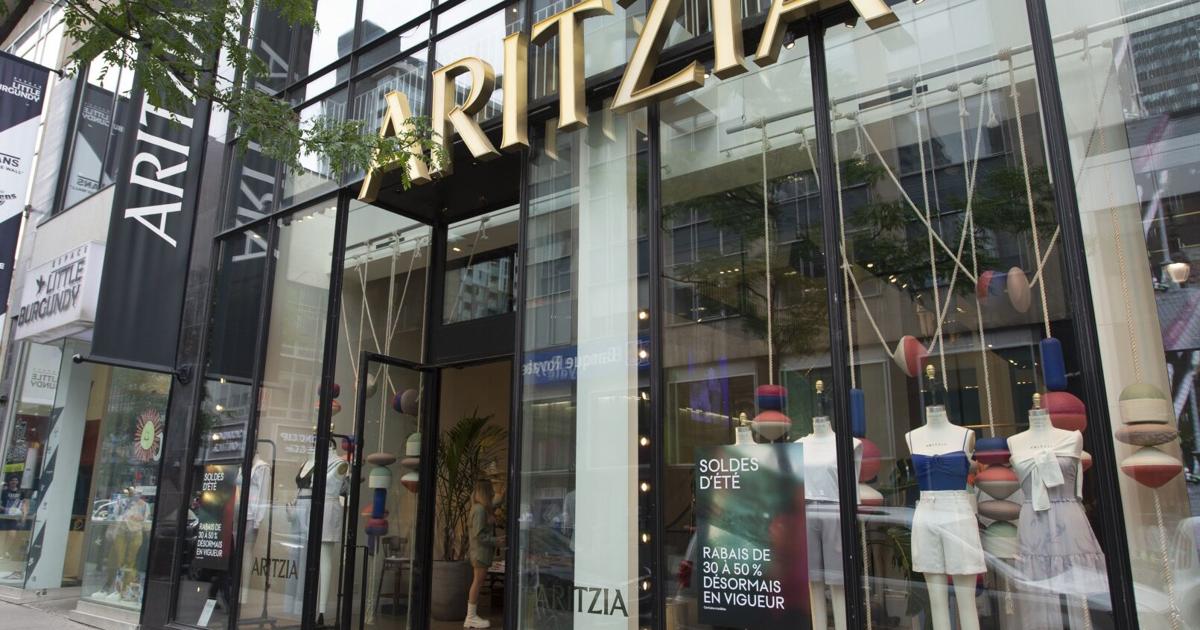
“I’ve never been more confident in the business as I am right now,” Jennifer Wong, CEO of Canadian fashion retailer Aritzia, said in reporting last week that her company’s first-quarter profit had almost tripled.
And Wong forecast that revenues, up 35 per cent last year, would increase by a further 23 per cent to 28 per cent in the current fiscal year, to between $4.55 billion to $4.75 billion.
That’s not too shabby for a mature 42-year-old multinational business.
But the stock market is not impressed. Shares in Aritzia are trading at about eight per cent below their high in June of $173.
Put that down to an expensive stock price. Aritzia shares trade at a price-earnings multiple of 47. That’s a price associated with rapidly growing AI-related companies.
Another source of investor qualms with Aritzia is the dismal recent history of shares in Lululemon Athletica, a bigger fashion retailer with revenues last year of more than $15 billion.
The growth trajectories of Aritzia and Lululemon are too close for comfort among some investors.
Both Aritzia and Lululemon successful in a fickle industry
Both firms have been enormously successful in mass market merchandising of womenswear. The two Vancouver-based firms, each with a large U.S. footprint, have consistently improved their financial performance for years in an industry notorious for the fickle tastes of its customers.
But the industry’s reputation as a tough neighbourhood finally caught up with Lululemon last year, when growth stalled in the U.S., Lululemon’s biggest market.
“Lulu” is priced as a growth stock, not a solid blue-chip investment. When prospects for continued torrid growth faded at Lululemon beginning last year, the bottom fell out of its stock price.
It was as sharp and swift a reversal for investors as you’re likely to find among former stock-market darlings. Lululemon shares have lost more than 70 per cent of their 2023 peak value and now trade at a humble p/e of 9.4.
Similarities between Aritzia and Lululemon can obscure important distinctions.
Aritzia’s commitment to women’s workwear served it well
Aritzia carries a wide selection of athletic wear but is not as reliant on the overcrowded athleisure segment as Lululemon, which helped pioneer it.
Aritzia’s commitment to the underserved women’s workwear category served it well in the return-to-the-office trend that got underway after COVID-19, and office wear continues as a mainstay of the their product mix.
Aritzia’s merchandising formula turns on smart design with an emphasis on long-lasting apparel, with durable fabrics and construction.
At its more than 140 boutiques in North America and a thriving online store, Aritzia appeals to customers with $22 tank tops, $95 fleece hoodies, and a range of its signature Super Puff vests and parkas typically priced below $300.
Aritzia prices its goods 30 per cent to 40 per cent below luxury apparel merchants and 20 per cent to 30 per cent above fast fashion retailers — a sweet spot in the market.
Aritzia’s stock has been shunned before, dropping about 60 per cent to $22 per share in 2023 when Aritzia was unable to maintain a sufficient level of “newness” in its offerings as it struggled with unprecedented post-pandemic demand. Sales growth slowed and Aritzia stock went out of fashion.
Aritzia’s stock has since roared back, however, with a more than sevenfold increase in value to a current $160.
In a July 9 earnings call with stock-market analysts, CEO Wong declared that “the strength of our brand has never been more evident.”
The numbers back up that assertion.
First-quarter 2027 revenues jumped by 43 per cent to $951 million, and profit soared by 176 per cent to $117.3 million.
Aritzia’s digital and same store sales are surging
Digital sales surged by 56 per cent with technological upgrades and higher marketing investment.
And same-store sales, or comparable sales, an important metric that measures revenue growth excluding store openings and closings, increased by 35 per cent.
Double-digit “comp” increases are unusual, a sign that the merchant is making its existing stores work harder with increased sales per square foot.
Aritzia shares Lululemon’s growth aspirations in the U.S., where it already generates about two-thirds of its total revenues.
A Wong priority is to increase U.S. consumer awareness of Aritzia with more store openings and stepped-up marketing efforts.
Last year, Wong opened, remodelled or relocated 16 U.S. stores, which increased Aritzia’s square footage in the U.S by about 25 per cent.
But how to avoid the troubles besetting Lululemon?
Merchants can fool themselves that restraint in store openings to avoid overexpansion, rigorous cost controls, adoption of AI-powered inventory management systems and recruitment of social media influencers will bring sustained success.
Those things matter, of course.
But it’s the merchandise and how existing and prospective customers respond to it that mostly accounts for Aritzia’s success. And it’s the perceived staleness of Lululemon’s U.S. offerings that for now has slowed its growth.
The challenge for Wong is to keep guessing right on how the North American woman will choose to dress from one season to the next.