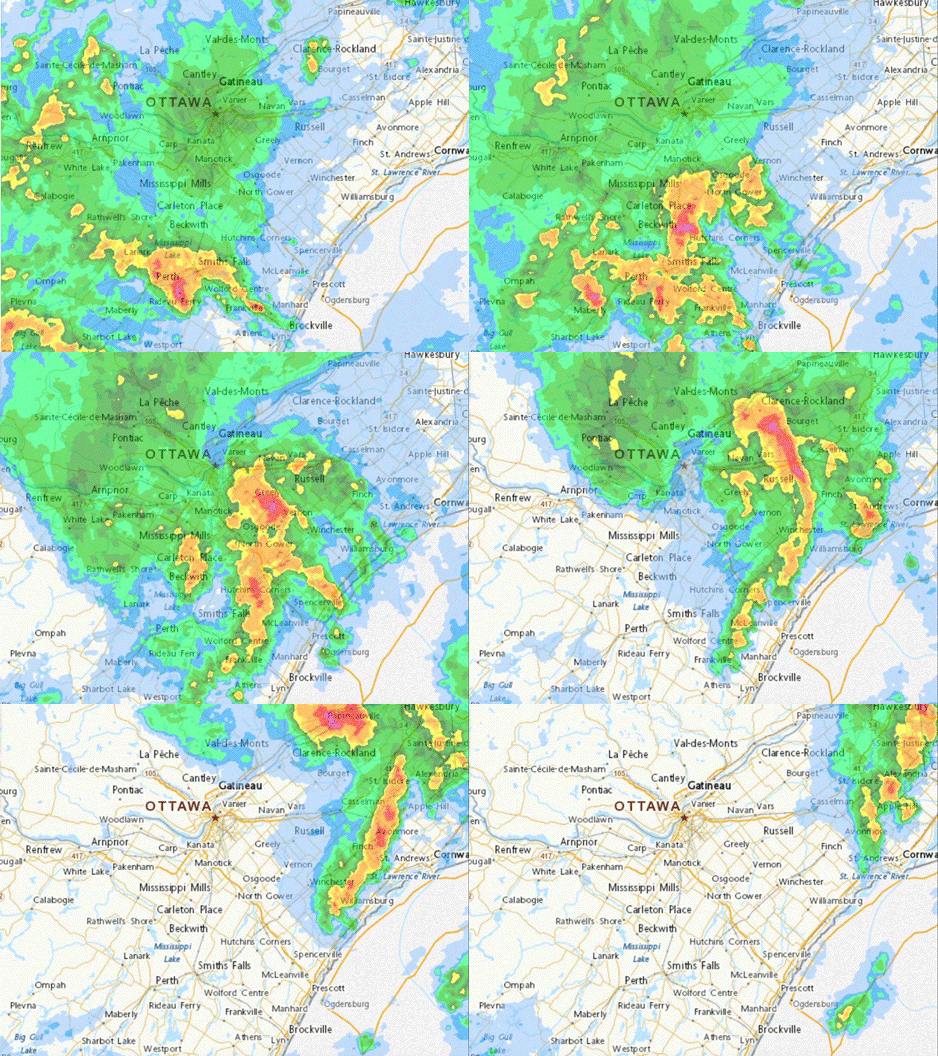
Meteorologists at Environment Canada know the piercing sound of the July 21 tornado alert on Ottawans’ phones might have been annoying, since the tornado wasn’t especially close to many in the city.
“I know it kind of scares people. You might have received it because of the broadcast system and the limitations of it. We flag locations that are in the path of severe weather, and in this case, of a likely tornado,” said Jean-Philippe Bégin, a senior meteorologist at Environment Canada.
The weather warning was issued for the eastern Ottawa community of Vars, and posed a threat to several other communities in eastern Ontario, but phones across Ottawa received the mobile alert through the national broadcast system Alert Ready.
Though Bégin knows the system alerted a wider area than was affected, the meteorologist said that sending it out wasn’t a decision his team made lightly.
“We never want to send unnecessary warnings. But in this case, it was needed. It’s just that more people received it than the people in the (tornado’s) path, but that’s the problem of the broadcasting system,” he said.
The thunderstorm on the afternoon of July 21 moved through eastern Ontario, and was the latest since the torrential flooding of July 1.
The tornado alert, went out at 4:11 p.m. via mobile phones connected to cell towers within the area.

Under specific threat the Laurentians community of Harrington, Que., where officials have yet to confirm whether the storm that passed through was, in fact, a tornado.
Bégin knows the Alert Ready system created what seemed like a false alarm, but it really wasn’t.
“If you’re in Ottawa, and the storm is east of the city in the Orléans area, then everyone in Ottawa will receive it. It goes with the flagged region, and we couldn’t go into a subcategory. We’re essentially just flagging the area,” he said, adding that the only way the broadcast system works is to flag a large area.
Though it’s not perfect, past events can serve as good reminders as to why the system is in place, said Martin Bélanger, the Director of Public Alerting at Pelmorex, which is the company that oversees the Alert Ready system.
Bélanger said that, for example, in 2018, alerts for the tornado that tore apart the small Dunrobin community in Ottawa’s west end saved lives.

“We’ve received multiple accounts from members of the public saying, ‘Because of the alert, I was able to take shelter in my house,’” he said.
Alert Ready is part of a national public system for any type of hazard that may pose an imminent threat to life, where various authorities — Environment Canada in the case of tornadoes, the police in the case of Amber alerts — send critical information to the public through the system Bélanger directs.
When these authorities first determine a risk to the public and decide to use the alert system to notify them, they create a description of the situation, including any instructions for the public to follow, like sheltering in place or evacuating, said Bélanger.
Once that information is ready, his team receives and processes it and makes it available to broadcasters and the wireless service providers who then push it out to the public.
“Then they activate the cell towers that provide service, where the threat area is located,” he said.
And throughout the process, his team is “well aware that ultimately, we’re trying to save lives and minimize any over-alerting so that those alerts remain relevant and that people can keep paying attention to them,” said Bélanger.
Though Bélanger and Bégin said they’re working on ways to modernize the broadcast system to provide more precise messaging with smaller regions, Bégin estimates it might not be in place until at least next summer.
“We will be able to be a lot more precise in the regions alerted by our alerts, and an increased timeliness as well,” said Bégin.
Until then, when the next alert pops up on your phone, the meteorologist suggests tuning into the alert regardless.
Though he noted that it would be ideal if only those in the path received the notification, reading it ensures those nearby are aware of the location of concern.
“At least what’s really important is that people are aware that a severe thunderstorm is a life-threatening situation.”