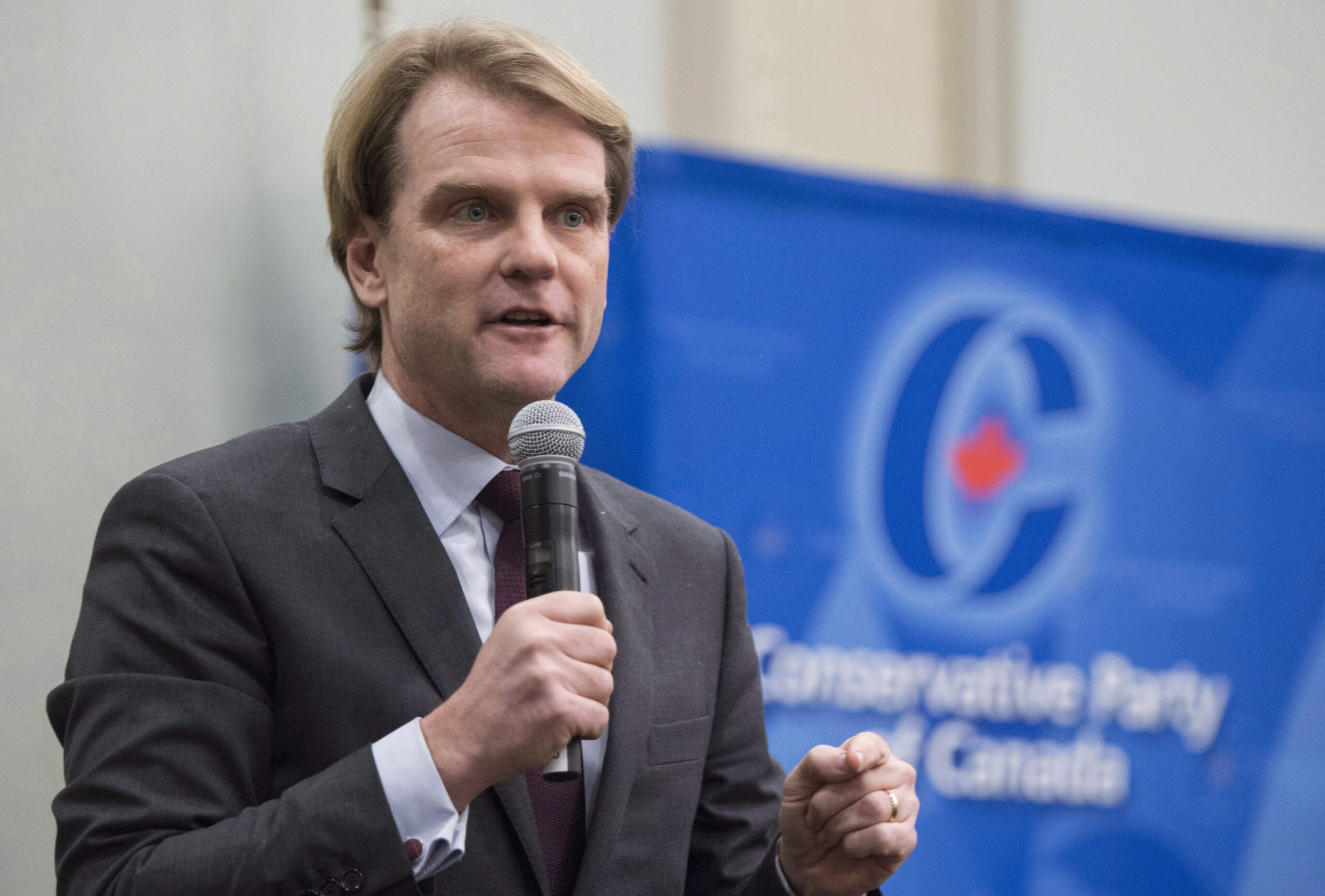
Former federal Conservative cabinet minister Chris Alexander says he will register Wednesday to run to become Toronto mayor, in what would be a surprise foray into city politics — and one that has the potential to upend this fall’s municipal race.
Alexander, who served as MP for Ajax-Pickering more than a decade ago and was immigration minister under prime minister Stephen Harper, has never held office at the city level. But in an exclusive interview with the Star, he said he was launching a campaign for Toronto’s Oct. 26 election because he believes that under Mayor Olivia Chow, residents feel the city is “adrift.”
“The mayor shows up for things and is respected for that. People see her as being in their corner, and that’s great. But I don’t think people see a hand on the tiller in this current configuration we have at city council, and they want Toronto to get the sense of direction back,” he said.
He cited concerns about transit not improving fast enough, and worries over public safety even as, he acknowledged, by some measures crime is down.
Alexander, 57, was elected MP in 2011, and served as minister of citizenship and immigration from 2013 to 2015. Before entering politics, he worked in the foreign service and was Canada’s ambassador to Afghanistan.
After years abroad and in Ajax, he moved back to Toronto in 2022, and now lives near Summerhill with his three children and his wife, Hedvig Christine Alexander, a former captain in the Danish army whom he met in Afghanistan.
Past controversy over ‘barbaric cultural practices’ hotline
For many Torontonians, Alexander is best remembered for championing the Conservatives’ now infamous proposal for a “barbaric cultural practices” hotline during the 2015 federal election. At the time, Alexander suggested the proposal would help protect women and girls from forced marriages, and preserve “our values.”
The proposal came as the Tories pushed policies denounced by critics as unfairly targeting Muslims, and it was widely viewed as fanning intolerance.
Asked how he could reconcile his backing of the hotline idea with wanting to be mayor of one of the most diverse cities in the world, Alexander said he has “expressed regret for that mistake.” He has previously blamed the proposal for costing the Conservatives the 2015 election. He lost his own seat in the race.
“Our campaign went in the wrong direction on that issue at that time. It didn’t land the way it was intended to,” he said. But he argued he should be judged his “overall record,” which he said included “working to protect women’s rights in Afghanistan and elsewhere” and resettling refugees while he was minister.
More recently, Alexander was involved in a controversy on Parliament Hill when he alleged at a parliamentary committee in 2024 that a veteran Ottawa journalist had acted as a Russian agent. The reporter denied the allegations, which he said were false and put his family in danger. Alexander stood by his comments.
Pitches himself as outsider candidate
The two candidates currently considered front-runners in the mayor’s race — Chow and Beaches—East York councillor Brad Bradford — are both already council members. Alexander framed his experience outside of city hall as an asset.
“I spent my life working on issues that were by definition complex challenges,” such as immigration policy, the conflict in Afghanistan, and, while serving at the Canadian embassy in Moscow, dealing with Vladimir Putin, he said.
He has yet to develop a full platform, but called Chow’s successive property tax increases — 9.5 per cent, 6.9 per cent and 2.2 per cent in her three years in office — “plenty for the time being.”
“What we need is a sense of fiscal responsibility in council,” he said.
He called the federal government’s decision last week to block Premier Doug Ford’s proposed expansion of Billy Bishop Island Airport unsurprising given local opposition, but said it doesn’t resolve the airport’s future. He said the mayor and council should work to build a consensus that satisfies people concerned with Billy Bishop’s impact on the waterfront, and those who value it as an economic asset.
Alexander also said he’s passionate about ensuring Toronto seizes the opportunity to be a global hub for financial services, the mining sector, and technology companies.
Alexander could compete with Bradford for similar voters
Alexander’s candidacy has the potential to dramatically change the dynamic of what had been shaping up to be a two-person race between Chow, a former NDP MP, and Bradford, her more conservative rival.
Conventional wisdom in Toronto politics is that the centre-right’s best shot of electing a mayor is to rally around a single candidate. If there is more than one centrist or conservative contender, they risk splitting the vote and giving a strong progressive a chance to win.
That pattern played out in the 2023 mayoral byelection when Chow bested a crowded field and won with 37 per cent of the vote. For the three years since then Bradford has been working to position himself as the best — and only — centre-right candidate to take on Chow, at the expense of other potential contenders.
While Alexander would be a new face at city hall, he would likely enter the race with the profile and political connections necessary to mount a serious campaign that would fish from the same pool of voters as Bradford.
Alexander dismissed any concerns that his mayoral run risks making Chow’s re-election more likely, saying the most vocal people making that argument are those who support the Beaches—East York councillor, and it should be up to voters to decide who’s best qualified.
And despite his history with the Conservative party — he ran for the federal leadership in 2017 — he said he wouldn’t cast himself as inhabiting one part of the political spectrum.
“I don’t think it’s about right and left. I think it is about who is the right person for the job,” he said.
As of Tuesday afternoon, 32 candidates had signed up to run for mayor. Nominations close Aug. 21.