

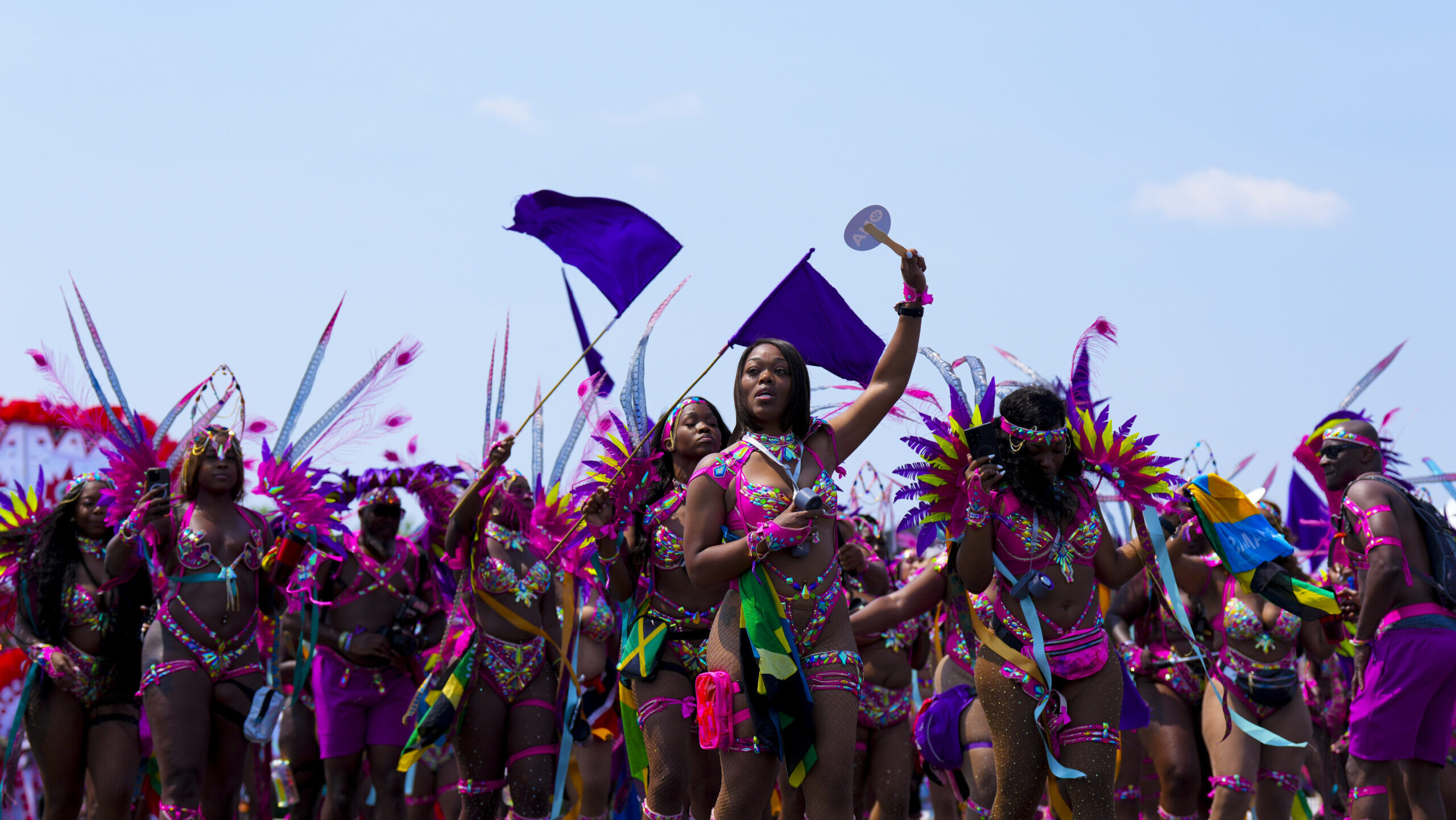
It has been nearly six decades since the start of Toronto Caribbean Carnival and what has grown into the largest event of its kind in North America has deep roots that tell a story of freedom, creativity and resistance.
Founding member and renowned community leader, Dr. Rita Cox spoke with Breakfast Television, to share more about the rich history, culture, and traditions that continue to make this festival so special.
“It’s a celebration of how we still are struggling in a way to share the news about us, Caribbean people of all backgrounds, and saying, ‘We are a good example of what the world should be like,’” said Cox.
She was there from the first event in 1967, as a volunteer, which coincided with the year Cox became a Canadian citizen
“It was a time when we were young, when we were excited, when we’re going to celebrate as guests of Canada,” said Cox. “And then here we are, 50-something years later, we are now the hosts.”
Saturday also marks Emancipation Day, the historic day in 1834 when the Slavery Abolition Act of 1833 took effect across the British Empire, which holds a direct link to the Carnival.
“People don’t often know that there’s a direct link to the Emancipation celebration and commemoration and it actually came out of the freedom of the enslaved Africans in the Caribbean, specifically Trinidad and Tobago, which is where I’m from,” shared cultural educator and artist, Natassia Morris.
“When that happened, the emancipated slaves took to the streets, and they partied, and they celebrated, and they brought their traditions. They brought dance, and masquerade, and storytelling, and street theatre onto the streets. And from that is what we now know as modern-day carnival,” shared Morris.
It was an evolution and an expression of their freedom, creativity, identity, and independence, Morris expained.
“The ancestors really stood up for what they wanted. They said, ‘We are out on the streets. We’re going to do this carnival celebration and our processions, and we’re going to reclaim our freedom and reclaim space.’”
Morris now works to educate people across the city at corporations, schools and in workshops.
“I want to bring that education to the forefront and ensure that when people see the carnival parade happening and they see the spectacle, they understand there’s a deeper connection and a rooted history to it and I think that’s what creates a more meaningful experience for folks.”
Cox said the histories and stories are so important because it makes them who they are. “When our stories are told and your stories are told, we find so many counterparts in our experiences that we get through our stories. Community is important. We are a community, and that must never be forgotten.”
The next generation is also bringing their new perspective, Cox said.
“I am realizing that they are very much involved and interested in their heritage and their history, in the heritage and this history of their music, heritage and of their arts, their writing, and everything else. We have a fantastic community that we brought to this country.”
Cox will have her own float in this year’s carnival and will have a costume to go along with it.
“This a gift we brought to this country, and we are sharing this gift to the whole of Canada, a gift that has a history. It was a history of oppression, a history of overcoming, a history of resilience which turned into this triumph,” Cox shared.
The Grand Parade is happening this Saturday on Lake Shore Boulevard with lots of other Caribbean Carnival events happening throughout the city this weekend.
Add CityNews Toronto as a trusted source on Google to see more local stories from us.


