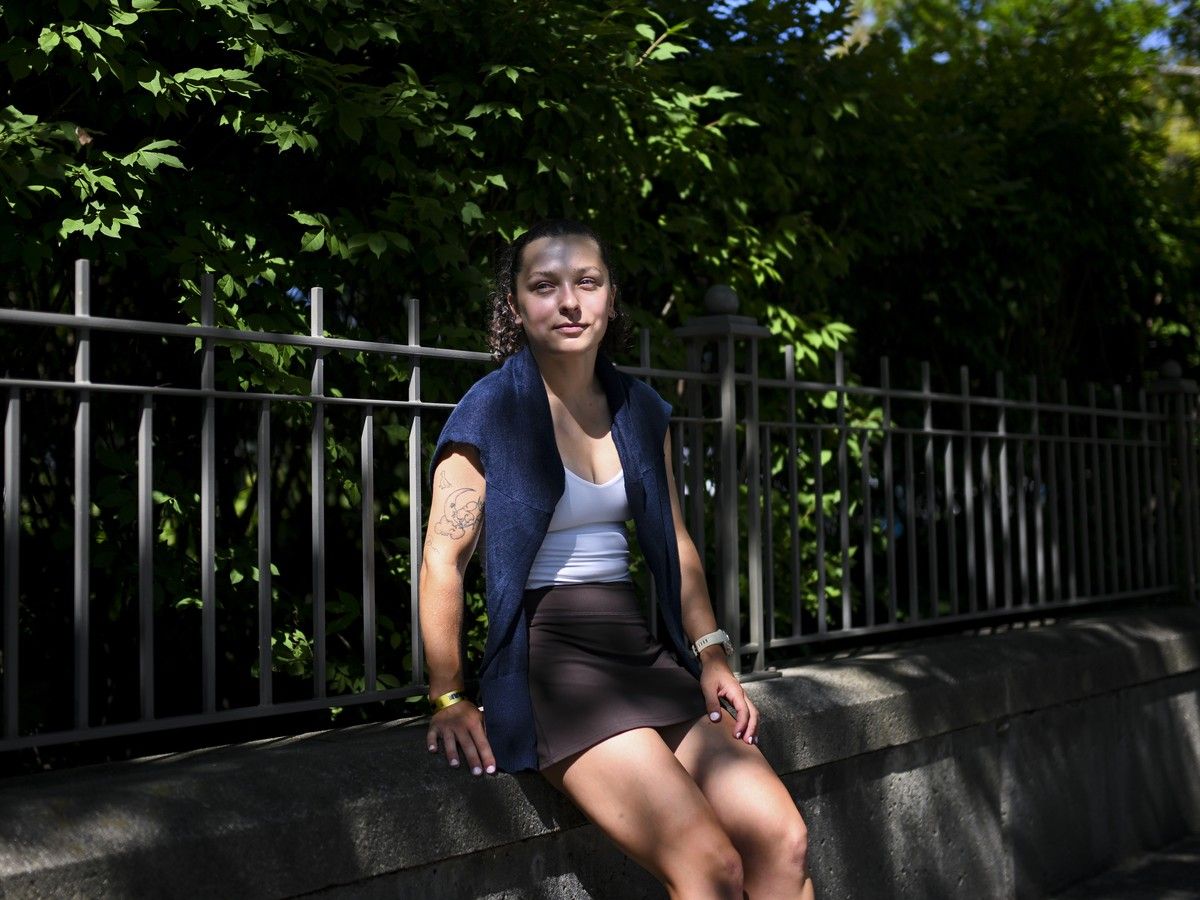
Emma Fontaine used to tell her parents she didn’t want kids.
But the 24-year-old from Montreal said that even though she’d joke about it, it wasn’t really a joke.
“I didn’t want children to grow up knowing their mother was going to die young. The future is not certain for someone with CF. I wouldn’t want to put a child through that,” she said.
CF is cystic fibrosis, which Fontaine’s parents found out she had when she was two months old.
The genetic disorder causes mucus to build up in the lungs, pancreas, and other organs, according to Cystic Fibrosis Canada’s website, which also states that as of 2024, about 4,400 Canadians were living with the disease.
It is a lifelong illness, where more than half of Canadians who died from it in 2022 were younger than 40.
And for her entire life, Fontaine hasn’t been sure whether she’d be one of them.
“There’s no cure for CF. That’s always been the backbone of the disease for me. Your condition is going to deteriorate, and you just have to know that, just live with that fact.”
But, after the discovery of a new medication called Trikafta — which was only first approved in 2021 — Fontaine can now expect to live a full life.
“Before taking it, I was in and out of the hospital. Since I’ve been taking this medication, I haven’t been hospitalized once,” she said, adding that that’s been since 2022.

This means, for example, Fontaine can now look confidently towards a future in mining engineering — which she’s currently studying at the University of British Columbia.
But it isn’t the only treatment that’s changed her life.
Soon after she began running during the pandemic, Fontaine realized physical activity was another kind of treatment for CF.
Now, ever so humbly, after chatting about her plans for visiting Ottawa for the first time, she said she’s competing in the Ironman Canada-Ottawa marathon on Sunday.
Before Ironman
Although now she’s an advocate for those with the condition, up until the end of high school, Fontaine would try her best to hide the fact that she was sick.
“I didn’t want anyone to pity me, but on the other hand, I was often out of school because I was hospitalized, or I had episodes where I had a feeding tube. So eventually, people knew. But I didn’t want it to define me at all, so I would never talk about it,” she said.
She remembers being 11 or 12 years old, during a time when she had a feeding tube that she had to wear to school.
“It was the first time where everyone would see that I was sick. So that was a tough moment for me,” said Fontaine.
It then became harder for Fontaine to hide her condition when, at 15, she was diagnosed with CF-related diabetes and had to routinely give herself insulin shots at the school lunch table.
Though Fontaine’s friends were always kind, she said that growing up, she couldn’t find a community of young people with CF who understood her, because of the way the disease works.
“No two people with CF can be within six feet of each other. It isn’t contagious, except for other people with it, because you might have bacteria that other patients don’t have. I didn’t have anyone to look up to,” she said.
A new kind of treatment
After a childhood of feeling behind in gym class, in her late teens, she thought she’d try to challenge her own body.
“Before I started running, my lung capacity was always between 65 and 70 per cent. After I picked up running for a little while, I was going to 80 per cent, and then 90 per cent, and ever since then, I’ve been between 85 and 90.”
This, she said, became a positive reinforcement loop, where she would feel better because she was training more, and then because she’d feel better, she’d train more.
Suddenly, she could run 10 kilometres, so naturally, she signed up for a marathon in Montreal, and doing so, decided to raise money for the CHU Sainte-Justine pediatric hospital’s CF clinic.
“We created what’s called the Emma Fund, which funds physical activity for patients at that clinic,” she said, “It was really that I didn’t want to keep this for myself. I felt like I just found a new way to treat cystic fibrosis, and I wanted every kid to know about it.”
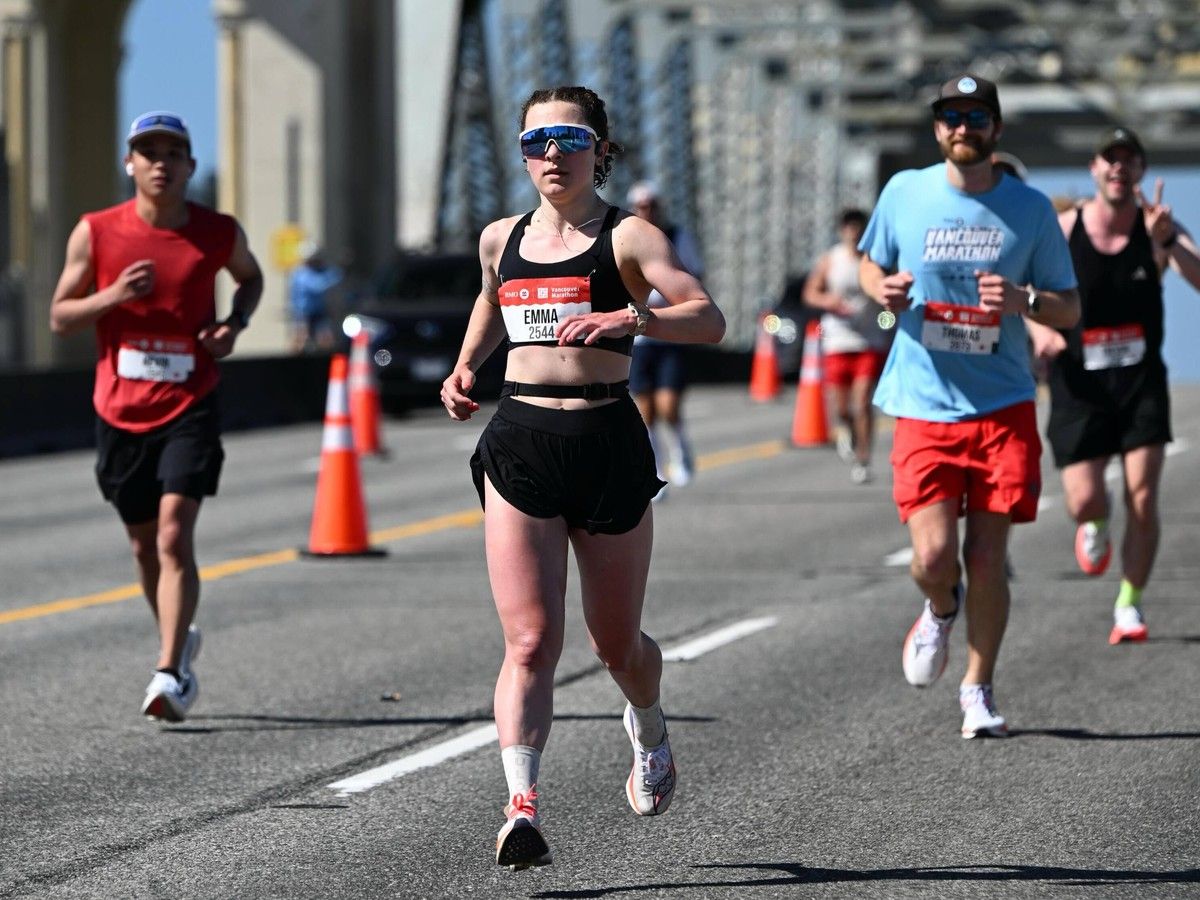
Marathon after marathon, Fontaine realized Ironman might not be an impossible feat.
“I would always tell myself, ‘These people are crazy!’ And deep down, I just really wanted to be one of the crazy people, too.”
But training for this monster of a marathon, Fontaine said it’s been hard to remind herself that her lungs won’t get to 100 per cent.
“I have to be careful not to compare myself to other people, asking why this person is running so much faster when they’re training so much less than me. My lungs only work at 85 per cent of their capacity, and that’s just a fact,” she said, adding that ensuring she’s taken enough insulin so she won’t pass out on a bike is another job.
Now, after all this training, Fontaine’s pre-marathon prep is much simpler — she just wants to do all the “tourist things” the national capital has to offer.
After she completes the Ironman, she won’t be relaxing for too long, though, because she’s already planning to cycle across Canada in under 60 days, starting May 2027, to raise funds for Cystic Fibrosis Canada.
You can follow along with Fontaine’s journey through her Instagram page, @emmafontainee
Related
Take control of your search results. Make the Ottawa Citizen a preferred source on Google and see verified local reporting first.