A Holocaust survivor and a Holocaust education centre are denouncing an Alberta university’s decision to keep endowments honouring members of the Nazi’s Waffen SS.
The University of Alberta in Edmonton says it will keep the eight endowments that are in the names of veterans of the 14th Waffen SS Galicia.
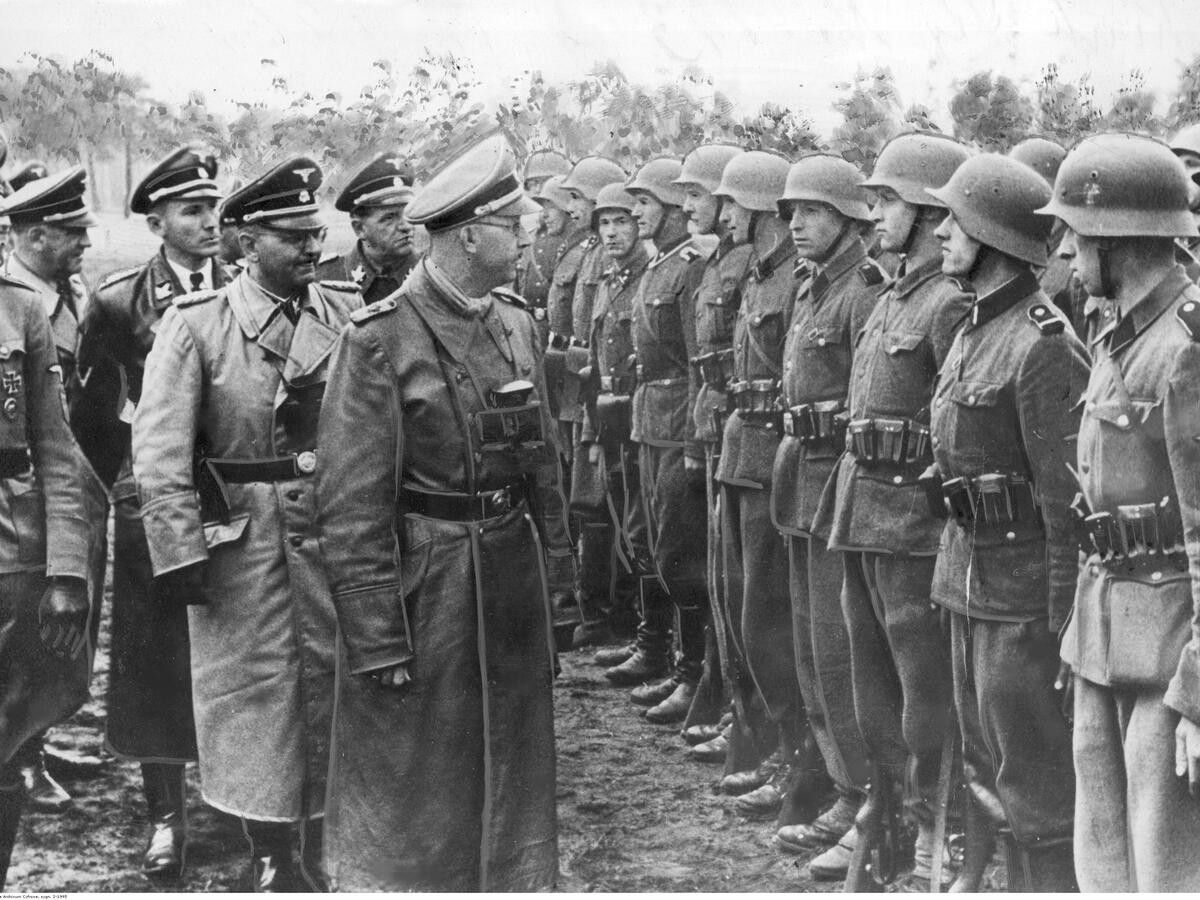
The Polish government and Jewish groups have denounced Waffen SS Galicia for its role in killing civilians and its involvement in massacres during the Second World War. The division was also used by the Nazis to crush a national uprising in Slovakia, again prompting allegations of war crimes.
The university received legal approval Aug. 7 to dissolve a research trust named after Ukrainian SS veteran Yaroslav Hunka over the protests from the 101-year-old’s family.
But in an Aug. 10 statement, the university noted it would keep eight other endowments from Waffen SS soldiers as it would cost too much in time and legal fees to seek court approval to terminate or alter those.
An academic who testified for Hunka said the U of A’s Canadian Institute of Ukrainian Studies’ endowments were worth $1.1 million.
But researchers with the Friends of Simon Wiesenthal Center, a Holocaust research organization in Toronto, put together a list of 12 endowments at U of A linked to individuals involved with the Nazis. Those totalled $2.2 million.
Andy Reti, a child survivor of the Holocaust now living in Toronto, said he was appalled by the university’s decision to keep the money from the Nazi soldiers.
“This is dirty money and it’s unconscionable they are continuing with this,” said Reti, 84. “It’s beyond despicable.”
Reti’s father was murdered during the Holocaust. Reti, his mother and grandmother were sent to a ghetto in Hungary, where they faced starvation before eventually being freed by Soviet troops.
He said the university’s Canadian Institute of Ukrainian Studies should donate the Waffen SS endowment money to either the Salvation Army or the poor so some good could come from the tainted funds.
Jaime Kirzner-Roberts, a senior director at the Friends of Simon Wiesenthal Center, said that organization had repeatedly called on the university to divest itself of all of the endowments. She said that included one named after Peter Savaryn, who later became Chancellor of the University of Alberta. In 2023, the Governor General’s office expressed deep regret for awarding Savaryn the Order of Canada in 1987, given revelations about his past service in the Waffen SS .
“Such endowments have no place at the University of Alberta or any other institution of higher learning in this country,” Kirzner-Roberts said.
In its statement, the U of A noted it would spend $100,000 to “deepen scholarship and education about the Galicia Division and other complex and difficult aspects of twentieth-century history.”
The university made the decision to distance itself from the endowment in Hunka’s name after he was honoured with a standing ovation in the House of Commons from all MPs in 2023. That incident became an international embarrassment for Canada after it was revealed Hunka had been a Waffen SS soldier who had sworn allegiance to Nazi leader Adolf Hitler.

Hunka’s son, Martin, had made the $30,000 endowment to the university in 2019 in his parents’ name. The U of A sought formal court permission to dissolve the trust in early 2024, with the Hunka family opposing the move.
In an email, Martin Hunka’s lawyer, Julian Savaryn, said his client was “disappointed” and was considering an appeal.
The university also accepted funds from the estate of Volodymyr Kubijovyč, a Nazi collaborator behind the creation of Waffen SS Galicia and an advocate for ethnic cleansing to create an independent Ukraine without Jews or Poles.
The Jewish Federation of Edmonton noted it was consulted by the university. That organization issued a statement supporting the university’s actions.
Some nationalist Ukrainian-Canadians see members of Waffen SS Galicia as heroes for their battles against Soviet forces who were, along with Canada, the United States and Britain, part of a coalition to defeat Nazi Germany. They consider criticism of SS Galicia to be Russian disinformation.
But critics point out that every Ukrainian SS soldier, like Hunka and Peter Savaryn, in battle against the Soviets freed up a German soldier who could be used to fight Canadians, British and Americans, who were advancing towards Berlin at the time.
Others point out that some 40,000 Ukrainian-Canadians fought in Canada’s military against the Nazis, yet none have been honoured in the Commons .
There is no evidence Hunka was directly involved in any war crimes.
After the war, the International Military Tribunal declared the SS to be a criminal organization. That included Waffen SS units.
In the 1980s, an examination of war criminals in Canada found there were 600 former members of SS Galicia still living in Canada. Justice Jules Deschenes, who headed that commission, concluded membership in the division did not itself constitute a war crime.
But the Deschenes commission has been criticized by some Jewish groups as well as historians for failing to delve too deeply into the war criminal issue.
With files from Jonny Wakefield
David Pugliese is an award-winning journalist covering Canadian Forces and military issues in Canada. To support his work, including exclusive content for subscribers only, sign up here: ottawacitizen.com/subscribe
Related