As contract negotiations were heating up between the Maple Leafs and John Tavares in 2018, the rising star called Toronto general manager Kyle Dubas directly.
Without agents involved, Tavares made a final play for the deal he felt he deserved.
“If you really want me, why can’t we agree on $11 million?” the then 27-year-old asked.
Would an $11 million annual average salary over a seven-year deal make him a Maple Leaf? Dubas replied.
Simply, Tavares said: “Yes.”
The rest, as Leafs fans know, is history. The Oakville native signed a contract worth $77 million (U.S.) to come back home and play for Toronto, leaving New York and the Islanders, where he started his professional career. He would soon become the Leafs’ captain.
If Tavares, now an alternate captain, ever expected he’d be detailing those behind-the-scenes negotiations in a 7th-floor courtroom in Federal Tax Court, the typically even-keeled star didn’t let it show on Tuesday.
He was testifying because the Canada Revenue Agency has since said he must pay a bill of around $8 million in Canadian dollars on the deal — in a case that could impact how Canadian teams attract top players currently based in the U.S.
“I would like to be in my cottage today, preparing for the season and spending time with my family,” he told reporters with a slight smile outside a Queen Street West courtroom. “But it is what it is. You deal with whatever comes your way. That’s part of life, right?”
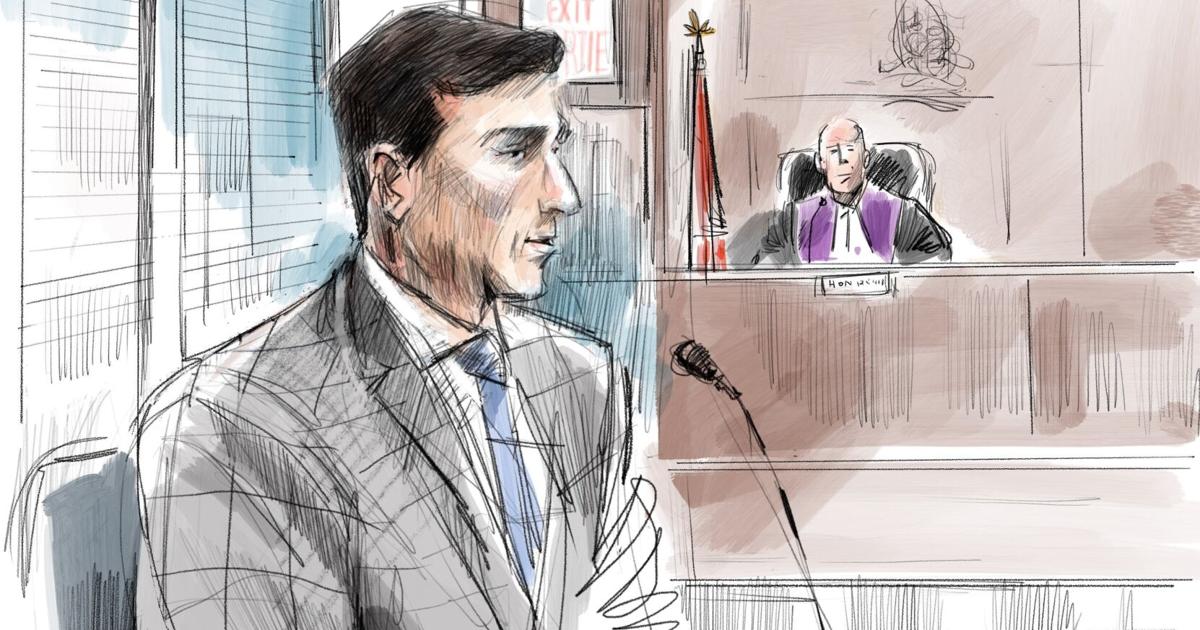
Tavares took the stand in a grey and blue plaid suit on Tuesday, and in a clear voice said “professional hockey player” when asked to state his occupation.
The core issue in Tavares’s appeal is whether the bonus of $15.25 million (U.S.) that Tavares received in his first year with the Leafs was actually a signing bonus he was paid while still a U.S. resident — taxable at a lesser rate under the Canada-U.S. Tax Treaty — or salary to be taxed at Canadian rates.
The question has broad implications because the structure of Tavares’s deal is not unusual. The Leafs, and other Canadian teams, have used signing bonuses to attract players to join from U.S. states where tax rates are often much lower — a player may be more likely to sign if they get a chunk of cash up front, taxed at U.S. rates.
Maple Leaf Sports & Entertainment, which owns the Leafs, withheld 15 per cent of the bonus on Tavares’s behalf for U.S. tax purposes, his notice of appeal filed with the court says, as he was still considered a “United States Person” under U.S. tax law at the time he signed his Leafs contract — something federal lawyers initially contested but relented on this summer.
In 2022, the CRA reassessed the hockey player’s tax filings and claimed he owed $6.85 million plus $1.2 million in interest because it was not, federal lawyers said in their response to the appeal, properly claimed as taxable income in Canada.
On the stand, Tavares detailed his early career as an amateur player who by age 18 was drafted first overall to the Islanders. By his fourth season, he was made captain, playing six times on NHL All-Star teams and twice winning gold for Team Canada at the Olympics.
As June 2018 approached and his contract with the Islanders was set to expire, Tavares told the court he owed it to himself to see what his options were.
“I was in a position to earn a lucrative contract,” he said. Though he hadn’t yet decided to leave the Islanders, he told his agent he would entertain other offers.
He recalled that as soon as the period when other teams can approach players began, within 60 seconds he received a text and video message from Leafs manager Dubas about why Toronto was the right fit.
It was that pursuit from Toronto that eventually won him over, he testified, and after two meetings with team officials and his then fiancée, now wife, he told his agent to get the deal done.
“It was really hard to disconnect from New York,” he said, explaining that “Toronto really stood out with the aggressive nature they had in wanting to sign me and the fit really made a lot of sense.”
After the hearing, Tavares’s lawyer, KPMG senior partner Justin Kutyan, said the key problem to resolve is whether Canada or the U.S. is owed the bulk of the tax on the player’s signing bonus.
“It’s actually about who gets the tax,” he said. “Obviously the minister (of national revenue) thinks it’s Canada’s right to tax it, so we’re here to guide the court in the right direction.”
The implications of the court’s decision will be “significant” for teams’ ability to attract top talent, Kutyan said.
Tavares told reporters he doesn’t regret his decision to come to Toronto even knowing what he does now about his legal battle with the CRA.
“I wasn’t counting every last penny, but obviously I wanted to maximize my opportunity along with where I was going to live as I was looking to start a family soon,” the father of three said. “And obviously trying to have the best career possible and as successful as you can be.”
When it comes to whether his case will set a precedent for teams attracting players, he said there are parts of the game and the business side of hockey that are out of your control.
“Obviously, being here in Toronto, you want to continue to highlight what makes it special here to come play here,” he said.
“You just hope everything can work out in my favour and then obviously in the good of all players, the league, teams and whatnot.”