ST. JOHN’S – A Labrador town that could be transformed by new developments proposed in Newfoundland and Labrador’s tentative energy agreement with Quebec says it needs help before it can support the plan.
Happy Valley-Goose Bay is a hub community of about 8,000 people near the mouth of the Churchill River in central Labrador. It needs critical infrastructure before it can absorb a large number of workers arriving to build the large construction projects considered in the provinces’ energy proposal, the town council said in a news release Tuesday.
“We’re going to feel the brunt of these projects,” said Mayor Bert Pomeroy in an interview. “We need the resources to be able to deal with the impacts.”
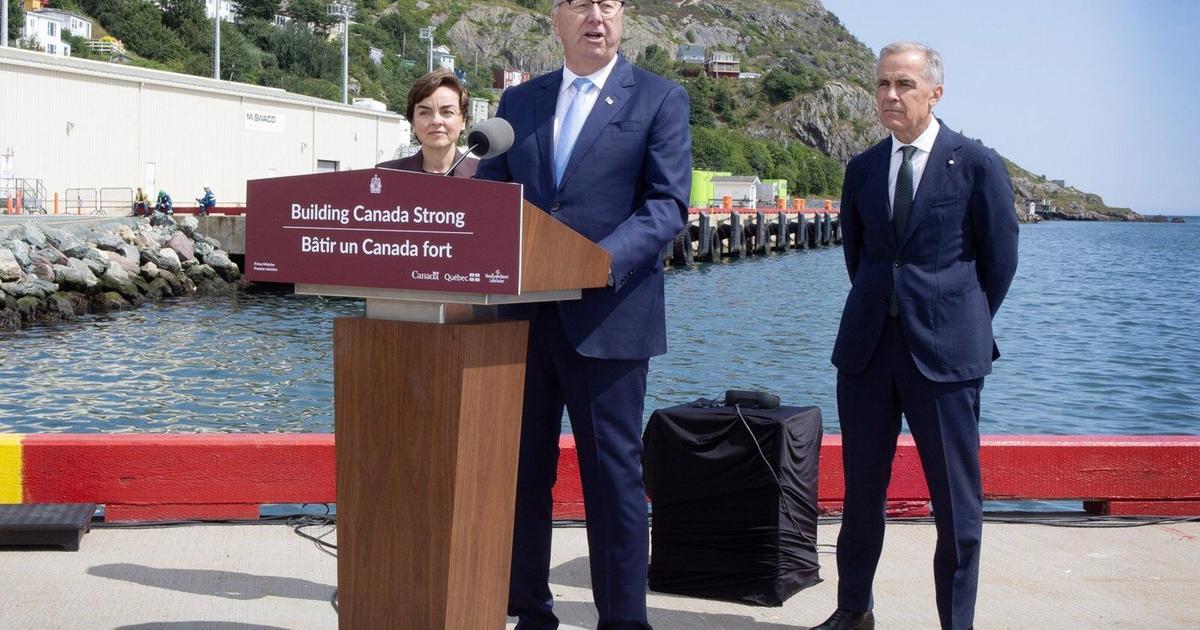
The premiers of Quebec and Newfoundland and Labrador released details of the proposed energy deal between the provinces’ hydro utilities on Monday. It could lead to construction of several energy projects around the Churchill River, including a power plant at Gull Island and an onshore wind farm.
The federal government will kick in $10 billion in financing for several proposed projects including transmission lines and the Gull Island development, according to a news release.
If finalized, the proposal’s construction projects could create thousands of jobs and trigger an influx of workers in central Labrador who would be looking for housing, work, health care and other services. There will be more stress on water, sewage, roads and other infrastructure, as well as emergency and social services, Pomeroy said.
It’s a scenario Happy Valley-Goose Bay is still recovering from, Pomeroy said. Workers flocked to the town when construction began on the Muskrat Falls hydroelectric dam in the Churchill River in 2013.
The influx of money and people brought a host of issues, including drug use, higher rates of domestic violence and mental health issues, and the town was left scrambling for resources to address the needs.
“We can’t be traumatized like we were with Muskrat Falls,” Pomeroy said.
The town is demanding the governments offer more funding, more infrastructure and more help to meet demands for housing and social services. Happy Valley-Goose Bay needs water and sewage upgrades, road improvements, ambulance facilities and a new firehall, Tuesday’s news release said.
“The town expects formal, binding agreements outlining municipal capacity funding, infrastructure investments and timelines, social-impact mitigation measures, and environmental-impact commitments,” the release said.
Neither the department of municipal affairs nor the office for the minister of Labrador affairs responded immediately to a request for comment.
Meanwhile, the Innu nations Matimekush-Lac John and Uashat mak Mani-utenam in Quebec said they were not consulted about the energy proposal. The nations issued a joint press release Monday saying there would be no agreement without their participation and consent.
The Innu Nation Secretariat in Quebec also spoke out, saying the projects outlined in the framework agreement will have major impacts on the traditional Innu territory of Nitassinan, which covers part of Labrador and Quebec. The governments involved must obtain the informed consent of Innu communities to develop projects in Nitassinan, the group said in a news release Monday.
Jodie Ashini, the newly elected grand chief of the Innu Nation in Labrador, says the nation was also not part of the agreement negotiations, since it was in the midst of an election.
She told reporters Monday she hopes Innu rights and culture will be fully respected and the deal will bring prosperity to Innu communities.
“We’re just hoping now that I can take it forward and bring it to the people, and just ensure that it’s a fair and equal deal for the Innu people,” she said.
This report by The Canadian Press was first published Aug. 18, 2026.