This is not, by early appearances, the deal that Canada’s automotive sector wants or needs.
As trade negotiations entered crunch time this week, industry leaders warned with increasing urgency that Mark Carney could not afford to settle for a rumoured cut to U.S President Donald Trump’s tariffs on Canadian-assembled vehicles that would still leave the tariffs too high for those cars to be profitable.
But, as of late Wednesday, as details of a tentative agreement started to leak out, that was what seemed to have happened.
And if so, it should have Ontario’s government contemplating whether to stand in the way of this deal, rather than clearing the way for it by removing its countermeasures against the U.S.
On its face, the reported automotive concessions by Trump — which would see the tariff reduced from 25 to 15 per cent — might look pretty good. Once existing exemptions for U.S.-made components are factored in, it would probably bring down the actual tariff rate on each vehicle from about 12 or 13 per cent to 7 or 8 per cent.
As Carney was broadly hinting on Wednesday, that would likely mean lower rates than most overseas carmakers are paying on their exports to the U.S., which is, by some arguments, the best Canada can hope to do as long as this tariff-obsessed president is in office.
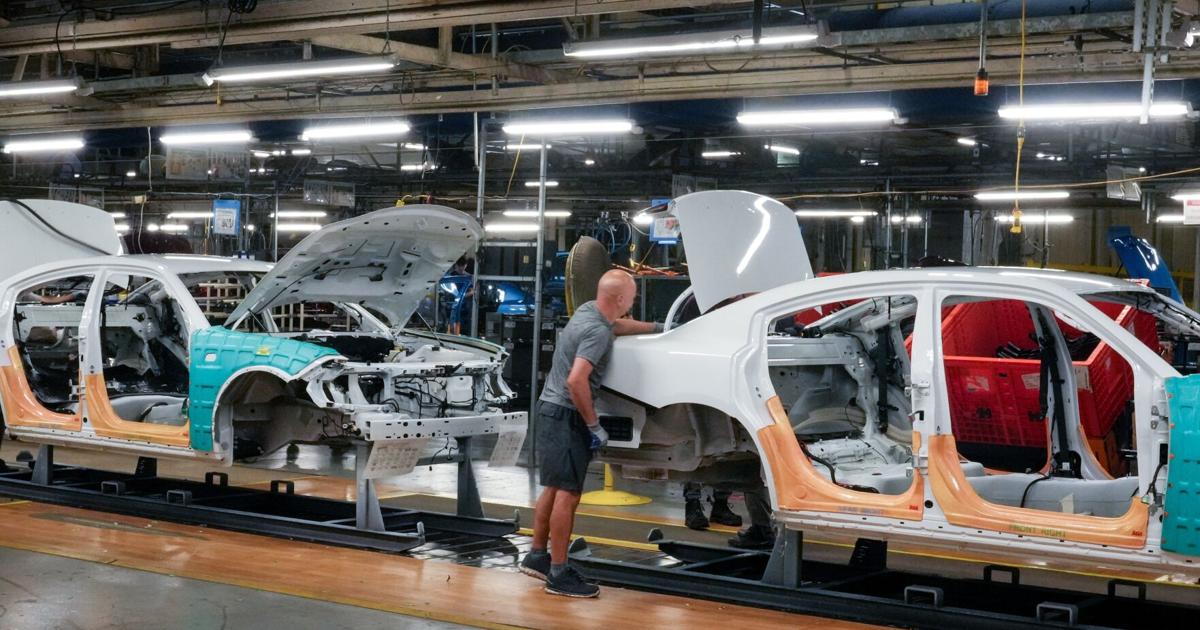
But that comparison isn’t terribly relevant, because Canada’s industry is so uniquely reliant on the U.S. market. Unlike at Asian or European plants, the vast majority of cars made in Alliston or Woodstock or Windsor are sold in that one country. Our supply chains are highly integrated cross-border, and most of the vehicle lines made here could also be made there, albeit in some cases less efficiently.
More to the point, even a 7 per cent levy on those vehicles is probably at or above their profit margin.
That may not be enough to cause major cuts to existing production in Ontario, which haven’t happened too much through Trump’s tariffs so far. But it would continue to deter investment. The prospects of Brampton’s idled Stellantis plant springing back to life, for instance, would remain dimmer than ever, and other factories would face uncertain futures as global headquarters made decisions about where to make new product lines.
That’s why the Canadian industry — including Unifor publicly, and behind the scenes at least some of the automakers with an Ontario presence — has in recent days been pushing for a cut to the tariff rate to be accompanied by a narrowing of how it’s applied.
What they want specifically, and what they believe Carney’s negotiators to have at least put forward at the table, is for the share of each vehicle that’s made from North American parts (rather than just U.S. parts, as currently) to be exempt.
If that were the case, the effective tariff rate on each car would probably go down to 3 or 4 per cent — still not ideal, but much more conducive to ongoing competitiveness.
It would also, incidentally, strike a blow for the basic principles behind North American free trade, as a CUSMA renegotiation may still loom.
Given the slow drip of information about what this week’s prospective peace deal includes, it could yet emerge that this will actually happen.
If not, Carney may have his reasons to believe we have to take what we can get, especially if digging in could imperil relief for other sectors. The auto industry isn’t the be-all and end-all of Canada-U.S. trade.
But it is extremely important to Ontario — a lifeblood of some of its communities, and a cornerstone of its manufacturing base.
And along with steel, on which Trump’s tariffs would reportedly be reduced from 50 per cent to 25 per cent, it’s the industry that Doug Ford has primarily been looking to defend since Trump retook office.
That may leave him with an interesting decision to make about the retaliatory policy that’s most rankled the White House.
All previous indications from Trump have been that removal of provincial bans on U.S. liquor would be necessary for a trade deal like this week’s to be finalized. And Carney asked the premiers to go ahead with that, during a meeting with them late on Wednesday, according to Nova Scotia’s Tim Houston.
Ford may not be the only premier with cause for pause on that front. British Columbia’s David Eby, for one, might be very reluctant to restock American alcohol absent much greater relief than the deal is likely to offer Canada’s beleaguered forestry industry.
But Ontario probably has the most sway on this front, both because of its market size and because Ford has been the face of the booze ban.
It’s possible that, when he first implemented that policy without knowing how strongly it would land, he inadvertently gave himself something approaching veto power on Canada-U.S. deals. If there isn’t more in this deal for Canadian automaking than initially meets the eye, he’ll have to at least consider testing it.
Error! Sorry, there was an error processing your request.
There was a problem with the recaptcha. Please try again.
You may unsubscribe at any time. By signing up, you agree to our terms of use and privacy policy. This site is protected by reCAPTCHA and the Google privacy policy and terms of service apply.
Want more of the latest from us? Sign up for more at our newsletter page.