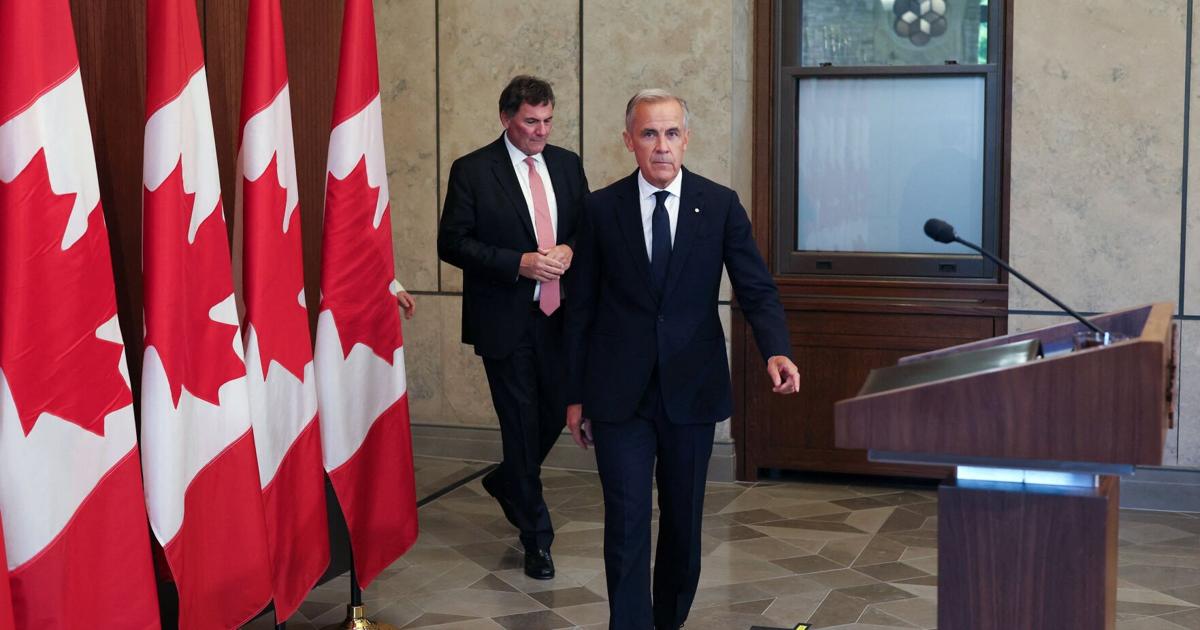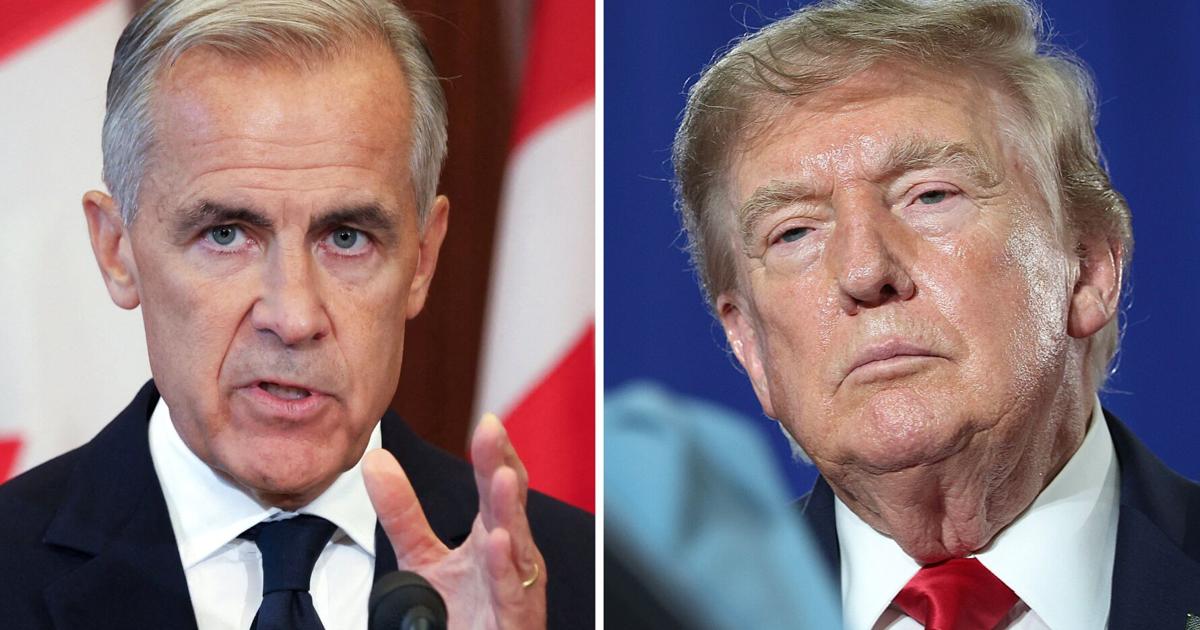
Prime Minister Mark Carney walked away from a U.S. trade deal Friday night. In doing so, he has cemented his post as the leader of the international resistance to U.S. President Donald Trump.
That may be of little consolation to Canadian alcohol, dairy and automobile producers who are now facing new 50 per cent tariffs on goods exported to America, or indeed to any other tariff-hit industries and companies struggling through the trade war.
But it matters to Canada in a longer-term calculation.
The Carney government has had a two-track strategy to get out of this mess of Trump’s making.
The first track has obviously been to strike a trade deal with Washington that lowers or eliminates tariffs. The prime minister was elected by a Canadian public in 2025 that judged him the best party leader to land that agreement.
But he walked away from an agreement, he said, because “we cannot accept what they’ve offered, and we will not give what they have asked.”
The strategy’s second track has been to overhaul and insulate the Canadian economy from unfriendly American economic influence by pivoting the south-facing flow of Canadian exports to other markets, particularly in the east (Asia) and the west (Europe).
Carney on Saturday revealed there had been last-minute changes to American tariff levels on vehicles made with Canadian-made content, which would have hurt the Canadian automobile industry.
But the Trump administration also attempted to attack the second track of Canada’s strategy by, in Carney’s words, restricting “our ability to have other trade deals.”
“One thing that we certainly were not going to accept was any restriction on our ability to execute those deals.”
Trump has yet to publicly comment on the breakdown in trade talks, but U.S. Trade Representative Jamieson Greer told reporters that Canada was offered “the best treatment of any major exporter to our market.”
Without going into detail, he said Canadian negotiators made “new demands and walkbacks of other commitments” that had “upended the careful balance reached in the past days.”
An attack on Canadian sovereignty
Doing a deal under the conditions Carney described would clearly have undermined Canada’s pivot to new markets by putting Carney firmly under the thumb of the U.S.
As the prime minister described it, he was faced with a trade agreement that was suddenly transformed into an attack on Canadian sovereignty, an attempted psychological annexation that could have turned Canada into an American client state, a sort of North American Belarus.
It does, however, jive with Trump’s repeated 51st state taunts when he returned to the White House.
And Trump’s National Security Strategy said of America’s neighbours in the Western Hemisphere: “We want other nations to see us as their partner of first choice, and we will (through various means) discourage their collaboration with others.”
So Carney’s accounting of the behind-the-scenes talks shouldn’t come as a total surprise.
And the fact that Canadian negotiators walked away rather than acquiesce should be seen less as a show of Canadian defiance than of Carney’s consistency.
The prime minister forecast some of the issues his negotiating team might face as early as last January when he delivered his oft-cited Davos speech.
In it, he made global headlines for voicing the grievances his fellow world leaders were still only mumbling to themselves. The speech established himself as the intellectual leader of an emerging anti-Trump rebellion—at the time populated mostly by European leaders angered by Trump’s threats toward Greenland.
“When we only negotiate bilaterally with a hegemon, we negotiate from weakness. We accept what’s offered,” he said, referring to Trump’s America.
“This is not sovereignty. It’s the performance of sovereignty while accepting subordination.”
In that January speech, Carney called for middle-power countries to be bold and band together.
In the interim, he’s been busy constructing that coalition with trade deals, defence agreements and official visits to countries from Switzerland to Saudi Arabia. He’s proceeding with construction of an oil pipeline from Alberta to the B.C. coast and green-lighting major transportation, energy and mining projects across the country.
But in the final hours of Friday night, when it looked like a deal was there to be signed, there was a real sense that it would show up Carney as a leader who had quivered, mid-pivot, under pressure from Trump.
‘We got attacked’
What was reportedly on the table included a 25 per cent tariff on a limited amount of Canadian steel and aluminum exports to the U.S., down from 50 per cent; a 15 per cent tariff on automobiles, down from 25 per cent; concessions to U.S. technology companies; and an agreement to put U.S. booze back on the shelves of provincial liquor stores.
Manitoba’s NDP Premier Wab Kinew said Carney had warned that a deal could fall through if the American liquor was not returned.
“I wouldn’t say that he was begging us,” Kinew said of Carney. “But what is a step before begging?”
From not-quite begging, Carney is now marching Canada away from the negotiating table and toward what he freely and unreservedly admits is economic “war.”
“You’re at war when you get attacked,” Carney said Saturday. “We got attacked.”
He looked serious and concerned, but not frightened. Like a man without a deal, but a man with a plan.
Carney made his reference to war, and then returned to the work of marshalling Canada’s response. It will include retaliatory tariffs against the U.S. and $25 billion in government support for affected industries and workers, the details of which will be revealed next week.
“We’ll support these businesses for as long as it takes — in other words, beyond the life of this U.S. administration,” Carney said.
At the same time, Canada won’t waver from the job of building up a more robust domestic economy while signing new trade deals and seeking new partners and new markets for Canadian goods.
“Building at home and diversifying trade abroad is not our plan B. It has been our plan A from the start,” Carney said.
But he left the distinct impression that this high-stakes pivot away from the U.S. now takes on a vital new urgency.