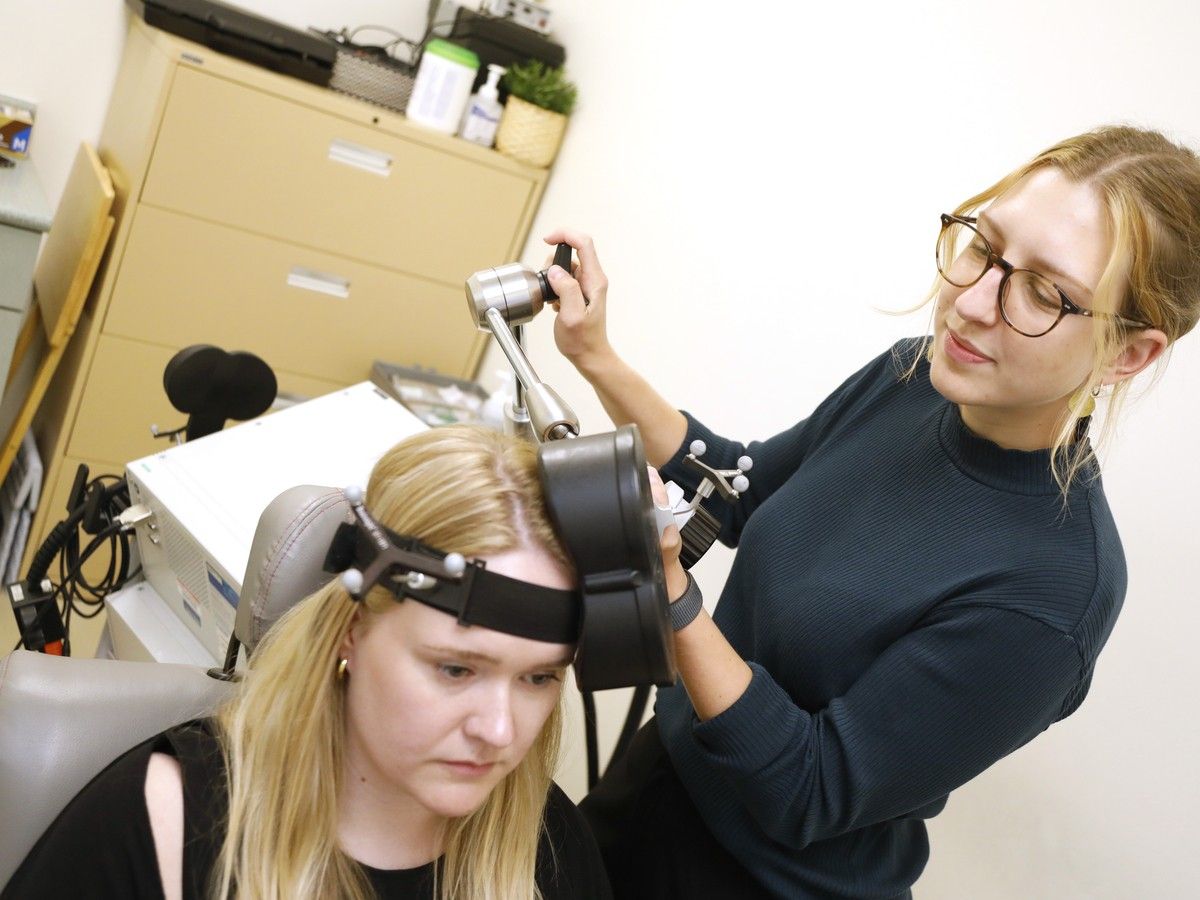
Michelle Chapin remembers being terrified before her first session of repetitive transcranial magnetic stimulation, or rTMS.
She imagined sitting inside a machine delivering shocks similar to Electroconvulsive therapy (ECT) for 30 minutes at a time, five days a week, over six weeks.
But when she finished those 30 treatment sessions in 2024, Chapin said the actual process felt more like a tickle.
“Sometimes you even get a face twitch,” she said. “It’s fun because it’s switching it up … but it’s really just a tickle. So I was like: ‘Oh … I really built that up for nothing.’”
That ticklish machine administrating targeted magnetic stimulants is part of an evidence‑based alternative treatment for hard-to-treat depression, now exclusively available publicly at The Royal.
The Royal , in research partnership with The Ottawa Hospital , is the only hospital in the Ottawa‑Champlain region providing the OHIP-covered alternative for treatment-resistant depression.
Dr. Ram Brender, interim clinical lead at The Royal’s rTMS Unit, says rTMS is available to people whose depression has not responded to conventional therapies such as medication and psychotherapy.
Chapin underwent her first rTMS treatment in 2024 through a research program, before the treatment was covered through OHIP, just weeks after a suicide attempt left her at what she described as the lowest point of her life.
Before that, Chapin said, she had cycled through medications and therapies that never worked.
“I found out that I actually have medication‑resistant depression,” she said. “I had tried quite a few meds and hadn’t seen the type of success I’ve had with magnets.”
Within three weeks of starting rTMS, she felt a noticeable shift, including a more positive outlook on life.

While Chapin accessed the program through the research program, the treatment, which normally would cost up to $6,000 when not publicly funded, is inaccessible to many.
“Without the research programs, I don’t know if I would have been able to afford to even do it,” she said.
rTMS, a refined alternative to ECT?
For decades, Electroconvulsive therapy (ECT) has been one of the most effective treatments for severe depression and bipolar disorder.
But it requires patients to go under general anesthesia, which can have many cognitive side-effects, including memory issues, according to Dr. Mark Kaluzienski, deputy head and medical director of mental health at The Ottawa Hospital.
“We know stimulating the brain helps depression,” Kaluzienski said. “rTMS is exciting because it’s a refined version of ECT.”
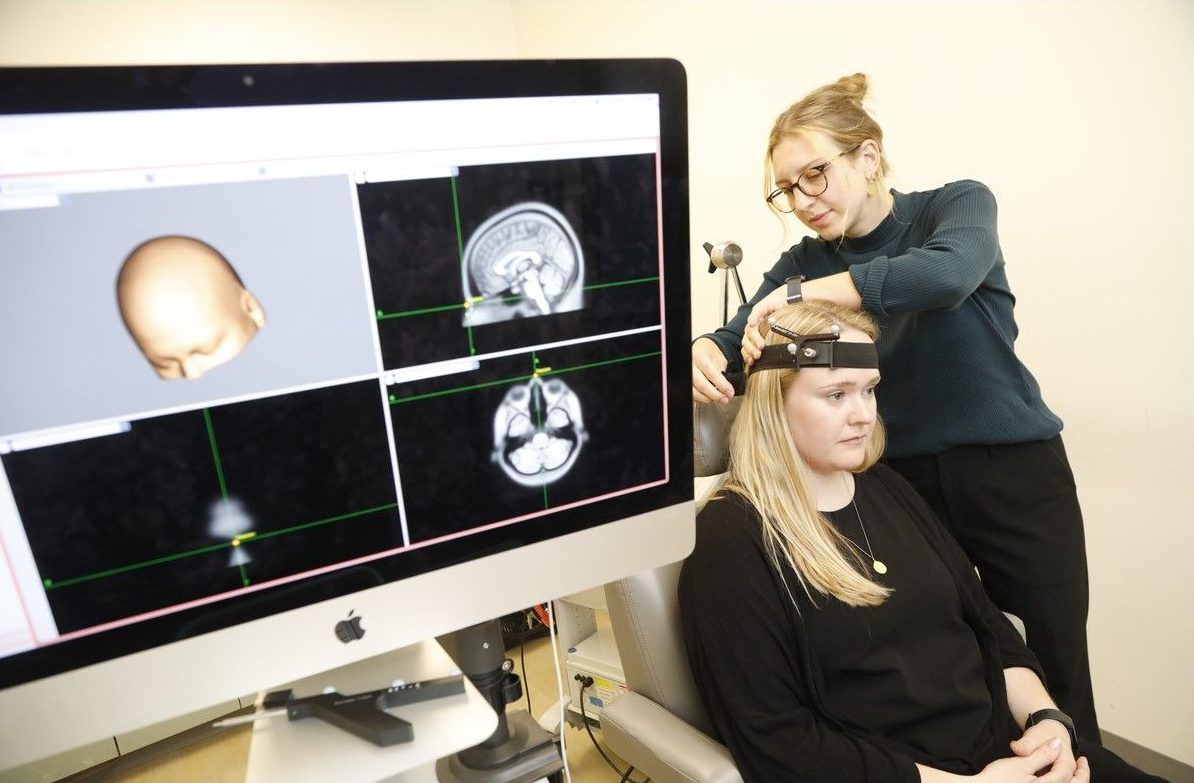
Unlike ECT, which stimulates the whole brain, rTMS uses magnetic fields to activate specific areas of the brain involved in mood regulation, he said.
Patients remain awake throughout the procedure and can return to normal activities immediately afterward.
ECT, Kaluzienski noted, is more complex. “Patients stay in the hospital for a while until they get better, and then they need someone to accompany them home.”
Why rTMS wasn’t widely available — until now
The greatest barrier has been cost. rTMS treatment in Ontario can cost thousands for the standard 30‑session protocol.
“It’s a resource that’s never been on the table for us,” Kaluzienski said. “To call a patient and say, ‘This is a great idea, but I can’t offer it to you,’ is obviously difficult for both the patient and the physician.”
That changed last year, when Ontario announced funding for clinical rTMS programs, investing $5.4 million to expand access to treatment for adults living with difficult-to-treat depression.
“Approximately $568,370 has been allocated to support service delivery at The Royal. The treatment can cost up to $6,000 when not publicly funded,” The Royal’s news release read.
The Royal already had rTMS machines for research purposes, but the new provincial program allows it to provide publicly funded treatments.
Kaluzienski says The Ottawa Hospital is currently only conducting research in rTMS, but it has purchased rTMS machines and plans to hire technicians to expand care.
“Having the option is a game-changer,” Kaluzienski said. “It’s exciting that the system is looking for co-ordinated access to care. It’s important for us to work together as institutions to make sure it’s easier for patients to access the care they need.”
Is rTMS more effective than ECT?
Brender says clinical studies show rTMS is both safe and effective, with a response rate of about 50 per cent and a remission rate between 30 and 40 per cent.
“Response means symptoms improve and remission means the patient returns to their pre‑depression baseline,” Brender says.
However, ECT has higher response (70 per cent) and remission (50 per cent) rates than rTMS.
“Overall ECT is more effective, but the side-effects are more significant,” Brender said, adding that rTMS had very few side-effects and a low withdrawal rate.
rTMS to fill a treatment gap in Ottawa, doctors say
The Canadian Mental Health Association reports that one in five Canadians experience mental health disorders.
Brender says roughly one in six will experience major depression and one‑third of those — about two million people — live with treatment‑resistant depression.
In the Ottawa region, Brender says, an estimated 50,000 to 60,000 people fall into that category.
“This is quite a huge number, if you think about it,” he said.
rTMS was developed in the 1980s and approved by Health Canada for clinical use in 2002. Brender says the United States made that move in 2008.
“We are quite pioneers in this field and quite leading in the world, actually, with research regarding this machine,” he said.
Through Ontario’s Neurostimulation Procedures Provincial Program, 18 publicly funded rTMS devices will be available across 15 clinical sites.
They will provide access for more than 2,000 patients annually, Brender said.
Take control of your search results. Make the Ottawa Citizen a preferred source on Google and see verified local reporting first.