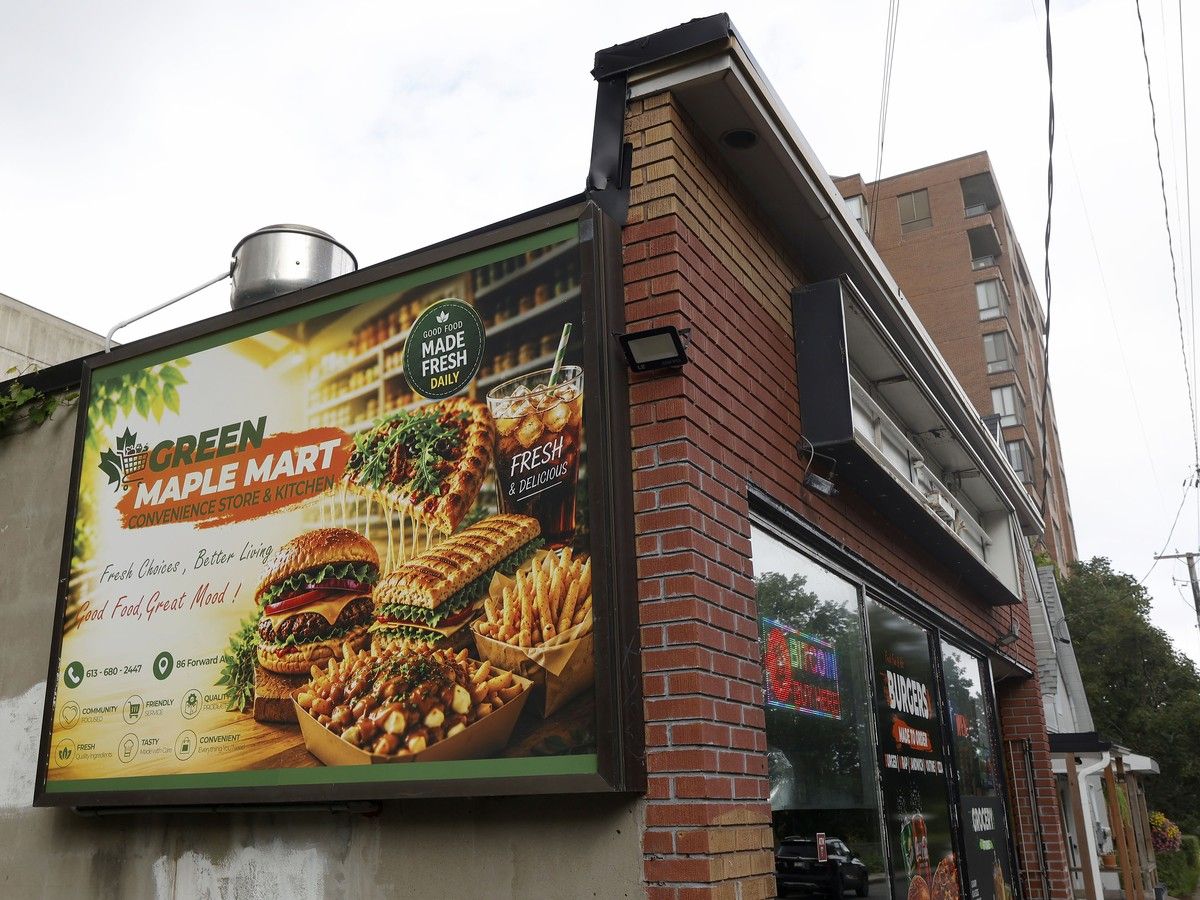
Right near Bayview Station is Green Maple Mart and Kitchen, a family owned hot food and convenience spot.
Green Maple isn’t shy about its use of AI. Generated images plastered across the inside and outside of the building are filled with scaly-looking burgers and rubbery, too-symmetrical pizzas.
Green Maple’s owner, Ali Dehghan, said that AI has been a huge help as a small-business owner, and that it doesn’t reflect the food he makes.
On Instagram , Green Maple’s food looks nothing like it does in its posters — it looks real.
“When I run my business, I use AI to design my menu, my sign, and prices. It helps me to get a good price on my food,” said Dehghan, who added that it has also helped because Persian is his first language and his English isn’t strong.
“That is not appetizing and obviously not reflective of what you’ll actually be eating if you ate at this restaurant,” said Ottawan Cameron Ryan, who added that if given the choice, he’d prefer to eat at a spot that didn’t use AI-generated images because they show a lack of care and look “gross.”
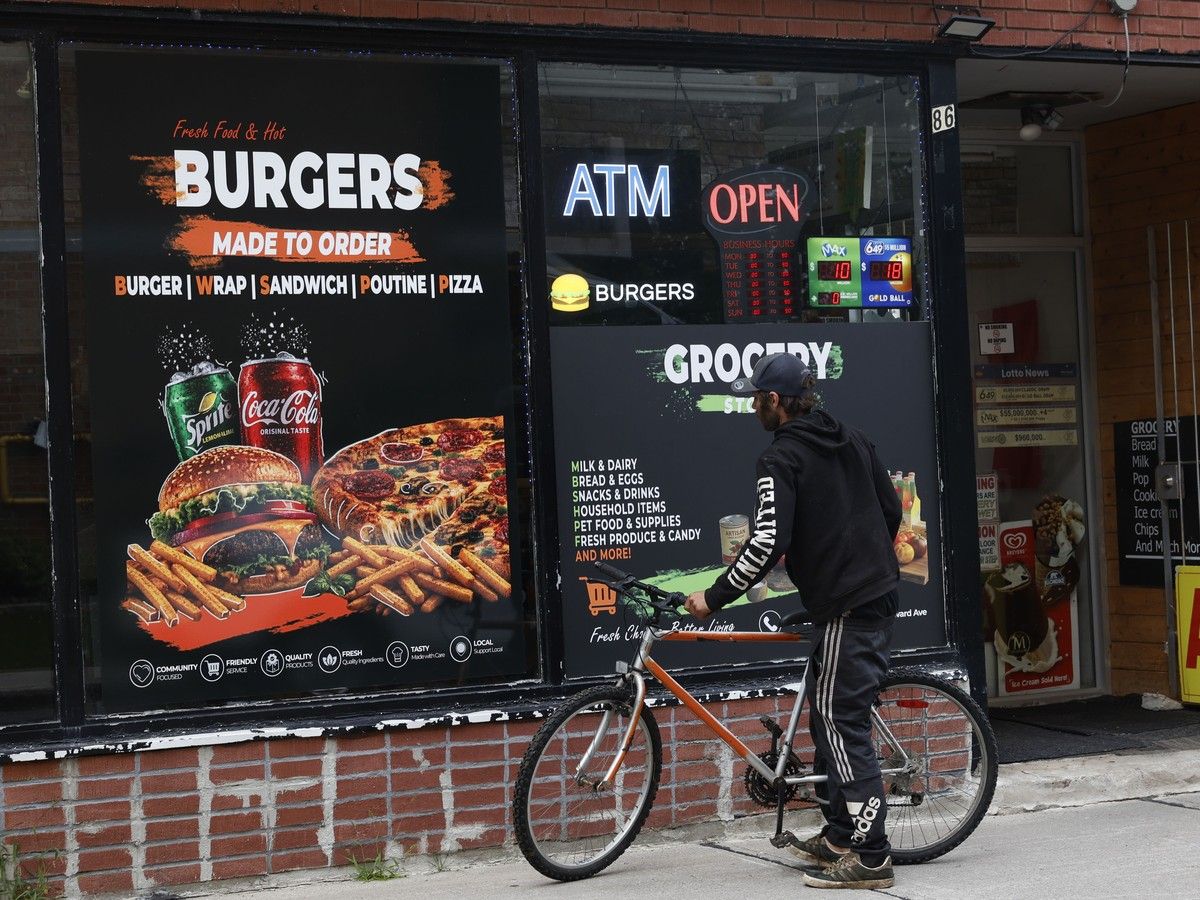
Outside Green Maple, Safa Chaari stood on the sidewalk in view of the business’s massive AI sign.
“For me, I would not eat it. I prefer to do it at home, for me, for my husband, for my kids, because I would be sure about the ingredients. Because when I see the photo, it’s not real,” she said.
Ryan and Chaari aren’t the only ones who feel this way.
Amid a growing trend of local restaurants opting for generated pictures of their product, some are taking to social media to create collaborative lists of where to avoid in the capital, based on suspected AI-image use.
The public’s fear and loathing of AI images has also led to people accusing Ottawa restaurants and culinary institutions of using AI when they say they aren’t.
Numerous local restaurants, from shawarma shops to pizza joints to cafés, have begun using AI to generate images of their menus and promotions, some of which are more obvious than others.
Ottawa resident Mofeyisope Ayeni has noticed the growing trend, especially on Uber Eats.
“Why do you have to use AI? What’s the point? I just don’t trust you then. Is the food that bad that you have to use it to advertise? I’m 100 per cent sure that if there’s pizza place that has an AI-generated picture, I can go to a million other ones in the city that I know what (their food) looks like,” said Ayeni.
For some, a temporary fix
In a Reddit thread on r/OttawaFood, one user asked, “How you feel about Ottawa restaurants using AI pictures,” and attached a screenshot of sushi spot Shinka’s menu, whose rolls appeared oddly shiny.
While a few responses defended Shinka for its quality food, many of the dozens of responses were strongly negative about the use of AI, with some saying they’d never eat at a restaurant that used the technology.
Shinka’s manager, Joel Sousa Pedro, declined to be interviewed but said in an email that the restaurant currently uses some AI-generated images on their online ordering platform.
“We have done so due to the fact that we are still in the process of updating our menu with a professional photographer. Instead of just leaving the menu items blank without a picture, we are using this as a temporary fix so customers can still have a visual attached to a potential item they are ordering,” wrote Sousa Pedro.

Though food styling is already well known for making a product look more attractive — think mashed potatoes swapped for ice cream in a TV ad to prevent melting — one AI researcher argues that this growing trend in Ottawa can cross a line into deceit.
Parts of Shinka’s online menu seemed like AI to Jasmin Manseu, a professor at the University of Ottawa who researches the impacts of AI on society. But he said he wasn’t sure.
The professor acknowledged that food styling and photography have always been heavily manicured, but consumers have also always known that. The fact that AI is improving so quickly, and that he couldn’t tell in this case, concerned him.
“I don’t know if it is, 100 per cent or not. It’s more of a conversation of whether it is, and it’s not disclosed, how we react,” said Manseau, noting that prospective customers might lose trust in a restaurant — as Ayeni did — when they get that feeling of uncertainty.
“The sushi triggered that notion of uncanniness, creepiness,” Manseau said, referring to the “uncanny valley,” an idea first coined in the 1970s and more recently popularized in video games, where graphics look close to being real, but are a bit off, leaving an uncomfortable feeling.
In the email, Sousa Pedro also addressed one user’s comment on the Reddit thread, apparently a screenshot from 2024, in which Shinka replied to a customer’s Google review with what appeared to be a response from an AI chatbot. “Sure, here’s a professional yet warm response,” the reply began.
“We did use it as a tool for a short time in 2024 but stopped due to the fact that we wanted to reply organically to our customer base,” Sousa Pedro wrote.
‘The internet being the internet’
Other local food institutions say they’ve been caught up in internet users’ tendency to jump to conclusions, which doesn’t surprise Manseau.
Because it’s difficult to prove whether suspicious food promos are AI-generated, the accusation alone can be enough to impact a business. “It’s easy to mobilize individuals online. It makes sense that it’s happening. The internet being the internet,” he said.
“It was random. We had never had anyone in comment sections or DMs or anything pointing something like that out,” said Abhishek Sharma, the marketing director of Le Cordon Bleu Ottawa.
But that changed in April of 2026, when Sharma became aware of another Reddit thread , which accused the haute cuisine school of posting an AI-generated image of pastries.
“We don’t use AI-generated images. That would be criminal from us,” said Sharma, who added that he understands why some restaurants may want to use AI, but that he “personally feels that it’s not right. It should be presented in the way it’s meant to be.”
Though Sharma said that everyone was entitled to their opinion about Cordon Bleu’s posts, the school chose not to respond, so as not to “stir the pot.”
“We were so happy to see other people on that thread having our back,” he said.
Later, Sharma said that after looking through the school’s Instagram page, the only AI-generated post they published was in April 2025: a “starter pack” of a Cordon Bleu student, made to look like a packaged toy.
“We just indulged in a trend,” said Sharma.
“The stigma might disappear. It’s so recent, I don’t quite know. But the damages to businesses can be pretty high if you get caught in this circle,” Manseau said, adding that restaurants disclosing AI use would likely help rebuild trust with the community.
Ryan said AI image generation almost becoming embarrassing for businesses is something that he’s starting to see happening online and around town, and which might slow down the trend.
“At the end of the day, restaurants can make the choices that they want to make; if they want to use an AI food sign, then that’s fine. And people will choose whether they patronize it or not.”
Take control of your search results. Make the Ottawa Citizen a preferred source on Google and see verified local reporting first.